
Camas School District: enrollment stable at about 6,836 as board warns of state funding shortfalls
Get AI-powered insights, summaries, and transcripts
Sign Up Free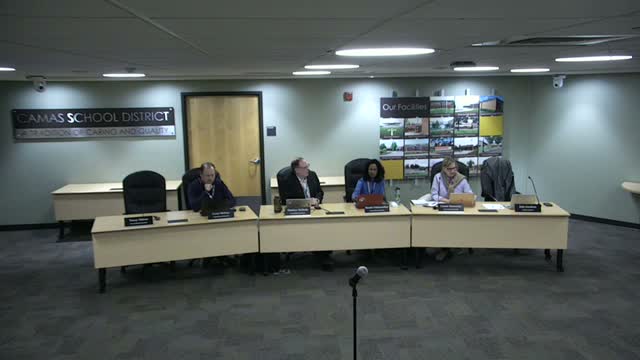
Summary
The superintendent told the school board enrollment is largely stable while state funding decisions and one-time allocations are squeezing the district budget; the board heard that transportation allocations fell about $550,000 year over year and discussed longer bus life cycles and running-start funding changes.
The Camas School District heard an update from the superintendent on enrollment and state funding pressures at its board meeting, where district leaders said enrollment is roughly stable while legislative outcomes are tightening the budget.
The superintendent told board members the district's Basic Ed headcount was 6,836 as of March 2, a figure used for state funding calculations. "We're kind of at that kind of stagnancy phase," the superintendent said, noting that primary grades drew the most concern and that preschool registrations for next year are up.
The superintendent and staff described several state-level developments that could affect operations. They said running-start funding was negotiated to 1.3 full-time-equivalent (FTE) for purposes of state apportionment, after proposals to reduce it further; officials said the change affects student options rather than producing a large immediate fiscal hit. The superintendent also explained adjustments to bus depreciation lifespans (small buses from 8 to 10 years, large buses from 13 to 15 years) and said that, while the district keeps good upkeep, longer lifespans mean older vehicles on the road.
District finance staff reported a notable year-over-year change in transportation allocation: "We received $550,000 less than we did last year," the finance presenter said, adding that the district remains in the black for now but that fund-balance management is critical because state apportionment and property tax timing can defer revenue through the fiscal year. The staff noted a clean 2024-25 audit but said it included a management letter about declining financial condition.
Board members discussed options to respond, including continued emphasis on fund-balance targets and local levy planning. The superintendent urged continued community engagement and legislative outreach, saying the district would bring more detailed budget planning back to the board as negotiations and state guidance on issues such as transitional kindergarten (TK) and other program changes become clearer.
The board did not take any specific cost-cutting votes at the meeting; members asked staff to return with more data and analysis at future meetings.