
Covered California says loss of enhanced federal tax credits could double premiums for many enrollees
Get AI-powered insights, summaries, and transcripts
Sign Up Free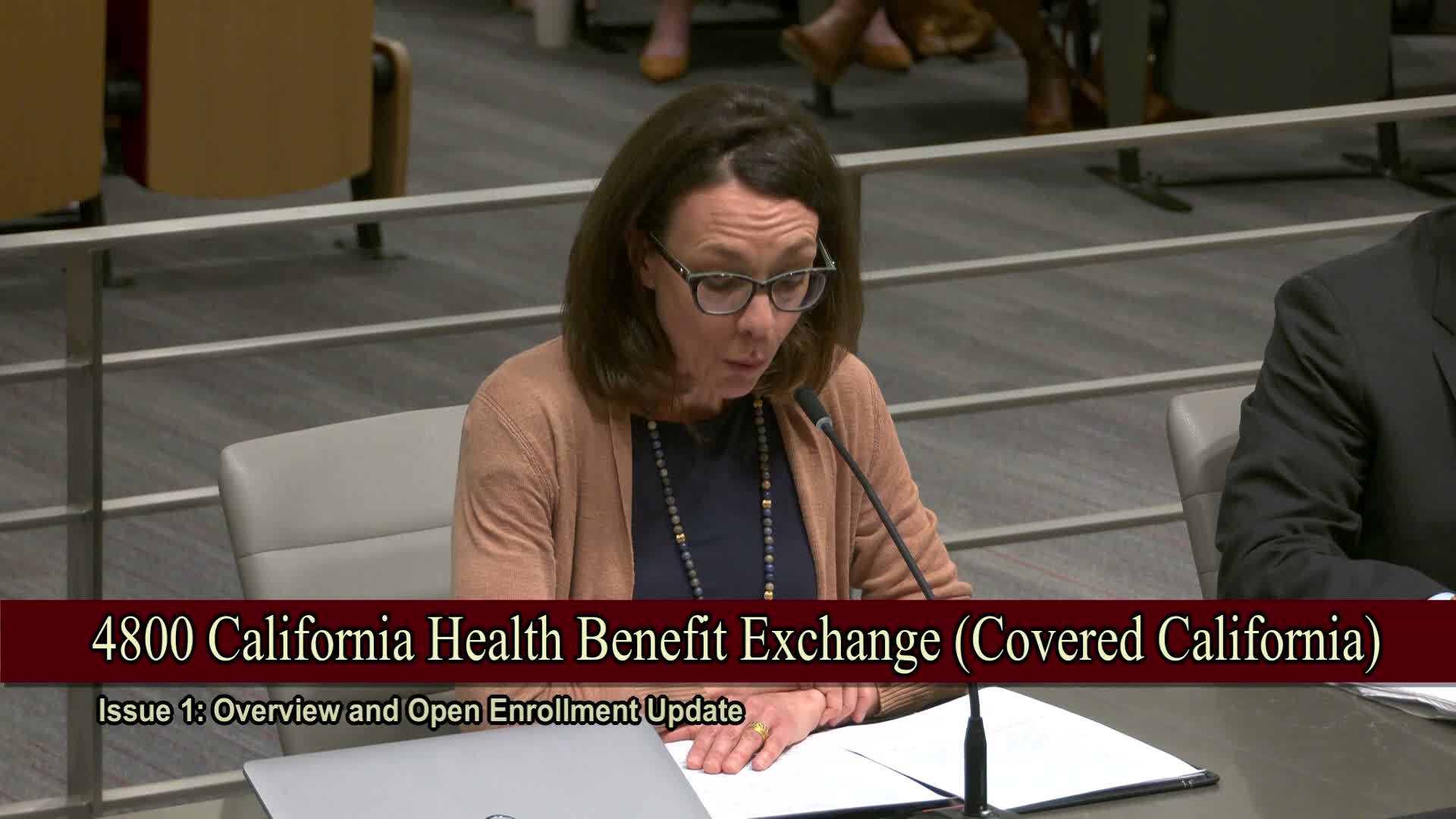
Summary
Covered California reported open enrollment closed with about 1.9 million signups and warned expiration of enhanced premium tax credits could raise average monthly premiums by roughly 97% for enrollees; the state has appropriated $190 million to target lower‑income consumers but cannot fully backfill federal assistance.
Katie Ravel, director of policy, eligibility and research at Covered California, told the subcommittee the expiration of enhanced federal premium tax credits — which expired on Dec. 31, 2025 — will materially increase premiums for many marketplace enrollees. "With that expiration, Covered California estimates that our enrollees will lose about $2,500,000,000 in premium assistance for 2026," Ravel said, adding that monthly premium costs could on average double for members (about a 97% increase) and that as many as 400,000 Californians could drop marketplace coverage over time based on national modeling.
Covered California reported 1.9 million enrollees at the close of open enrollment, a 3% decline from the prior year; new enrollments were down 32% and middle‑income enrollment (above 400% FPL) fell sharply. The state appropriated $190 million from the Healthcare Affordability Reserve Fund for 2026 premium assistance; that program currently supports nearly 390,000 enrollees at incomes up to about 165% of the federal poverty level.
Department of Finance staff told the committee the Healthcare Affordability Reserve Fund has an ending balance of about $369.4 million (including the $200 million scheduled to be returned next fiscal year per budget plan) but cautioned that revenue volatility and federal policy uncertainty complicate out‑year commitments. Ravel said Covered California will post an interactive dashboard to track enrollment and plan selection trends and will follow up with more granular outreach strategy details.
Lawmakers asked about equity impacts; Ravel said the subsidy targeting in the state's $190 million plan prioritized lowest‑income enrollees because modeling showed it would yield the greatest retention among Black, Latino and other historically underserved groups. The subcommittee left the matter open for additional data and timeline updates ahead of the May revision.