Get Full Government Meeting Transcripts, Videos, & Alerts Forever!
Get email alerts on the Dental Policy topic
No spam. Unsubscribe anytime.
Dental providers warn that eliminating Prop 56 supplemental payments could shrink access and boost ER visits
Summary
DHCS said eliminating Prop 56 general‑fund supplemental dental payments would save about $331.8 million GF but warned a rate restructuring analysis required for CMS is pending; dental groups and providers told the subcommittee the cut risks provider exits and more dental emergencies in hospital ERs.
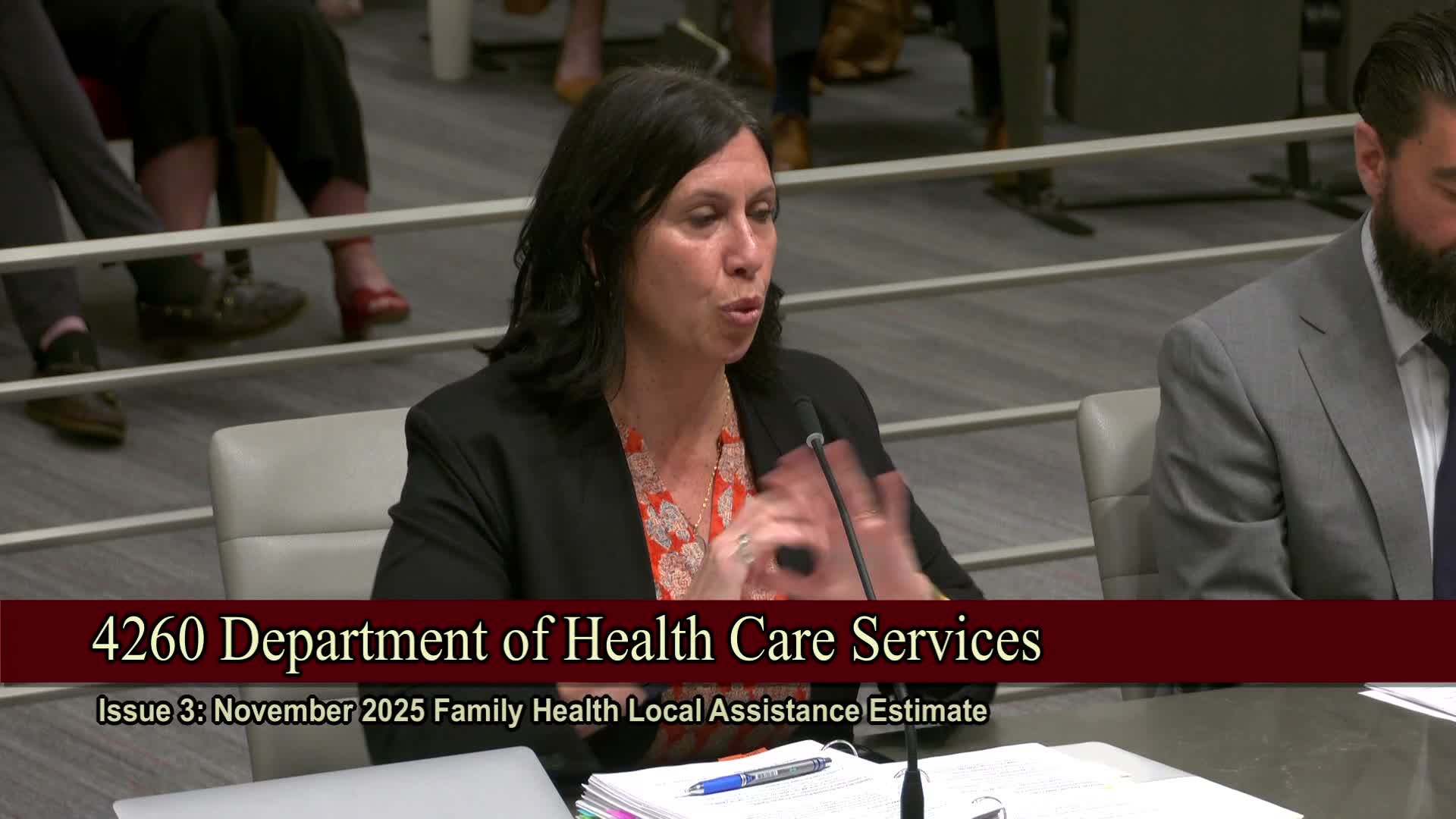
Chair and members focused sustained questioning on the administration's planned elimination of Prop 56 general‑fund supplemental payments for Medi‑Cal dental services, effective July 1, 2026. DHCS told the subcommittee the 2025 Budget Act decision to eliminate the general‑fund component would reduce state spending by an estimated $331.8 million in the budget year and that the department is preparing a rate reduction and restructuring analysis for CMS that will include public feedback, provider participation and utilization trends.
"The 2025 budget act, eliminated the general fund supported prop 56 supplemental payments, for dental services effective 07/01/2026," Michelle Boss said. She added the department has engaged the California Dental Association, California Dental Hygienists Association and regional stakeholder meetings and has issued monthly provider bulletins beginning February to educate providers about the change.
Dental stakeholders and providers urged the subcommittee to protect Prop 56 funding. Terry McHale of Aaron Reed & Associates, representing the California Optometric Association, told the committee many eye and dental providers face costs that outstrip current Medi‑Cal reimbursement: "It has been 26 years since they've had an increase. They get $47 for the patients that come in... it does not pay the cost of their employees." Eric Dowdy of the California Dental Association said a CDA survey of 1,500 dentists found more than half would consider disenrolling from the Medi‑Cal dental program if the cuts proceed; he warned the reduction could "decimate the provider network" and increase emergency department visits.
Providers and public‑interest advocates highlighted downstream costs. Deborah Payne, past chair of the Medi‑Cal Dental Advisory Committee, told the subcommittee that reduced access would shift care to emergency rooms where dentists cannot provide comprehensive treatment: "Emergency rooms are already overrun... Emergency rooms are not the place to go for dental care." Western Dental and other providers urged restoration of the supplemental payments, saying preventive dental care reduces costly emergency visits.
DHCS said the department does not yet have the complete access impact analysis and that the required CMS submission will include public comment and utilization data. The department also noted that providers will be able to submit comments to CMS once the public notice is available.
The subcommittee left the item open for further information from DHCS and stakeholder briefs on provider participation and ER impacts.