
House Fisheries Committee Hears Bill to Create East Side Cook Inlet Administrative Area
Get AI-powered insights, summaries, and transcripts
Sign Up Free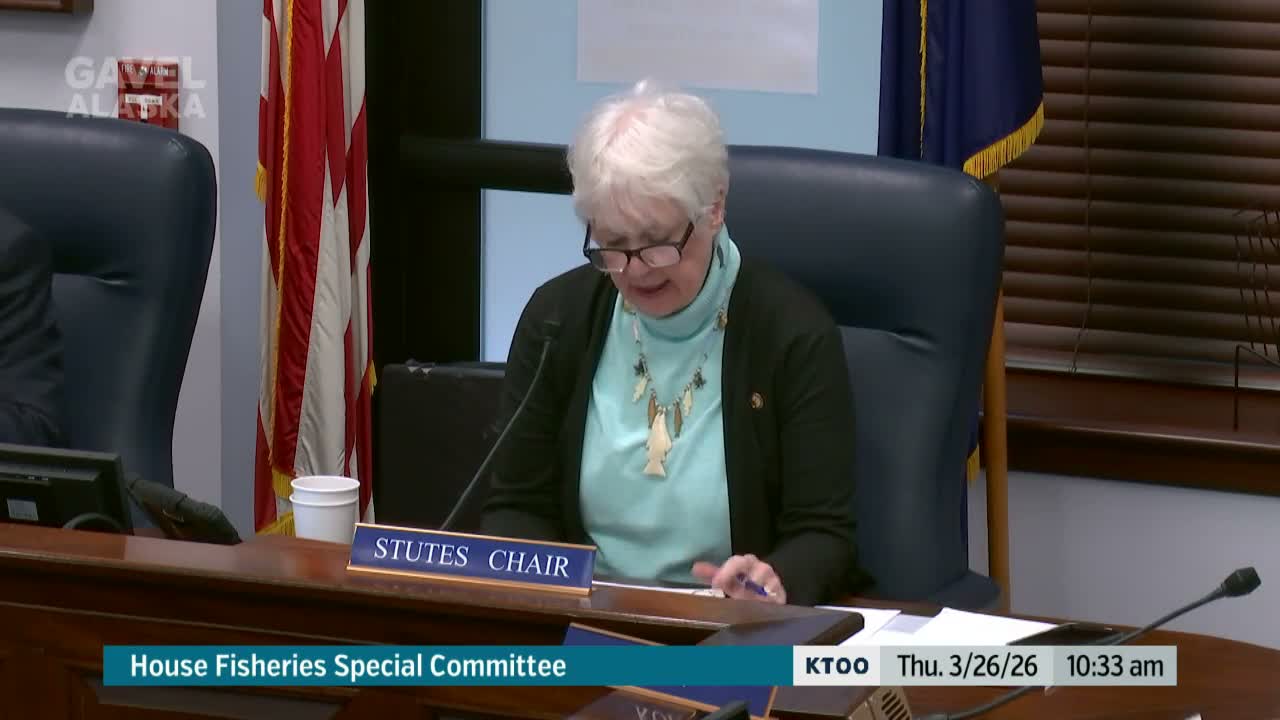
Summary
Lawmakers and East Side fishermen told the House Special Committee on Fisheries that Senate Bill 158 would give East Side set-net permit holders a distinct administrative area for CFEC management and potential voluntary buybacks, while committee members pressed for clearer timelines for provisional permits and appeals and asked CFEC and Fish and Game to return for more detail.
The House Special Committee on Fisheries on March 26 heard testimony on Senate Bill 158, which would create a new administrative area for East Side Cook Inlet set-net permit holders and reassign historic entry permits to that district, proponents told the committee.
Conrad Jackson, chief of staff to Sen. Bjorkman, the bill sponsor, told the committee the measure is "really a technical bill" that draws "lines on the map" to form an administrative area made up of six statistical areas. Jackson said the bill does not change allocation or the management plan set by the Board of Fisheries: "We do not propose any changes to the fishery itself, this is simply lines on the map." He added lawmakers amended effective dates on the Senate floor so the bill's implementation would occur in 2027.
Supporters from the East Side told the committee the change would help the community manage a distinct fishery. Lisa Gabriel, who said she has been an East Side set-netter for nearly 40 years, urged passage and said the administrative area would allow the Commercial Fisheries Entry Commission to "determine our fishery participation more easily" and better reflect harvest linked to the Kenai and Kasilof rivers. Gary Hollier, whose family operates multiple permits, called the bill "a small step, but it's desperately needed" and noted recent emergency closures and federal disaster declarations affecting the fishery.
Rick Green, chair and commissioner of the Commercial Fisheries Entry Commission (CFEC), told the committee CFEC could absorb the reassignments into the new administrative area with current permitting staff and processes and that the agency entered a zero fiscal note: "We can manage the reassignments of entry permits into this bill with our existing permitting staff and processes." Jackson and witnesses said roughly 440 permits currently fish the East Side, and proponents said creating a district could enable permit-holders to organize voluntary buyback or permit-retirement programs.
Committee members raised practical concerns about the transition language in the bill and how permit holders would maintain access while appeals are pending. Representative Vance and others pressed Jackson on the provisional permit language and the appeals timeline; the transcript references an appeal deadline to Superior Court of March 1, 2027, which prompted questions about whether permit holders and CFEC would have sufficient time to process reassignments and appeals. Jackson said the bill's effective dates were adjusted to 2027 and suggested CFEC and the Department of Fish and Game would be best placed to answer questions on processing timelines; the committee agreed to invite both agencies to a future hearing.
Several members emphasized that the bill itself does not change fishery allocation or Board of Fisheries authority, but that creating an administratively distinct area could make it easier for East Side permit holders to pursue locally designed solutions. Greg Johnson, who said his family holds seven licenses, warned that without a cap or local control, permit holders who have not historically fished the East Side could migrate in and confound any future local plan.
The committee set an amendment deadline for Tuesday at 5 p.m. and said it would not meet next week, resuming on the seventh; Chair Stutes adjourned the hearing at 11:29 a.m.
What happens next: Committee members asked CFEC and the Department of Fish and Game to appear at the next hearing to clarify provisional-permit mechanics, appeals timing and operational capacity before the committee considers amendments or a recommendation.