
Senate Finance hears wide testimony on proposed 98¢ surcharge to fund 988 crisis services
Get AI-powered insights, summaries, and transcripts
Sign Up Free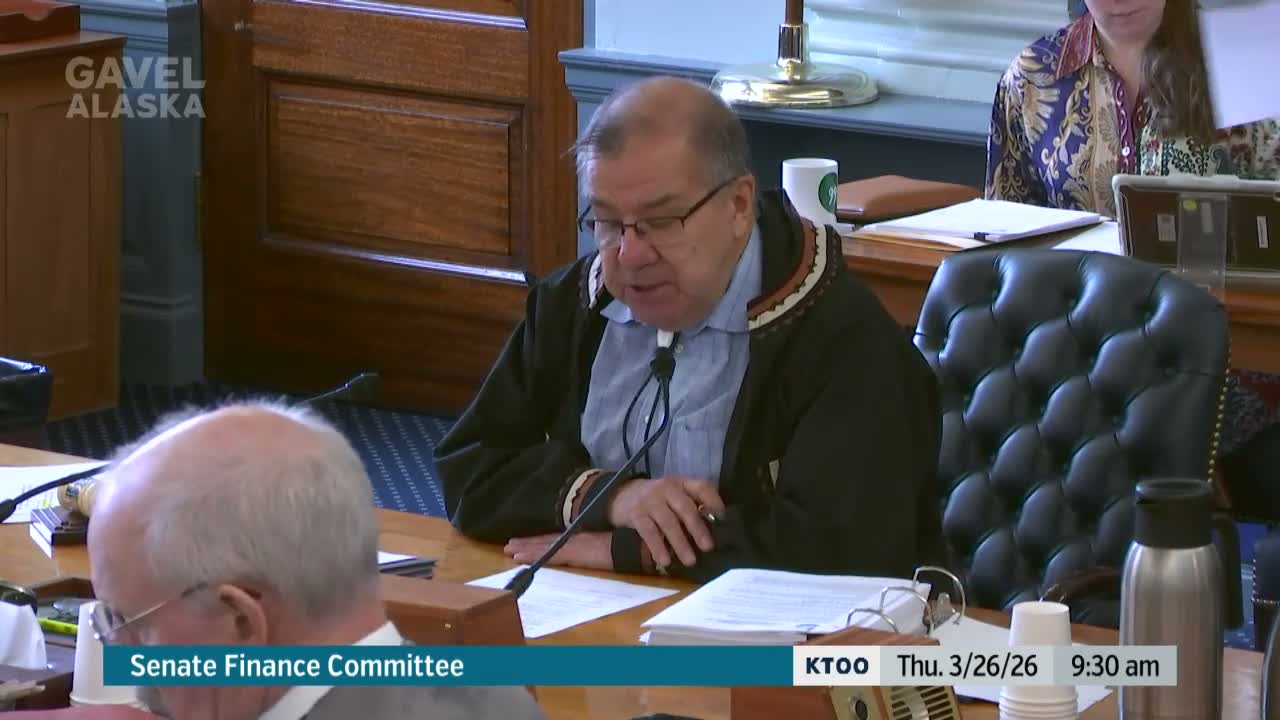
Summary
Senator Scott Kawasaki’s SB 196 would add a 98¢ behavioral‑health services surcharge per phone line to fund 988 call operations, mobile crisis teams and stabilization centers. Supporters including mental‑health advocates and law enforcement urged stable funding; telecom providers and some residents warned the flat fee is regressive and cited alternative funding options.
Senator Scott Kawasaki introduced Senate Bill 196 on March 26, proposing a 98¢ per‑line behavioral‑health crisis services surcharge on phone bills statewide to finance the 988 suicide‑and‑crisis hotline, mobile crisis teams and stabilization services. "This is a stable and steady funding source," Kawasaki said, noting federal startup grants have tapered and 988 call volume has risen.
Jenna Calhoun, staff to Senator Kawasaki, told the committee the surcharge would apply once per wireless line and be itemized on customer bills; carriers would remit collections within 60 days and receive an administrative payment equal to the greater of 1% of collections or $150. Calhoun said the surcharge was anticipated to raise roughly $6–8 million annually and that legislative appropriation would govern how money in the behavioral‑health crisis services account is assigned to the Department of Health.
Supporters described how predictable funding would translate into services. "The question before this committee isn't whether Alaska will spend money on behavioral‑health crisis. It already is. The question is whether they'll spend that money wisely," said Angela Kimball, chief advocacy officer at a national mental‑health advocacy organization testifying in favor of SB 196. She highlighted national examples where investments in a full crisis continuum reduced costly emergency and inpatient care and produced measurable returns.
Anchorage Police Chief Sean Caseman and 911 dispatch and law‑enforcement representatives said investment in mobile crisis teams reduces the burden on police and emergency departments. Chief Caseman said Anchorage’s mobile intervention team responds to more than 3,000 mental‑health crisis calls a year and that early mobile response helped reduce psychiatric emergency‑department visits in early implementation. Dennis Lasley, a 911 dispatch supervisor and vice president of the Anchorage Police Department Employees Association, said many crisis calls are not crimes and that diversion to behavioral‑health teams is both clinically appropriate and more efficient.
Advocates from the American Foundation for Suicide Prevention and NAMI Alaska urged the committee to provide steady support for 988, especially to reach remote communities that now rely on short‑term grants and time‑limited appropriations. James Vila, an itinerant school social worker and AFSP Alaska volunteer, noted Alaska answered more than 24,000 988 calls last year and said a reliable revenue source would support statewide coverage and mobile response.
Opponents and cautious observers raised concerns about the funding approach. Christine O'Connor of the Alaska Telecom Association said ATA supports strong behavioral‑health services but objected to using a flat per‑line surcharge: "Our concern is not with the goals of this bill but with how it is funded through a new tax on phone service," she said, warning the fee could disproportionately affect seniors, low‑income households and lifeline customers and could place administrative burdens on small rural carriers. Several public commenters urged the committee to consider the Alaska Mental Health Trust and other existing funding streams before levying a new surcharge.
Senator Kiel summarized three fiscal notes: the Department of Administration assigned a $0 fiscal note for accounting capacity; the Department of Health labeled operational impacts indeterminate; and the Department of Revenue's tax division estimated implementation costs of about $118,300 in the first year (with a similar out‑year estimate), one permanent position funded from the general fund, and an estimated upfront capital implementation cost near $1,000,000 (the tax division said approximately half of that was driven by expedited work to meet an effective date). Calhoun and others described an expected annual revenue range of roughly $6–8 million; the tax division continued to analyze long‑term revenue effects.
Senators asked follow‑up questions about how the 98¢ figure was chosen, how many phone accounts or lines would be subject to the charge in Alaska, and whether alternatives might be preferable. Senator Kawasaki said the proposal followed models used by other states and that staff would provide additional data on account counts and revenue estimates. The committee set SB 196 aside for further work rather than advancing it at this hearing.
The committee did not take a final vote on SB 196; senators and witnesses signaled openness to continued negotiation on funding design and allocation rules.