
GCI, Alaska Communications and Pacific DataPort present projects and urge planning for operations, workforce and middle‑mile needs
Get AI-powered insights, summaries, and transcripts
Sign Up Free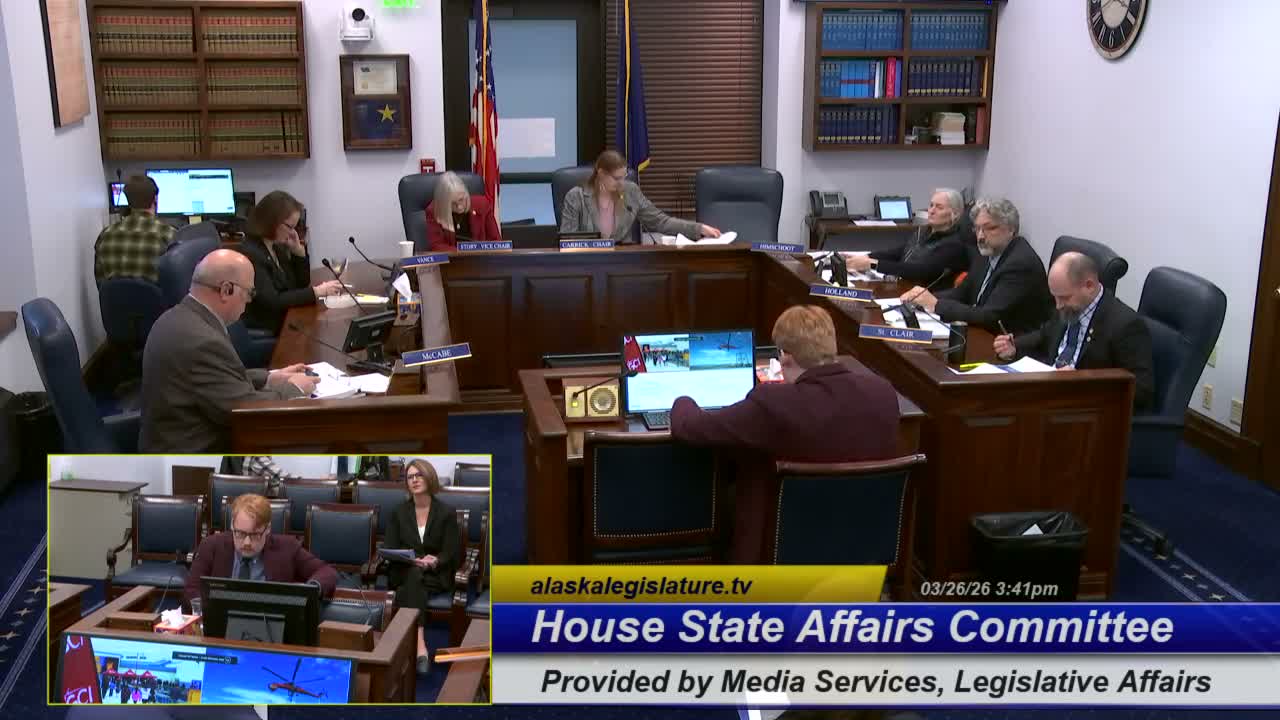
Summary
GCI, Alaska Communications and Pacific DataPort described BEAD‑funded projects—GCI’s $115 million IHUC expansion, ACS’s $124.5 million state award with private investment, and Pacific DataPort’s satellite solutions—and urged planning for maintenance, workforce training and middle‑mile resilience as BEAD moves to implementation.
Representatives of major Alaska providers briefed the House State Affairs Committee on how BEAD awards translate into construction, service and operations.
Billy Whelan, senior vice president of corporate development at GCI, described a $115,000,000 BEAD award to expand the IHUC network across Western Alaska, saying the project will connect at least 30 communities and more than 2,300 households and businesses with a mix of new fiber and microwave middle‑mile links. "Fiber is the gold standard where feasible because of its longevity, reliability, and virtually unlimited capacity," Whelan said, and he urged attention to permitting, supply chain constraints and workforce development.
Heather Kavanaugh, vice president of external affairs at Alaska Communications, said ACS received a $124,500,000 BEAD award and plans to invest an additional $26,700,000 of private capital to reach more locations. ACS told the committee it will offer urban pricing in many communities and participate in the FCC Lifeline discount program; Kavanaugh said BEAD is a one‑time capital award and ongoing operations and maintenance must be recovered through rates.
Sean Williams, vice president of government affairs and strategy at Pacific DataPort, emphasized policy and oversight issues, telling legislators they should strengthen in‑house telecom expertise and update Alaska’s regulatory framework inherited from the copper‑telephone era. "Updating statutory language and regulatory frameworks is not optional," Williams said, arguing that legislative oversight and clearer rules are needed as LEO satellites and other technologies reshape competitive dynamics.
Committee members asked providers about maintenance in remote locations, data center energy requirements, workforce pipelines (including technician training) and whether the state is creating overlapping award areas. Providers and the Broadband Office said permitting resourcing, middle‑mile capacity and a public status dashboard will be priorities as the state moves into contract negotiations and construction planning.
The presentations closed with an agreement to exchange follow‑up information and data with the committee; members emphasized interest in workforce training, affordability, and planning for replacement costs over project lifecycles.