Lifetime Citizen Portal Access — AI Briefings, Alerts & Unlimited Follows
Tanana Chiefs Conference tells House committee BEAD scoring disadvantaged tribal fiber proposals
Loading...
Summary
Tanana Chiefs Conference argued that an NTIA restructuring removed a fiber preference and prioritized lowest upfront cost, leading to rejected tribal fiber proposals; TCC warned microwave and satellite options carry higher lifetime operations and subsidy costs and urged the committee to consider total cost of ownership and tribal ownership in future decisions.
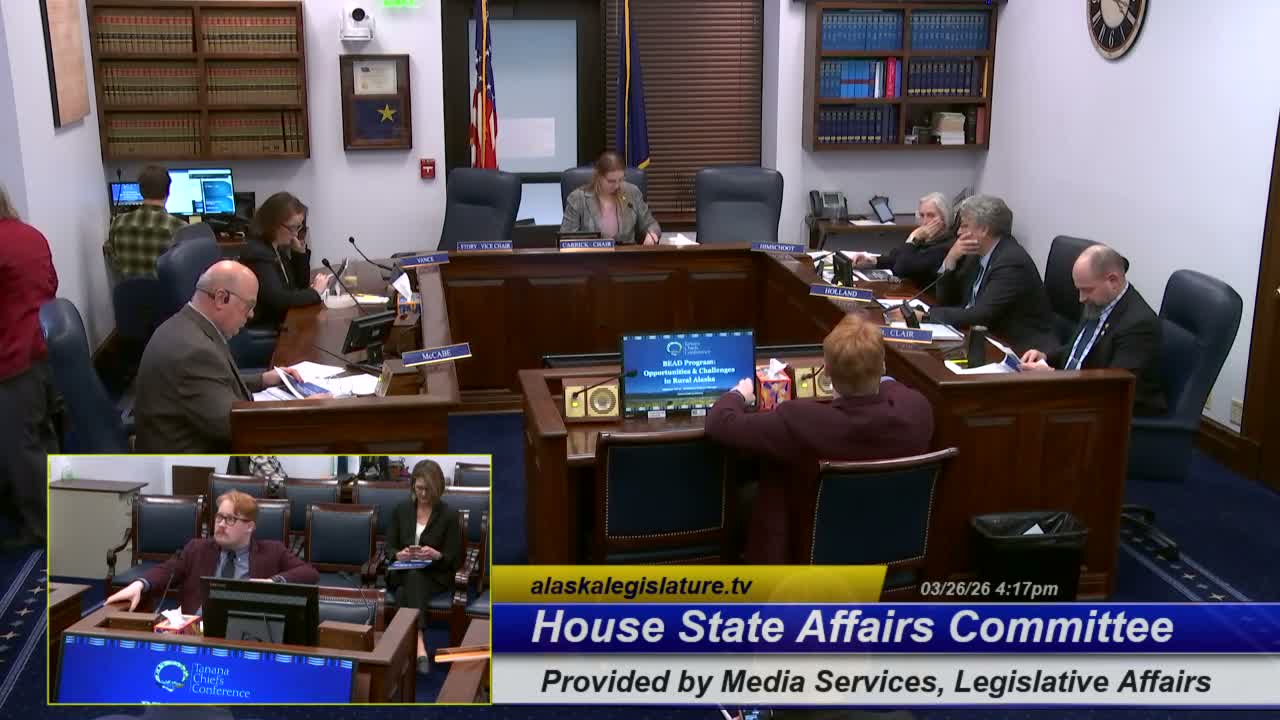
Matthew Glover, broadband program manager for the Tanana Chiefs Conference, told the House State Affairs Committee that TCC submitted two BEAD applications totaling about $123 million to build a continuous terrestrial fiber backbone through Interior Alaska. He said the applications—one for $91.4 million covering about 1,008 locations and a second for about $32.1 million covering roughly 379 locations—were initially provisionally awarded but were later judged too expensive after an NTIA policy restructuring in June 2025.
"The benefit of the bargain policy change in June 2025 eliminated the fiber‑first preference and made lowest upfront costs the determining factor," Glover said, describing how the change shifted award decisions. He said TCC reduced its costs and submitted a best‑and‑final offer that brought part of its proposal under $50,000 per location but that the Office ultimately rejected that BAFO on price and the communities were awarded to another provider.
Glover warned the committee that microwave and satellite links require remote generators, helicopter access for maintenance in extreme weather and frequent equipment replacement, and he cited monthly clinic connectivity costs currently paid from federal subsidies. "Fiber is a little bit different… there's no remote power needed typically," he said, arguing that fiber has lower life‑cycle operating costs and reduces long‑term subsidy dependence.
TCC recommended the committee evaluate total cost of ownership (20‑year life cycle costs), prioritize tribal ownership and workforce development, reform permitting and scoring criteria to account for lifespan and local benefits, and plan now for replacement funding for non‑fiber technologies with shorter equipment lives.
Director Lochner and other witnesses described following NTIA direction during a constrained BAFO process. Committee members asked follow‑ups about timing and opportunities to improve advisory board function and permitting. The committee requested written follow‑up materials from TCC and other presenters to better understand tradeoffs between upfront construction savings and long‑term costs.