
Lawmakers discuss bill to create statewide framework for CTE grants, seeking better access for rural students
Get AI-powered insights, summaries, and transcripts
Sign Up Free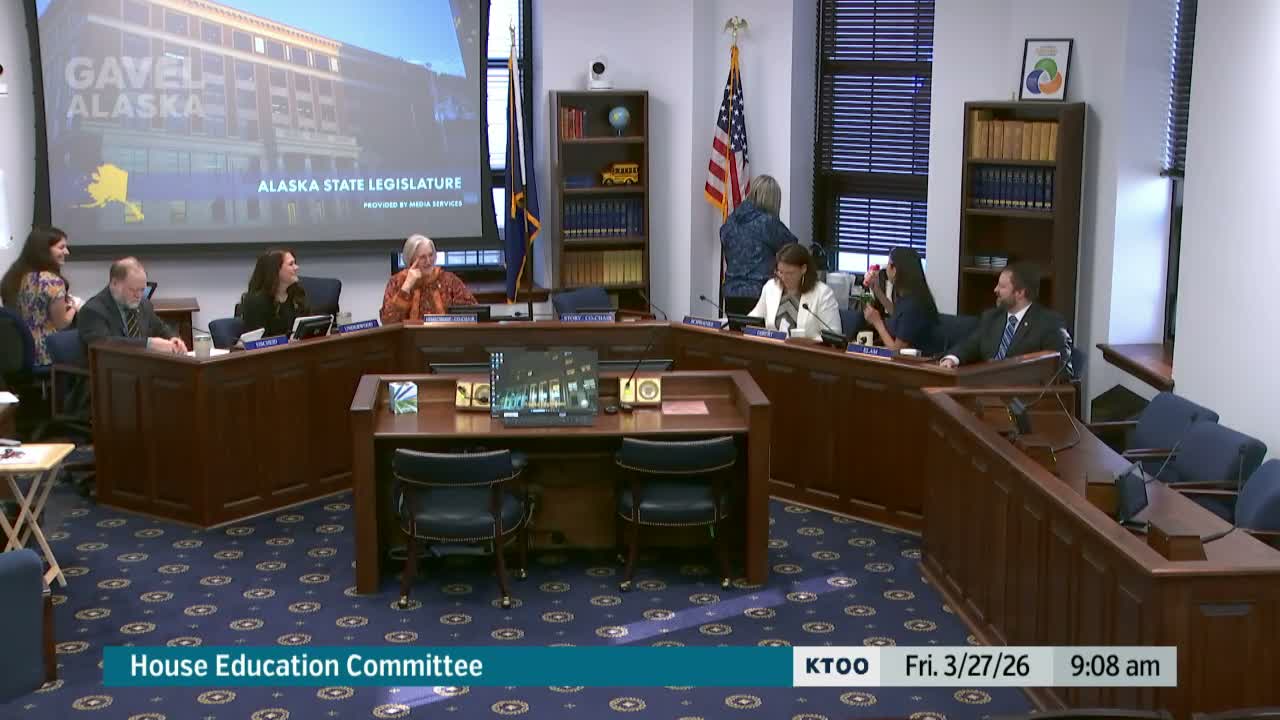
Summary
Rep. Bill Elam and department officials outlined House Bill 358 to establish a career and technical education grant program and coordinate pre-apprenticeship and work-based learning; lawmakers and witnesses discussed award rubrics, regional equity, reporting and the potential need for appropriations or a catalogue of statewide opportunities.
House Bill 358, intended to establish a career and technical education (CTE) mobility grant program and create a framework for pre-apprenticeship and work-based learning, returned to the Alaska House Education Committee on March 27 for questions and discussion.
Sponsor Representative Bill Elam said the bill's purpose is to create structure so local programs can be coordinated across the state, prioritizing hosting districts and enabling cost-sharing: "What it does is it allows us to be able to better support our students and then also to be able to bring those ties in with industry through, like, the pre apprenticeship, through the Department of Labor," Elam said.
Committee members raised implementation questions about how grants would be awarded, whether the bill should include a rubric or regional distribution requirement, and whether the fiscal note should include an initial appropriation to fund grants. Representative Story and others suggested a reporting function or catalog so districts and businesses could see available opportunities; department staff said some relevant resources already exist but currency is a challenge.
Brad Billings, administrator for career and technical education at the Department of Education and Early Development, said the bill could create a statewide 'shopping guide' of available CTE opportunities and cited examples of existing local articulation agreements and temporary residency models that allow students from remote districts to participate in larger programs.
Dirk Kraft of the Alaska Workforce Investment Board (Department of Labor) said the state lacks a defined pre-apprenticeship framework and welcomed the bill's potential to strengthen statewide collaboration.
Zach Stinson, a practitioner with experience running regional CTE programming, said many districts want to collaborate but lack a consistent statewide system and that programs often have wait lists; he described a multi-regional training underway that brought students to an Ironworkers Union training site for certifications.
Members discussed work-study and apprenticeship-style models, the need to clarify liability and labor-law issues for minors, and whether the bill should be amended to add a specific appropriation or reporting requirement. Several members argued for keeping statute intentionally flexible to allow district-to-district innovation; others urged building practical guidance and templates into the bill.
Committee members did not take a final vote on HB 358 at the meeting; the bill was set aside for further work and the committee recorded administrative next steps, including setting an amendment deadline for an unrelated Senate bill on civics education.