NDUS deputy commissioner urges systematic review of "low‑producing" programs; committee seeks detailed board plan by June

Higher Ed Funding Committee (Legislative interim) · March 25, 2026

Get AI-powered insights, summaries, and transcripts

Sign Up Free
AI-Generated Content: All content on this page was generated by AI to highlight key points from the meeting. For complete details and context, we recommend watching the full video. so we can fix them.

Summary

Deputy Commissioner Lisa Johnson told the Higher Ed Funding Committee that states commonly use multi‑year thresholds to flag low‑producing academic programs and that the State Board of Higher Education is developing a system‑level policy; legislators pressed for clarity on cost metrics, exemptions for mission‑critical programs and whether funding should be used to push action.

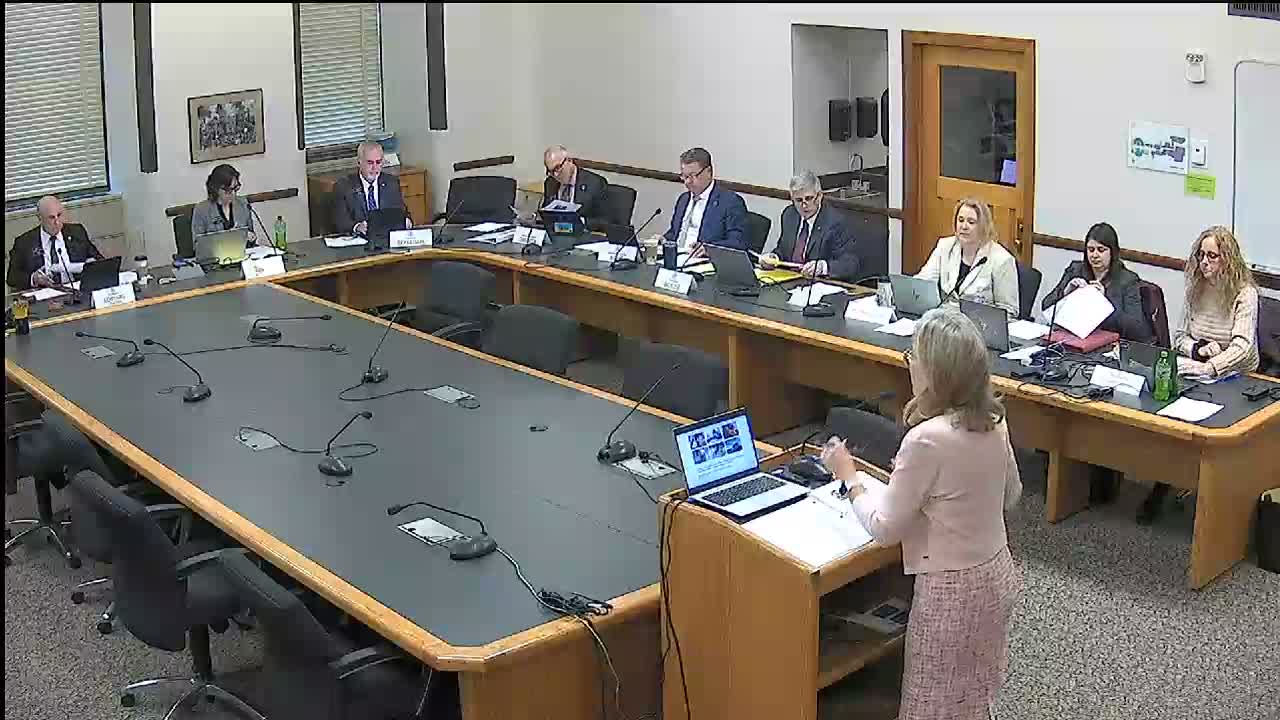
Lisa Johnson, deputy commissioner for academic and student affairs at the North Dakota University System, told the Higher Ed Funding Committee the State Board of Higher Education is actively studying how to identify and review academic programs that produce relatively few graduates.

Johnson said other states use multi‑year windows and minimum graduate counts to flag ‘‘low‑producing’’ programs and then undertake a deliberative review that weighs regional workforce demand, program quality, accreditation constraints and the cost of instruction. ‘‘Low producing programs are commonly identified through multi‑year enrollment or completion minimums,’’ she said, describing thresholds used in states such as Texas, Virginia and North Carolina.

The committee pressed Johnson on how granular a ‘‘program’’ can be, whether reviews include unit‑cost analyses and what exemptions exist. Johnson said the system’s recent survey of campuses found review cadences ranging from unspecified to two, three or five years, and that many campuses run unit‑cost or departmental analyses after a program is flagged. She said accreditation or clinical requirements often justify thresholds that differ from systemwide minima and that campuses can seek board exemptions for critical but small programs such as sonography.

Johnson told the committee that, over the last five fiscal years, roughly 100 programs were placed on inactivation and about 75 were terminated statewide; at the same time, campuses created about 384 new programs. She said teach‑out requirements and shared faculty, equipment or lab arrangements mean inactivation or termination does not always translate into immediate cost savings.

Chairing the meeting, the committee’s chair asked the State Board of Higher Education to bring a detailed proposal for a program‑review policy to the committee’s June meeting and suggested legislators could consider using funding leverage — for example, holding a portion of formula dollars until the board demonstrates follow‑through — as a tool to prompt action. Johnson and committee members agreed the board is well‑positioned to craft the policy but that legislators want periodic reporting and clarity on exemptions and metrics.

The committee did not vote on policy at the meeting. Members requested more detailed data on program‑level completions, certificate distinctions and campus cost mixes ahead of the next session.

The committee approved its Jan. 14 minutes at the outset of the meeting (motion moved by Nathie; seconded by Swantek) by voice vote with no opposing votes recorded.