Get Full Government Meeting Transcripts, Videos, & Alerts Forever!
Cities tell lawmakers North Dakota faces $1.7 billion in unfunded wastewater projects; officials flag affordability and reserves
Summary
The North Dakota League of Cities and rural water representatives reported a statewide wastewater need of about $1.7 billion, with surveyed cities noting $203 million in deferred maintenance and $435 million in future capital needs; local reserves are limited, raising affordability concerns for ratepayers.
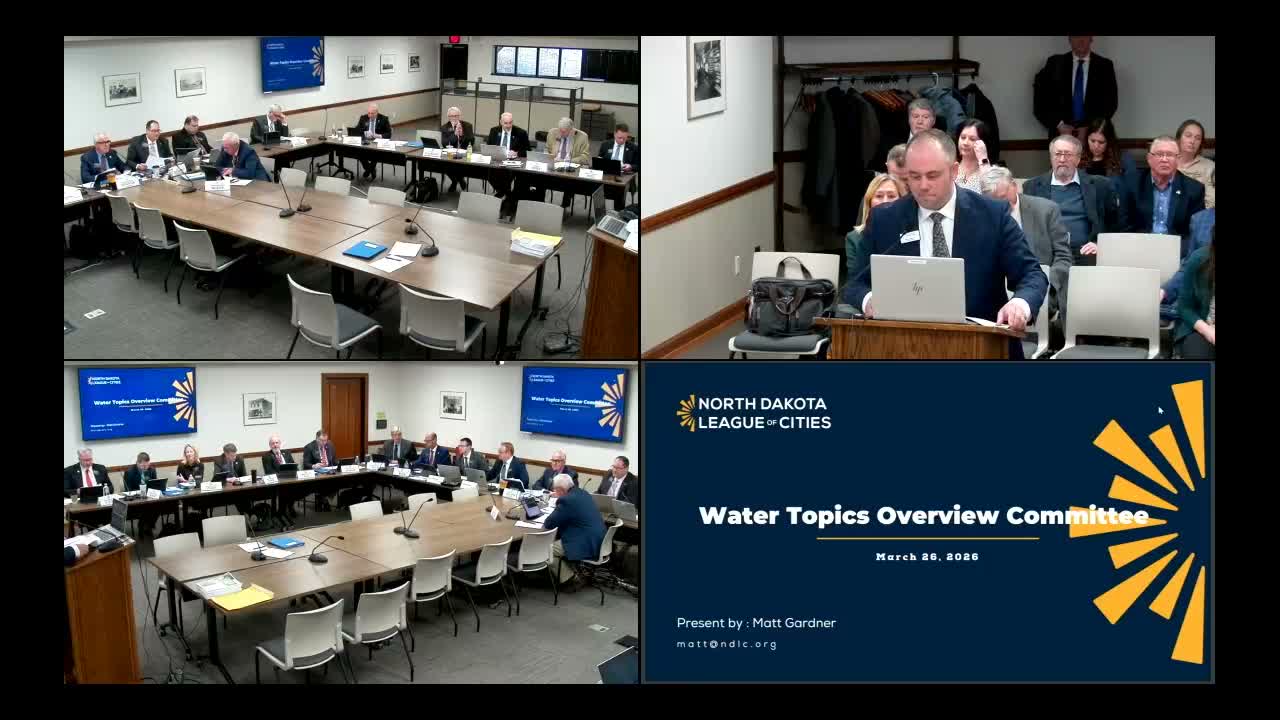
Representatives of municipal governments and water utilities told the Water Topics Overview Committee that wastewater infrastructure needs in North Dakota are substantial and largely unfunded.
Matt Gardner, executive director of the North Dakota League of Cities, said the Department of Environmental Quality's intended-use plan lists 292 wastewater projects totaling about $1,700,000,000 in project costs. A targeted survey of 11 cities with populations…
Already have an account? Log in
Subscribe to keep reading
Unlock the rest of this article — and every article on Citizen Portal.
- Unlimited articles
- AI-powered breakdowns of topics, speakers, decisions, and budgets
- Instant alerts when your location has a new meeting
- Follow topics and more locations
- 1,000 AI Insights / month, plus AI Chat