
Maine Senate rejects a motion to adopt a memorial for Charlie Kirk after heated floor debate
Get AI-powered insights, summaries, and transcripts
Sign Up Free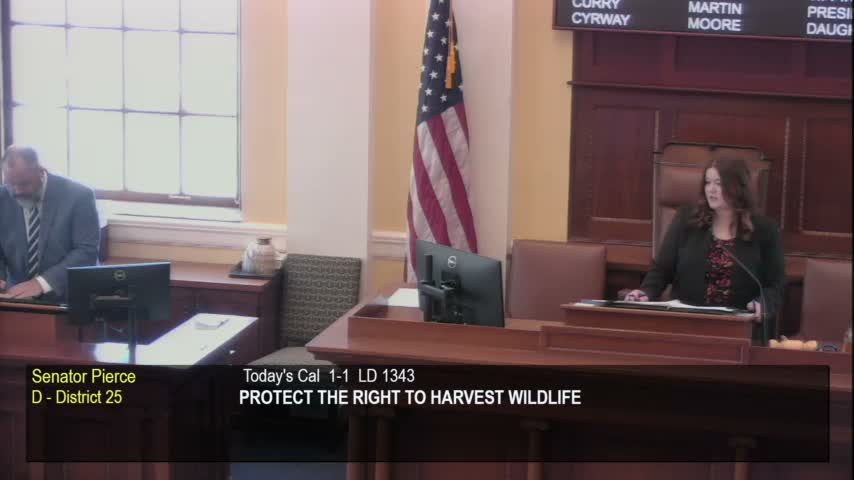
Summary
Senators traded sharp exchanges over whether to adopt a joint order honoring Charlie Kirk; an initial motion to recede and concur failed on a roll call, members later pressed procedural motions and a division, and the item was temporarily tabled to allow ceremonial business.
The Maine Senate debated and rejected a motion to adopt a joint order honoring Charlie Kirk during its March 17 session, then returned to the question after a recess for ceremonial business.
Senator Perce (Cumberland) moved that the Senate "recede and concur" with the joint order. Opponents pressed that the text and recent events made the recognition inappropriate; supporters said the chamber should recognize the life of a person who died. The first roll call on the recede-and-concur motion failed, with 14 senators voting in the affirmative and 17 in the negative.
Senator Stewart (Rustic) urged his colleagues to approve the measure, saying the other body had acted overwhelmingly and that the Senate should follow suit. He framed the issue as a matter of honoring a life even if one disagreed with the person's politics, telling colleagues he had seen the body honor figures he personally disagreed with in the past. "I didn't agree with the political positions that Melissa Hortman took, and yet we unanimously adopted a resolution recognizing her life," he said. "That shouldn't be different in this case."
Other senators voiced strong objections. Senator Balochi spoke at length about the honoree's public rhetoric and said he would not participate in honoring a person whose comments he described as racist and demeaning to groups of people. "I cannot honor somebody who is actively engaging in the type of rhetoric on a national level," he said. Senator Libby and Senator Bradstreet urged magnanimity in honoring the dead while also acknowledging disagreement.
After further procedure — including a request for a roll call and then a division — the chair announced a division result on the pending question that shifted the record: the chair stated 18 senators voted in the affirmative and 14 in the negative, and declared the motion to insist prevailed. The chair then directed leadership to approach, and the calendar was briefly set aside for scholarship recognition and other ceremonial business.
The debate highlighted a partisan divide over whether the chamber should issue formal recognition for a polarizing public figure. The matter was moved off the printed calendar at times to allow the Senate to honor visiting scholarship recipients; senators indicated the procedural posture would continue to be addressed later in the session.