
Senate advances grant program to expand preschool meals after debate on costs
Get AI-powered insights, summaries, and transcripts
Sign Up Free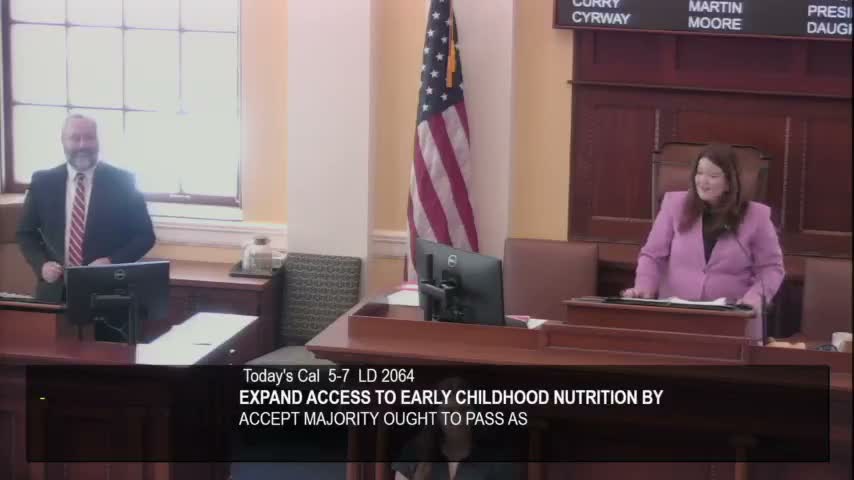
Summary
The Maine Senate voted to advance a measure creating a grant program to provide meals at public preschool partner sites, with supporters calling it an equity fix and opponents warning the fiscal note understates facility and insurance costs.
The Maine Senate on March 24 advanced a bill to expand access to meals for children in public preschool programs by establishing a state grant program for partnering sites, voting 23–12 to accept the majority "ought to pass" as amended. Proponents said the legislation closes inequities that leave preschoolers without federal meal benefits when they attend public preschool at nonrecognized partner sites.
Supporters, including the bill sponsor, described the proposal as a targeted grant program to help a small number of sites that currently cannot participate in federal meal programs. Senator Carney introduced student and community testimony earlier in the day and framed the bill as a move toward universal school meals for pre-K through grade 12.
Opponents pressed the Chamber on fiscal transparency and implementation details. Senator Libby said the bill’s fiscal note appears to undercount real costs, citing one center that reported losing roughly $11,000 annually providing meals and examples of facility upgrades that could cost tens of thousands of dollars. Libby highlighted additional costs she said were not clearly reflected in the fiscal estimate: refrigeration and food-handling upgrades, training, increased insurance liability, and potential shifts to school funding that could affect property taxes or tuition.
Senator Rafferty and other supporters said Maine’s high rate of child food insecurity—cited in floor remarks as about 1 in 5 children—makes the grant necessary to ensure children receive meals regardless of which public preschool they attend. The bill’s sponsor argued the program serves only about 400 students currently and that the grant structure is intended to be responsive to local partnerships between school departments and child‑care centers.
The Senate vote followed committee action to pass the bill as amended and to allow a second reading by title. With the majority report accepted, the measure will be engrossed and sent down for concurrence in the House.
Action and next steps: The Senate accepted the committee amended majority report and ordered the bill to be engrossed and sent for concurrence. Further implementation details — including the application process for grants, precise eligibility thresholds, and longer-term funding assumptions — will be determined as the bill moves through enrollment and any implementing guidance is prepared.