
Maine House advances broad data-privacy bill after heated debate over exemptions and business impact
Get AI-powered insights, summaries, and transcripts
Sign Up Free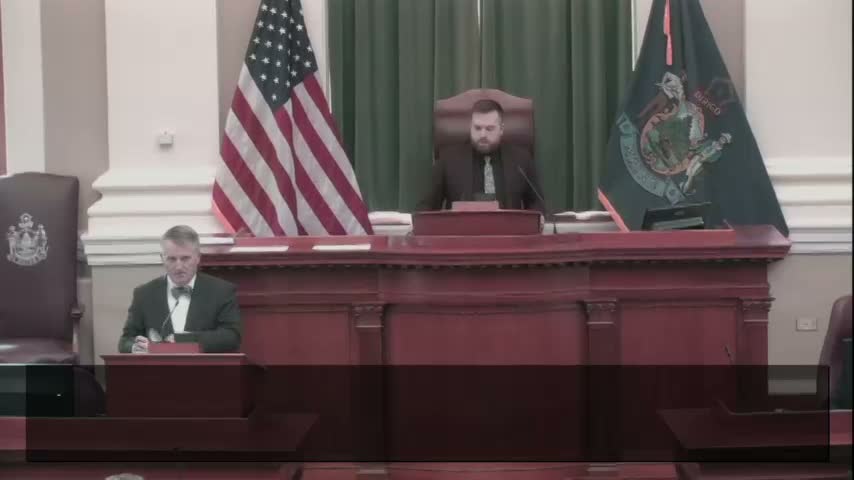
Summary
The House voted to pass as amended LD 18 22, the Maine Online Data Privacy Act, after hours of debate about carve-outs for nonprofits, political organizations and state entities. Supporters said it would curb dangerous data sales and protect minors; opponents warned it could harm small businesses that rely on targeted digital advertising.
The Maine House spent much of the afternoon debating LD 18 22, the Maine Online Data Privacy Act, including multiple late-filed amendments and a procedural sequence to recede and adopt revised language. Lawmakers sharply disagreed over the scope of exemptions, the bill's Maryland-style data-minimization approach, and the potential economic effects on small businesses and tourism-related organizations.
Representative Moonen told colleagues the bill would "prohibit the sale of minors' data and provide important protections for them," arguing that prohibiting precise geolocation sales and requiring limits on data collection will shield vulnerable Mainers from predatory uses of personal data.
Opponents, including a wide swath of business groups and chambers, said the bill as amended still contains carve-outs that create double standards and that restricting cross-site targeted advertising could disadvantage Maine businesses in regional markets. Representative Henderson and others read letters from business and arts groups warning of marketing harms for small and regional enterprises and sports teams.
On the floor the House adopted House Amendment B (HDash906) to committee amendment A, and after roll-call votes accepted the committee amendment as amended; members then ordered the bill passed to be engrossed as amended in non-concurrence and sent to the Senate for further action. Sponsors said the amendments preserve targeted advertising in most first-party contexts while preventing sales of sensitive categories of personal data.
The bill will proceed to the Senate; proponents urged continuing work to refine exemptions and implementation details to limit unintended harm to small businesses that rely on digital marketing.
Sources: extensive floor debate and roll-call votes during the LD 18 22 sequence.