
Interim Fire Chief Lasky outlines call volume, staffing needs and a pre-hospital blood program
Get AI-powered insights, summaries, and transcripts
Sign Up Free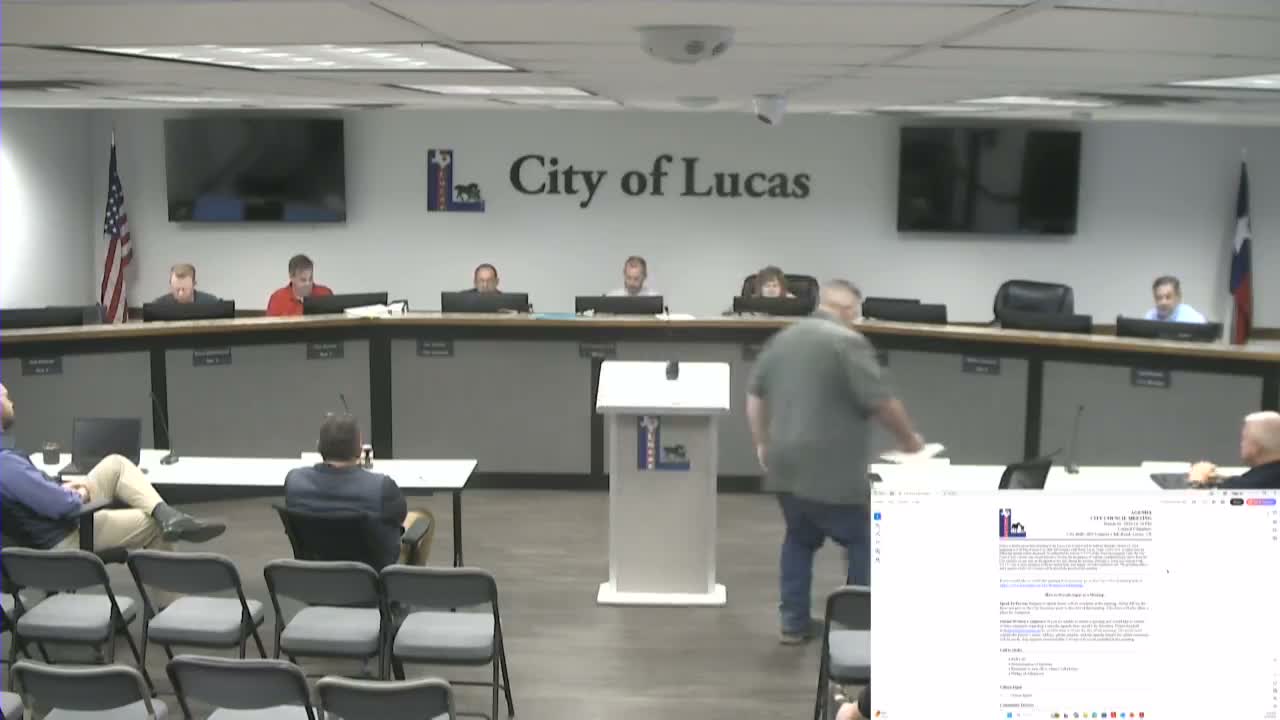
Summary
Interim Fire Chief Lasky reported 2025 call totals and 2026 activity, described mutual aid and dispatch procedures, urged additional staffing to meet 'two-in/two-out' safety standards, and announced a partnership to carry blood on ambulances with Medical City McKinney.
Interim Fire Chief Lasky delivered a detailed update to the Lucas City Council on March 19, reporting last year’s and year-to-date call volumes, explaining mutual-aid arrangements, and outlining internal changes and new programs intended to improve patient care and firefighter safety.
Chief Lasky said the department closed 2025 with 396 fire responses, 535 EMS/medical responses and a total of 1,033 incidents. For 2026 to date he reported 56 fire responses and 105 EMS responses (209 total), and explained the regional, automatic-aid model the department uses: dispatch sends the closest available units and agencies routinely assist one another. He said some calls that dispatch multiple units are canceled before units leave the station, which affects out-of-town/assistance tallies.
On staffing and operations, Chief Lasky described changes made since his November appointment as interim chief, including a shift to a 48/96 schedule that leadership sees as a recruiting and mental-health benefit, and said the department runs three shifts of five personnel (a captain, a driver/engineer and three firefighter-paramedics). He emphasized a short-term staffing need: adding an additional firefighter to ensure compliance with two-in/two-out tasking and to avoid situations where the department would lack sufficient personnel to make an interior attack.
Chief Lasky also highlighted apparatus and training developments: a new ambulance entering service (to replace an older unit and create a reserve ambulance), a new pumper nearing completion, investments in training and protective clothing, and the establishment of an accessory building for apparatus storage and hands-on training.
A major patient-care initiative announced by the chief is a pre-hospital blood program in partnership with Medical City McKinney. "We're gonna be carrying blood on our ambulance," he said, and described the program as rare nationally (he stated less than 2% of EMS providers carry blood). Chief Lasky said the program should improve survival in severe bleeding incidents and that the department will publicly roll out the initiative after April 1.
Council members asked clarifying questions about how calls are recorded in the CAD/dispatch system (fire vs. medical classification) and about the relationship between fire and EMS run reporting; Chief Lasky explained the distinction and the record-keeping transition from NIFRS to NERIS. He praised the department for a recent compliance survey with no deficiencies and recognized personnel awards and volunteer support. The council thanked the chief for his presentation and for validating departmental direction as they consider staffing and facility planning in future budgets.