Get Full Government Meeting Transcripts, Videos, & Alerts Forever!
Get email alerts on the Traffic Enforcement topic
No spam. Unsubscribe anytime.
Supporters and local officials urge caution, oversight and local choice on traffic-photo enforcement bill
Summary
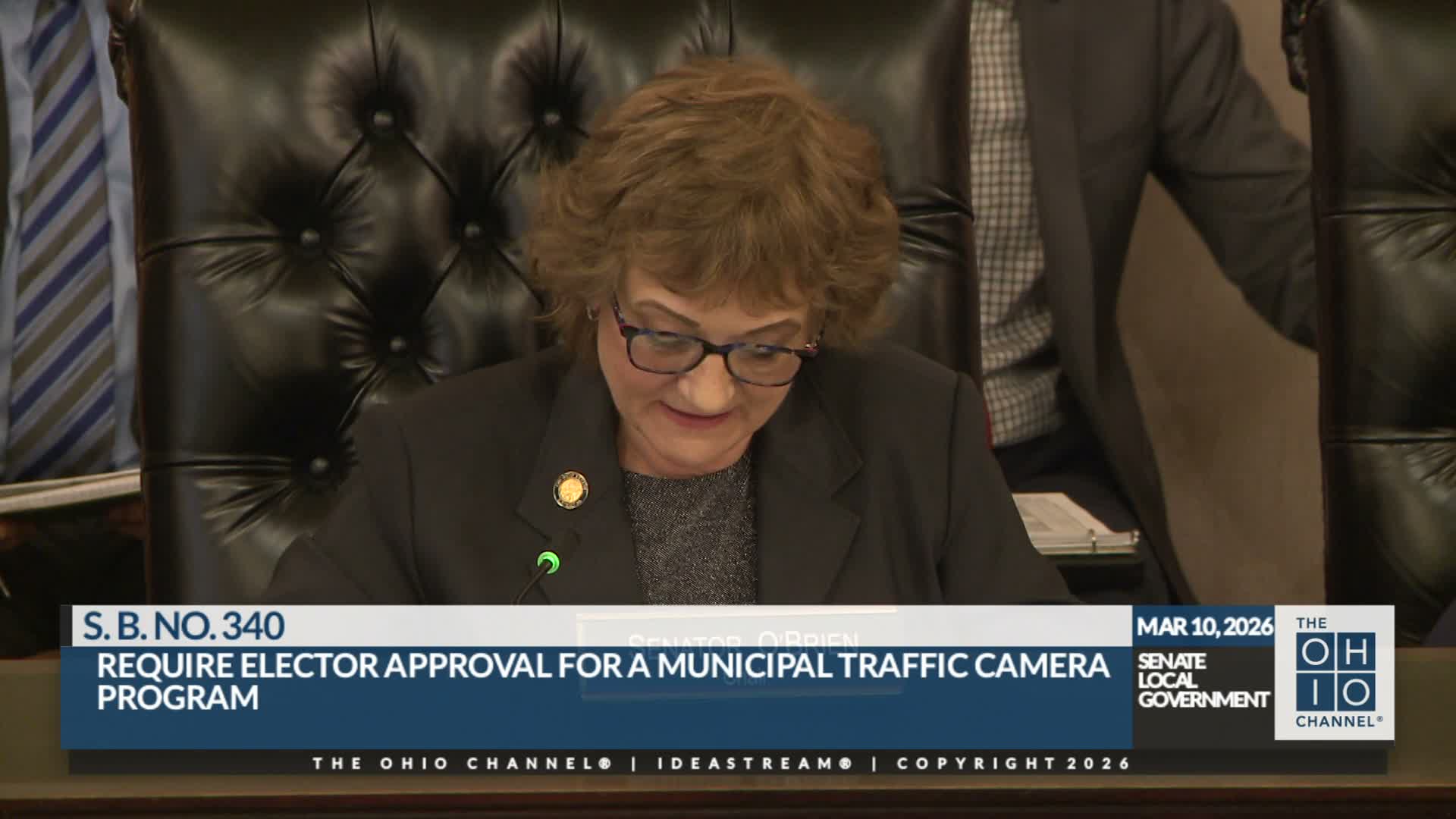
At a Senate Local Government Committee hearing on Senate Bill 340, supporters said automated enforcement can reduce crashes and protect officers, while opponents and local-government representatives raised concerns about voter approval requirements, local funding cuts and parity for townships; the committee recorded testimony and took no final vote.
Sharon Montgomery told the Senate Local Government Committee that automated traffic-enforcement cameras can monitor dangerous sites continuously and reduce crashes without exposing peace officers to roadside risks. "Cameras do not put peace officers in harm's way," Montgomery said, arguing cameras also avoid selective enforcement based on appearance or age and citing federal guidance recommending automated enforcement to reduce speeding-related crashes.
Patricia Kovacs, speaking for the Bicycle Federation, said her organization promotes traffic safety but opposed Senate Bill 340 as written. Kovacs questioned why voters would need to approve traffic-control devices when engineers and law enforcement commonly recommend changes such as roundabouts or pedestrian beacons that are decided at council hearings. She objected to provisions that would cut local funding for jurisdictions that implement camera programs and cited Columbus’s experience, which she said showed a 28 percent decrease in fatal and injury right-angle crashes after camera use in monitored intersections.
Kyle Brooks, Director of Governmental Affairs for the Ohio Township Association, asked the committee to ensure parity for townships, noting prior budget compromises allowed some townships to use cameras under conditions. Brooks suggested townships should have the same option municipalities have under the legislation to put the question on the ballot and, where cameras are used, to receive the same adjustments to local government fund distributions.
Witnesses discussed implementation and oversight issues, including vendor selection, camera activation thresholds and public-education efforts; responses from committee members sought to clarify how many townships might place the question on ballots. The committee recorded additional written testimony and held the item as the third hearing on Senate Bill 340; no vote was taken at the session.