Get Full Government Meeting Transcripts, Videos, & Alerts Forever!
Get email alerts on the Utilities Billing topic
No spam. Unsubscribe anytime.
Small landlord and water agencies clash over proposed changes to tenant utility billing in SB118
Summary
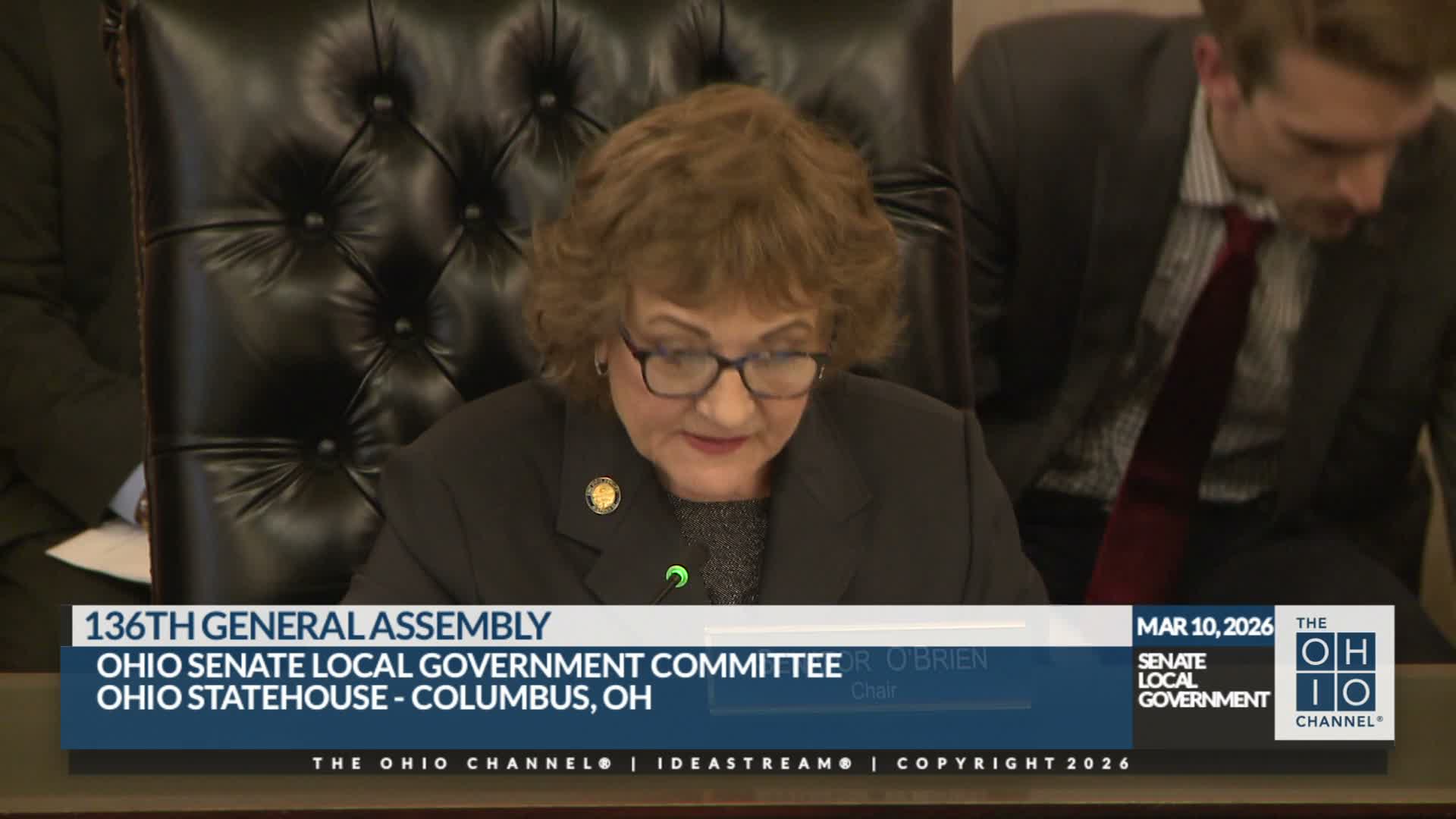
At a Senate Local Government Committee hearing, small housing provider Tisha Lee described unpaid tenant water liens that were certified as property tax assessments and urged reforms; water-system representatives warned that the bill in its current form could be unworkable and raise rates for millions and proposed mutual-notification and capped-liability compromises.
Tisha Lee, a small housing provider and community developer from Columbus, told the Senate Local Government Committee that current water utility assessment rules sometimes leave property owners responsible for unpaid tenant water and sewer bills, which can be certified as special assessments on property taxes. Lee said tenants left two properties with unpaid utility bills, including one instance that produced a bill exceeding $1,000, and that she discovered the charge only after it was certified to her tax bill. "I can't afford to feed my own children," Lee said, describing how unexpected assessments force her to choose between household bills and covering others' debts.
Lee asked lawmakers for reforms to how water and wastewater utilities bill customers: bill utility service directly to the user when possible; prohibit automatic tax assessments against property owners for tenant charges; establish tenant accountability measures for defaults; and create an appeal process before any unpaid charges are certified to property taxes. She framed the changes as protecting small housing providers who supply affordable housing and said the current approach discourages participation in housing programs.
Representing the Association of Ohio Drinking Water Agencies and the Association of Ohio Metropolitan Wastewater Agencies, Tyler Converse testified in opposition to the bill as written. Converse, superintendent of the City of Canton Water Department, said municipal utilities are generally set up with contracts with landlords and not individual tenants, and many systems lack the staffing, billing systems or submetering needed to bill tenants directly. He warned the bill’s requirements could force utilities to add staff and upgrade software, driving a state-wide rate increase he estimated at roughly 3–4 percent. "A vote to pass this sub bill in its current form is a vote to needlessly raise water and sewer rates for over 5,000,000 Ohioans," Converse said, urging further work with stakeholders.
Converse proposed several compromises the utilities associations have offered in stakeholder meetings: a legal requirement for mutual notification so landlords are informed promptly when tenants become delinquent, and a cap on landlord liability for single-family rental properties (for example a multiple of average monthly bills such as six months), with amounts above the cap remaining the responsibility of the water system. He said such measures would protect landlords from catastrophic surprise bills while avoiding large structural changes to municipal billing.
Committee members pressed both witnesses on implementation details. Lawmakers asked how property liens were placed without owner notification, whether liens survive sheriff sales or transfer to new owners, and how multifamily properties with a single meter could be handled. Converse said he could not answer every technical question on the spot and repeated that many municipal systems lack submetering; he said replumbing or installing submeters in multifamily buildings would be costly and that funding and legal questions remain.
The committee concluded the fifth hearing on Substitute Senate Bill 118 without taking a vote and recorded additional written testimony for members to review. Committee staff noted the role on the measure would remain open; legislators and stakeholders signaled an interest in further negotiation on mutual-notification language and liability caps before any final action.