Get Full Government Meeting Transcripts, Videos, & Alerts Forever!
Carrollton honors volunteers after first confirmed 4‑minute community cardiac‑arrest save in Texas
Summary
Carrollton presented certificates and challenge coins to volunteers and partner staff after a September cardiac‑arrest save by Avive/Avaya '4‑Minute Community' care‑team members; the program has responded to hundreds of alerts and increased AED‑equipped responses in 2025.
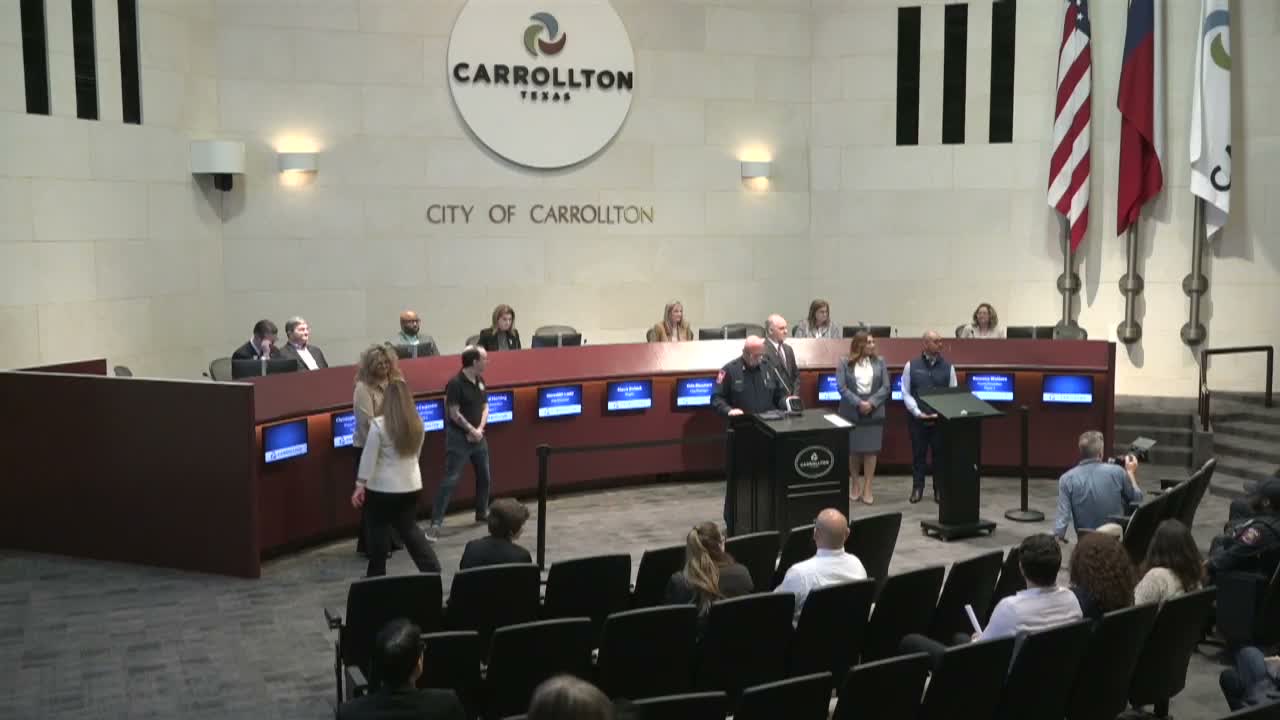
Carrollton officials recognized volunteers and partners on Monday after the city's Avive (4‑Minute Community) program recorded a successful cardiac‑arrest save in September.
Fire Chief Michael Thompson described the September 27 incident in which neighbors alerted by the Avive system arrived with AEDs, performed high‑quality CPR and helped stabilize a patient who was later discharged home without neurological deficits: "It takes a small army to…
Already have an account? Log in
Subscribe to keep reading
Unlock the rest of this article — and every article on Citizen Portal.
- Unlimited articles
- AI-powered breakdowns of topics, speakers, decisions, and budgets
- Instant alerts when your location has a new meeting
- Follow topics and more locations
- 1,000 AI Insights / month, plus AI Chat