Get Full Government Meeting Transcripts, Videos, & Alerts Forever!
Get email alerts on the Strategic Plan topic
No spam. Unsubscribe anytime.
Northlake finishes strategic-plan workshop, affirms goals on safety, taxes and growth
Summary
At a one-hour special meeting, the NorthlakeTown Council and consultant Alan Sims finalized language in a draft strategic plan that emphasizes visible police presence and community outreach, sustaining a low property tax rate, prioritizing town infrastructure and clarifying annexation language; staff will return action plans and metrics to council.
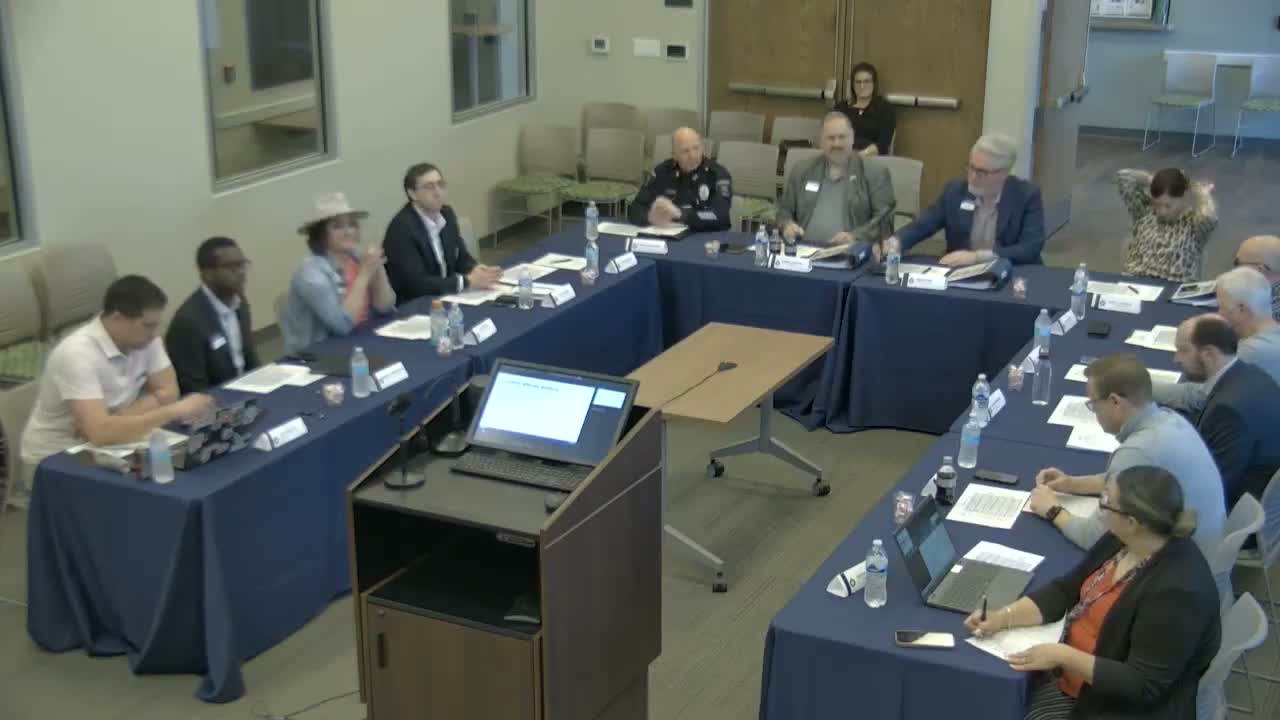
A special NorthlakeTown Council workshop concluded with the council and consultant Alan Sims refining a strategic plan that highlights police visibility and community engagement, a goal to sustain the town's low property tax rate, targeted infrastructure projects to mitigate traffic, and a renewed emphasis on economic development and cultural initiatives. The meeting began at 4:00 p.m. and adjourned at 5:00 p.m.
Alan Sims, the facilitator who described his experience as a former city manager in Cedar Hill, said the purpose of the session was to translate council priorities into clear actions and to specify "the what, the when, the where, the why and the who" for each goal so staff can report back with measurable results. "Values are the set of ethics and principles that govern an organization's actions and serve as a foundation for the organizational future," Sims told the council while reviewing the plan's values of "excellence, integrity, innovation, and family-centered" community goals.
On public safety, council members agreed to strengthen the draft goal for "police presence" by explicitly adding outreach and community engagement. One council member said the intent was that residents should be able to "get to me when I call them" and see officers "actively in the neighborhood," while another added, "I think it builds trust," describing community engagement as a separate but complementary metric staff should track.
The council reviewed a draft objective to "sustain a low property tax rate." Members debated the meaning of "low" and emphasized the need to balance affordability with the town's service demands. Councilors directed staff to return with a salary-survey–based action plan to keep pay competitive and to report projected staffing levels tied to population and service demand; Sims warned that public-safety salary trends often outpace population growth.
On infrastructure, the plan retains prioritization of town-owned road projects and regional advocacy on corridors outside the town's control. Councilors stressed the importance of keeping town roads well maintained so the town can credibly press county and state partners on larger projects. Staff said architects are preparing space and budget estimates for town facilities, including possible town hall and police resources, which will guide timing in future capital discussions.
The council also debated language about municipal boundaries and extraterritorial jurisdiction (ETJ). One council member objected to wording that read "strategically annexing and incorporating ETJ," arguing it could be perceived as heavy-handed. The council asked staff to reword the section to emphasize that annexation is voluntary and to consider terms such as "encouraging annexation" or "encouraging voluntary annexation," while retaining the town's intent to pursue opportunities when property owners seek to develop.
Economic development and revenue diversification were also emphasized. Councilors agreed to pursue sales-tax–generating uses—restaurants, retail and family-oriented entertainment—near the sports and entertainment corridor and to use incentive programs to attract those businesses. Members directed staff to continue diversifying revenue (sales tax, impact fees, franchise fees, municipal development districts) rather than relying solely on residential property tax.
A new addition to the draft was a goal to "promote cultural initiatives that reflect Northlake's historic identity," with councilors suggesting low-cost, town-sponsored and neighborhood-led events (Fourth of July, tree lighting, small festivals) and partnerships with the Star Center and developers to reinforce a family-centered town brand.
The council did not take a formal vote to adopt the plan at the special meeting; members expressed general agreement on revised language and asked staff to return with an action plan, timeframes, and measurable metrics for council review. The meeting closed at 5:00 p.m.
Speakers quoted or paraphrased in this article are identified by the names and roles used in the meeting record.