
City outlines Diversity Advantage Plan 2035 and parks-specific equity measures
Get AI-powered insights, summaries, and transcripts
Sign Up Free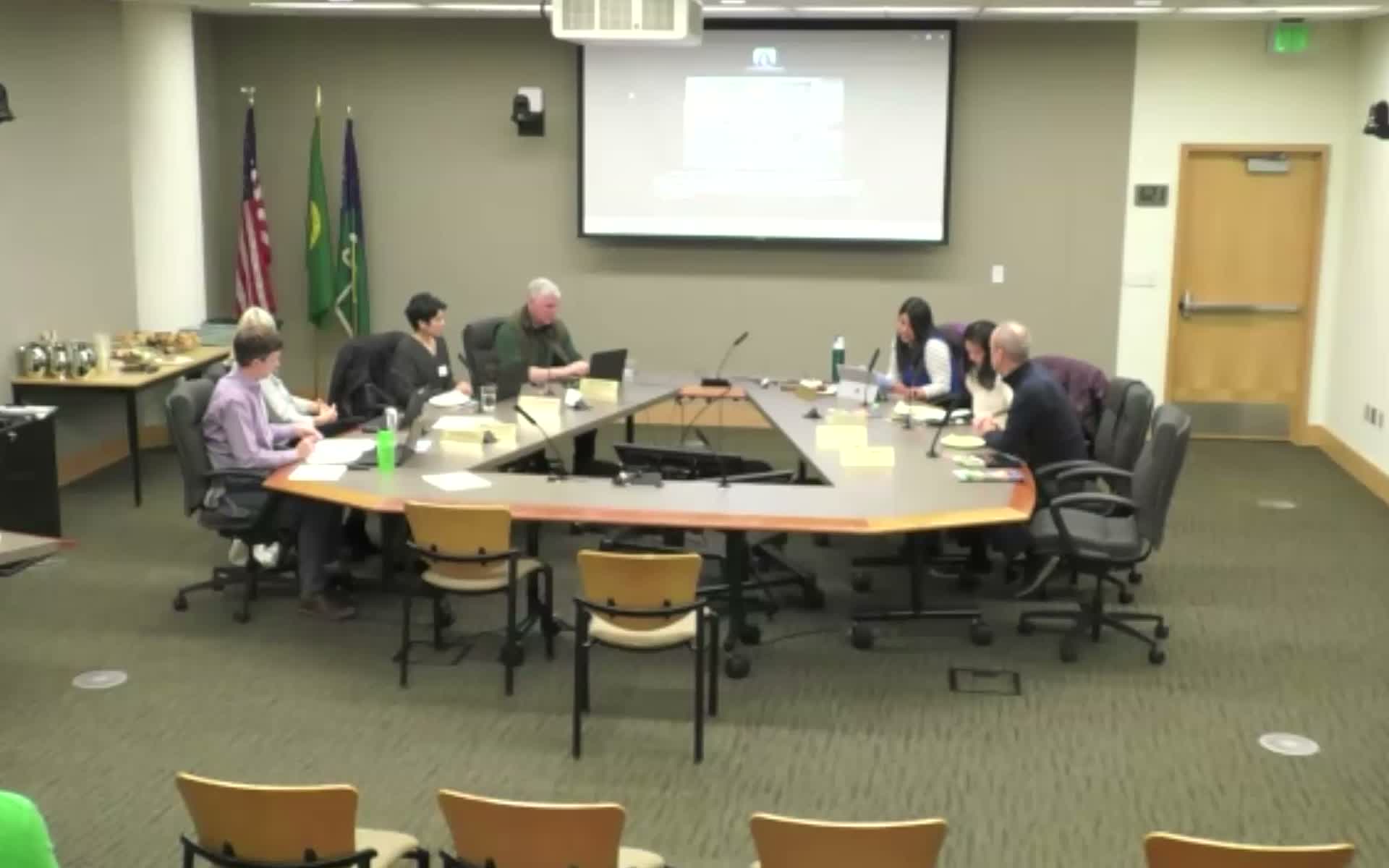
Summary
City DEI staff told the Parks and Community Services Board the council-adopted Diversity Advantage Plan 2035 includes 41 equity objectives and more than 100 activities; the city will publish internal dashboards by June 30 and public dashboards by Sept. 30 to track Key Equity Indicators (KEIs).
Sarah Boyle, a citywide diversity, equity and inclusion (DEI) administrator, told the Parks and Community Services Board on Wednesday that the City of Bellevue's Diversity Advantage Plan 2035 is a council-adopted roadmap that sets 41 long-term "equity objectives" and ties departmental work to measurable outcomes.
"There are 41 what we call, equity objectives, which are those long term objectives that we are trying to achieve," Boyle said, and she framed the plan as an update to the city's 2014 effort. Boyle cited the city's diverse population as part of the plan's rationale: "Over 60% of our population identifies as a race other than white," she said, and added that roughly 40% of residents were born outside the United States and about half speak a language other than English at home.
Why it matters: Boyle and parks DEI program administrator Doug Rayford told board members the plan is not just a list of programs but is intended to change how the city measures impact. The city will use Key Equity Indicators (KEIs) to focus on outcomes rather than raw counts and will build a centralized dashboard to report progress.
Boyle said departments identified more than 100 activities to be implemented over the next three years and that the city will complete internal dashboards for staff by June 30 and publish external dashboards for the public by Sept. 30. "We are creating a centralized tracking and reporting tool," she said.
What parks will do: Doug Rayford described how parks will map the citywide objectives to department work through short-term equity plan activities (STEP). He gave examples including renovating parks to remove barriers and making programs more culturally responsive. "We have a Barriers team," Rayford said, describing a multi-staff group that catalogs obstacles in recreation and service delivery and proposes fixes; KEIs will then help evaluate whether those changes produce impact.
Board questions and concerns: Members queried the geographic and demographic granularity of the indicators and how small or hard-to-reach groups would be served. Boyle said some nationally or regionally derived figures (for example, a metro-area estimate of LGBTQ prevalence) lack city-level granularity and that KEIs are designed to spur follow-up outreach and community engagement rather than provide all answers on their own. "A number alone doesn't tell the whole story," she said, noting the need for disaggregated data and complementary human outreach.
Examples of prior community-driven changes: Boyle and Rayford pointed to recent policy steps developed after community input, including the city's community court pilot, the creation of a citywide community engagement team, and a budget equity toolkit that informed the last budget cycle. Parks staff also said they had expanded scholarship rules for recreation programs to increase access.
Next steps and oversight: The presenters emphasized that KEIs are generally long-term, slow-moving measures and that the dashboards will include narrative context to explain scope and the city's role in affecting each measure. The board was asked to consider how these metrics should inform upcoming work on the parks and open-space system plan and the recreation program plan.
The presentation concluded with staff saying they will return with implementation details and that board members may follow up by email for questions not resolved at the meeting.