Get Full Government Meeting Transcripts, Videos, & Alerts Forever!
Get email alerts on the HB 646 topic
No spam. Unsubscribe anytime.
Residents and stakeholders urge data center study, call for transparency and protections
Summary
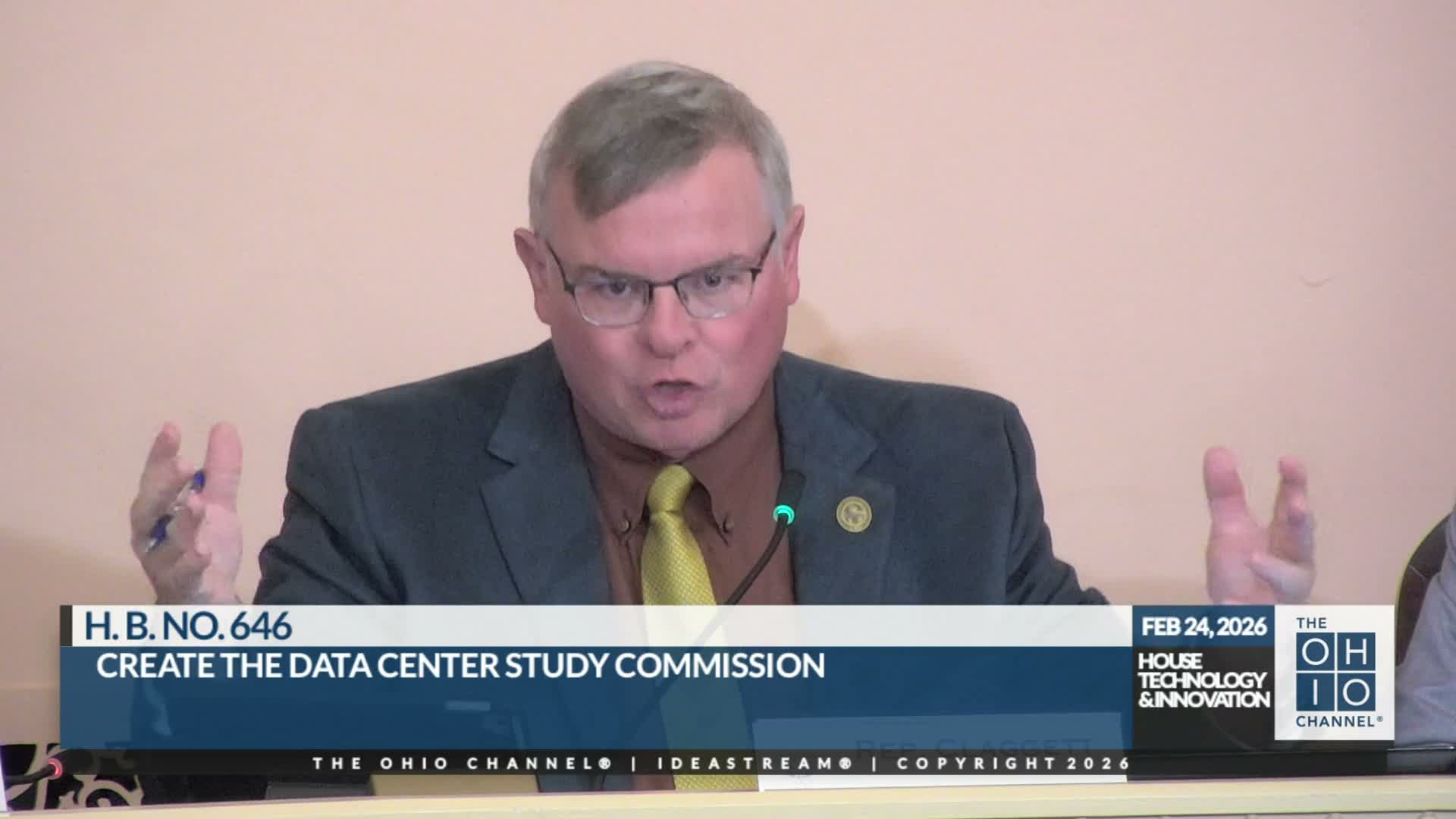
House Bill 646 would stand up a study commission to examine data center impacts including water use, grid effects, land use, environmental and community concerns; witnesses ranged from industry and chambers citing economic benefits to residents and farmers raising concerns about water, noise, EMF, land loss, and calls for moratoriums.
The committee heard extensive testimony on House Bill 646, which would create a time‑limited study commission to examine the proliferation of data centers in Ohio.
Proponents including the Buckeye Institute and the Ohio Chamber of Commerce argued for evidence‑based policy. Greg Lawson (Buckeye Institute) emphasized national‑security and technology‑competition stakes; Rick Carfagna (Ohio Chamber) described the industry's economic contribution, citing research that estimated roughly 95,200 jobs supported in 2024 and approximately $1 billion in combined state and local tax revenue, and urged inclusion of industry voices in the commission.
Agricultural and rural voices urged the commission study environmental and land‑use impacts. Evan Calicoat (Ohio Farm Bureau) flagged water use, environmental discharge permits, and the potential acreage of hyper‑scale projects, noting projects could occupy several hundred to over 1,000 acres and that water and farmland preservation are central concerns for members.
Multiple local residents criticized the pace and transparency of approvals for proposed hyperscale projects. Barry Blankenship (Woodsdale & Trenton Environmental Resistance Group) described a proposed 1,000,000‑square‑foot project in Trenton near homes and a primary school and raised concerns about water draw from the Great Miami Buried Aquifer, traffic, emergency response, and fire risk; he said residents learned about the project only after land sale and asked for more transparency.
Other witnesses urged stronger protections or a moratorium while studies proceed. Kim Georgetown urged a statewide moratorium of at least 36 months and warned of noise, lighting, EMF concerns, and the economic consequences of tax incentives that she said had been granted to data centers. Kara Hendrick and Nikki Gerber described local ecological and quality‑of‑life impacts and asked the committee to ensure future regulatory clarity and protection of farmland and recreation assets.
Supporters of the commission said a study could provide empirical data, convene diverse perspectives, and avoid ad hoc local decisions. Several witnesses and committee members discussed the need to balance economic benefits with environmental protection and local public‑process norms. The committee concluded the hearing after receiving numerous written and in‑person testimonies.