Get Full Government Meeting Transcripts, Videos, & Alerts Forever!
Get email alerts on the Insurance Verification topic
No spam. Unsubscribe anytime.
Sponsors outline plan for real-time auto insurance verification system to curb uninsured and 'fake LLC' registrations
Summary
Representative Abrams and joint sponsor Jack Daniels presented House Bill 678 to create a BMV‑run real‑time auto insurance verification system; sponsors said it would allow law enforcement and registrars to verify coverage, send notices for lapses, and (after a pilot) permit suspension of registration items for confirmed noncompliance. Lawmakers asked about false positives, appeals, funding (a proposed $40 'blackout' plate), and privacy safeguards.
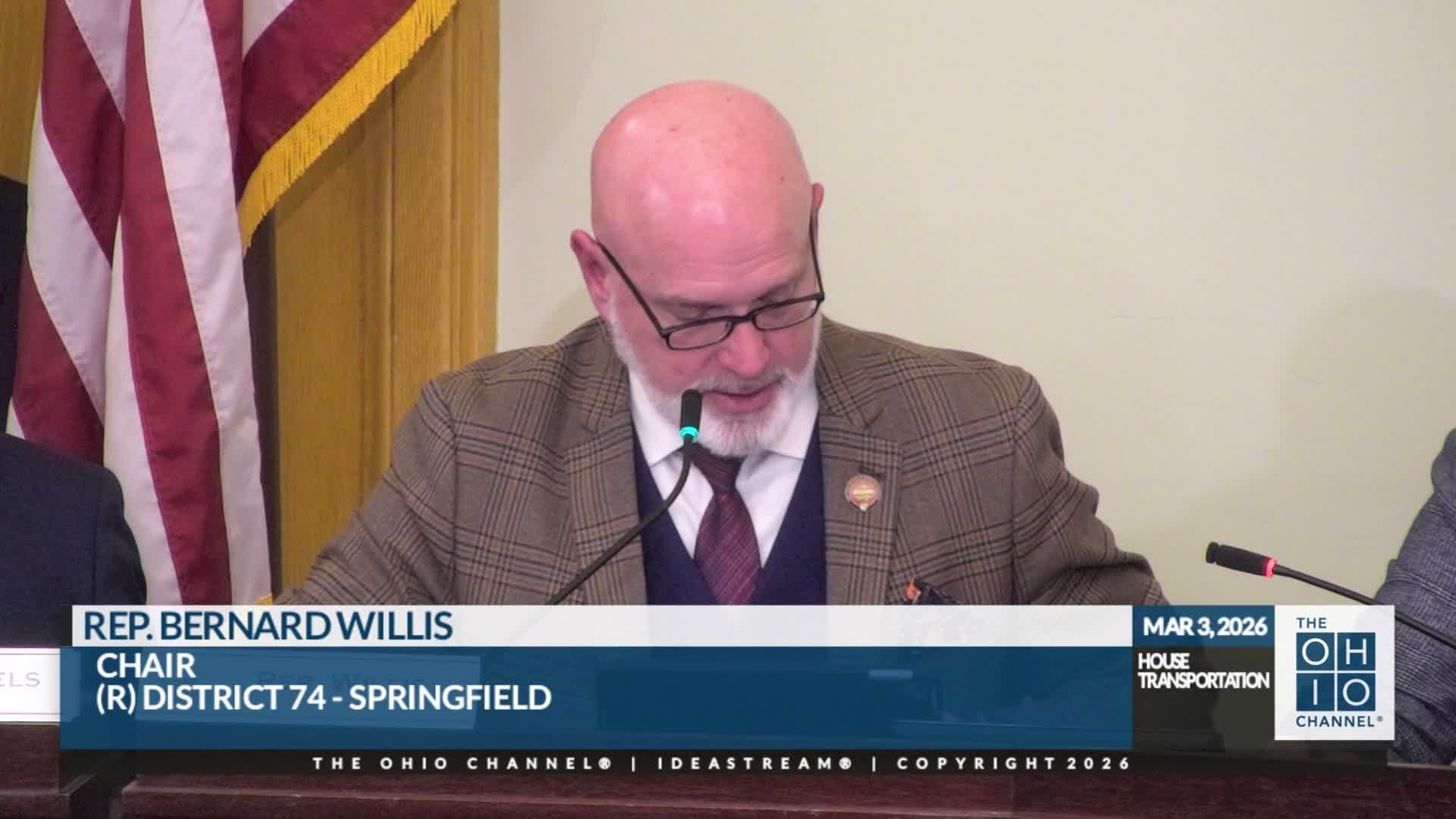
Representative Abrams presented detailed sponsor testimony on House Bill 678, which would establish an online Ohio Insurance Verification System run by the Bureau of Motor Vehicles (BMV) to allow real‑time confirmation of a vehicle’s insurance status.
Abrams described recurring enforcement problems including vehicles registered to so‑called "fake LLCs" and hit‑and‑runs where victims have no insurance recourse. The bill would require cooperation between insurers and the registrar, enable the registrar to verify added, dropped or changed financial responsibility data using insurer feeds and VIN/policy information, and require notification to individuals electronically or by mail if the system indicates no coverage so the person can present proof before penalties are applied.
Sponsors emphasized the measure does not change coverage requirements and does not eliminate the ability to show physical proof of insurance: "It is important to reiterate that this system does not mean that you no longer have to carry proof with you," Abrams said. The bill would also allow registrars or deputy registrars to refuse registration renewals when proof is not verified, and create authority to impound certificates of license, registration, and plates in certain verified-lapse cases.
Jack Daniels, the joint sponsor, described technical and administrative details, saying the bill authorizes electronic verification during registration and renewal, includes a pilot and delayed enforcement phase, and does not change coverage minimums. Committee members asked detailed follow‑ups about safeguards and appeals. Ranking member Grimm asked how the system would prevent wrongful flags of insured drivers and what appeal process would be available; sponsors said existing judicial remedies remain (an officer can write a citation that can be resolved in court) and that the system provides an additional resource to confirm coverage.
Representative Newman suggested funding options such as a specialty "blackout" license plate; Abrams said a $40 fee (with $10 administrative) was proposed as a potential funder of the program and cited Indiana as an example where a specialty plate offsets costs. Representative McLean and others asked the BMV registrar to provide cost estimates at a subsequent hearing. Sponsors said states including Georgia, Kentucky, Indiana and others already use comparable models and that the bill would follow the Insurance Industry Committee on Motor Vehicle Administration (IICMVA) model.
No formal vote occurred; sponsors said outside stakeholders (insurance agents, BMV, Ohio State Highway Patrol, Department of Public Safety) will offer further proponent testimony in future committee sessions.