Get Full Government Meeting Transcripts, Videos, & Alerts Forever!
Get email alerts on the Rideshare Regulation topic
No spam. Unsubscribe anytime.
Panel hears bill limiting TNC vicarious liability; members press sponsors on assault cases
Summary
Sponsors told the House Transportation Committee HB604 would align rideshare platforms with independent-contractor law and limit vicarious liability for their digital networks; Ranking Member Grimm pressed sponsors about whether the bill could hinder civil suits in sexual-assault cases, citing an Arizona verdict.
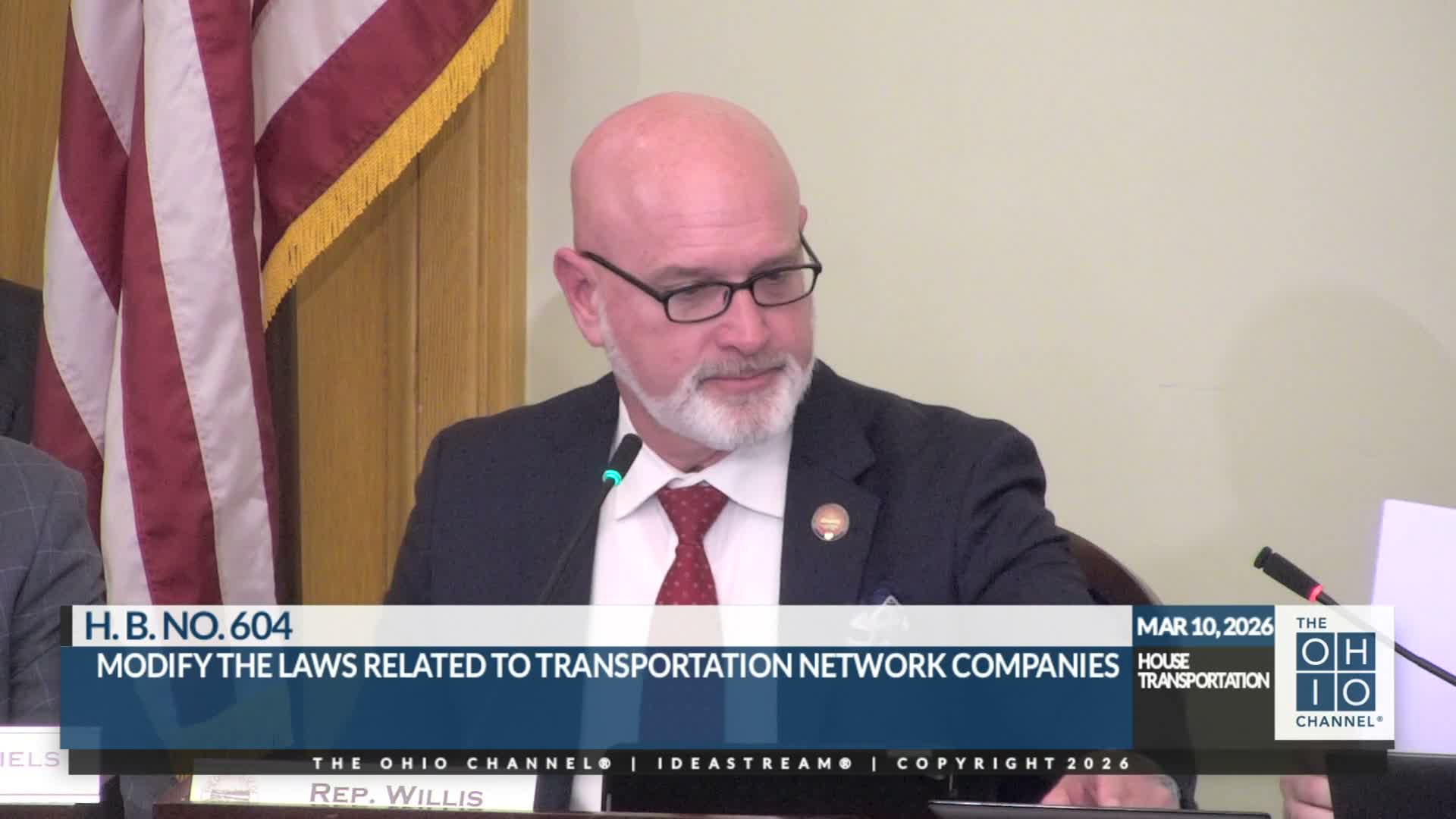
Sponsors of House Bill 604 told the House Transportation Committee on March 10 the bill would clarify legal obligations for transportation network companies (TNCs) and generally exempt a TNC’s digital network from product-liability and vicarious-liability claims tied to drivers classified as independent contractors.
"House bill 604 exempts a TNC's digital network and platform to facilitate delivery services from the product's liability law," a sponsor told the committee, saying the bill preserves existing product-liability and vicarious-liability concepts but narrows vicarious liability when the TNC "commits no criminal wrongdoing of its own and follows all statutory obligations already in Ohio law." The sponsors said TNCs already maintain high per-trip insurance (cited in testimony as $1,000,000 per trip) and that most rides end without incident.
Ranking Member Grimm pressed the sponsors about civil liability in serious criminal cases. Citing recent litigation, Grimm noted a case in Arizona where, he said, "an Uber was actually ordered to pay 8 and a half million dollars over a passenger who was raped by a driver," and asked whether HB604 could limit victims’ ability to bring claims in comparable cases. Grimm said he was "very concerned that this bill would hinder cases like this because, again, this was a really huge case in Arizona." The sponsor replied that the bill leaves liability in place when the TNC directs or requires criminal conduct, and that the bill applies only when the TNC has met the obligations specified in the bill (testimony referenced bill lines in the 240–242 range).
Committee members asked for follow-up materials about background checks and the statutory lines that would preserve a pathway to damages when a TNC or its platform plays an active or criminal role. Sponsors offered to provide line-by-line references and other supporting documents for the committee’s consideration.
The hearing did not include a committee vote; the bill was recorded as having had its first hearing. The committee requested additional information and said it would consider follow-up questions.