Get Full Government Meeting Transcripts, Videos, & Alerts Forever!
Get email alerts on the Open Government topic
No spam. Unsubscribe anytime.
ACLU, privacy advocates and innocence project warn bill would limit public records access and create paywalls
Summary
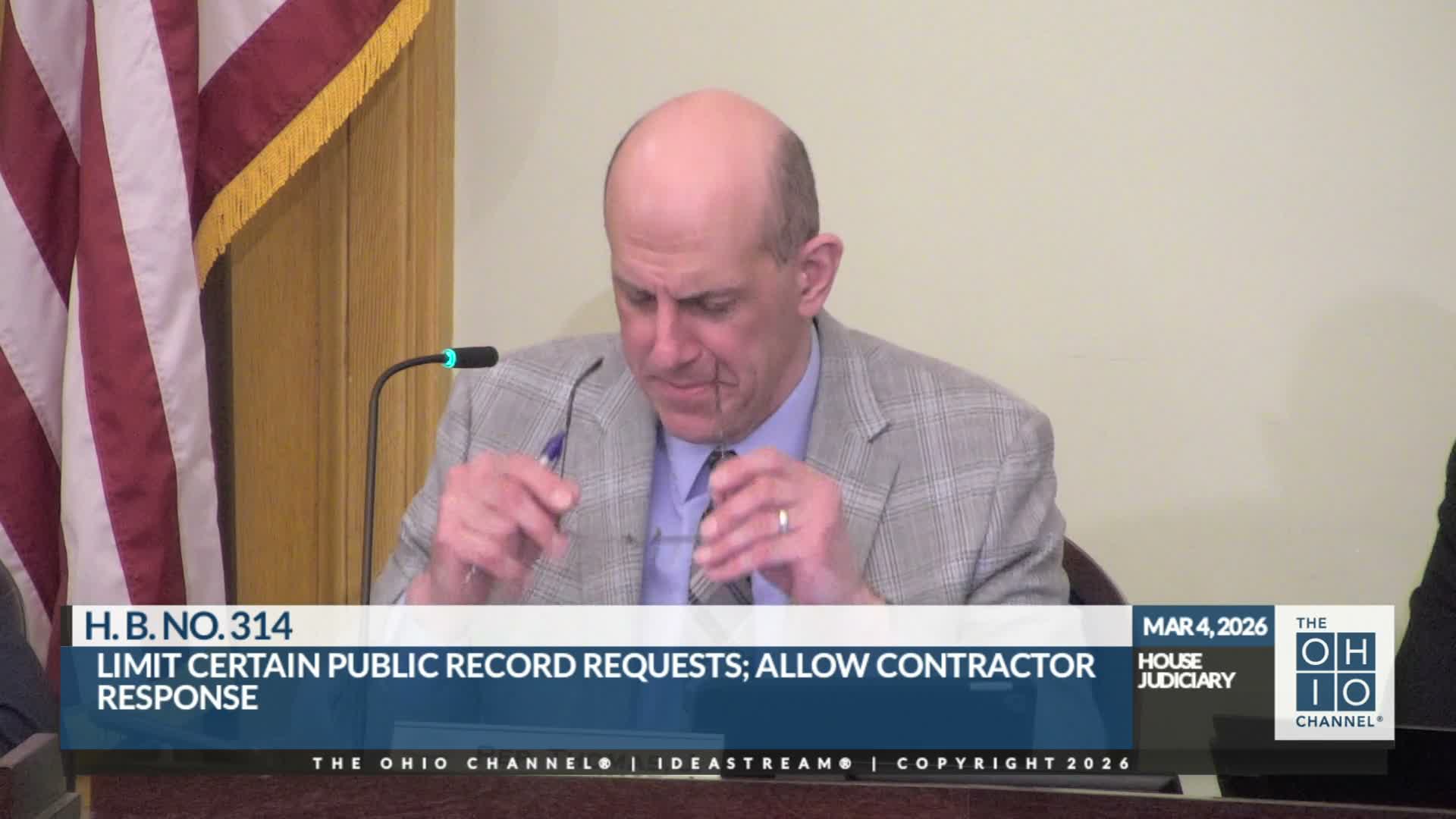
Opponents told the House Judiciary Committee that HB 314's provisions letting public bodies label "vexatious" requesters, hire private contractors to fulfill voluminous requests, and charge requesters could chill transparency, burden activists and innocence organizations, and allow officials to block access to records.
Several civil-rights and public-interest witnesses told the House Judiciary Committee they oppose House Bill 314, warning that the bill's definitions and contractor-payment provisions would shrink the public's access to government records.
"HB 314 will impact far more people, far more requesters, and will dramatically shrink the ability of Ohioans to learn and know more about how their government and elected officials perform and act," Gary Daniels of the ACLU of Ohio told the committee, arguing provisions that allow public offices to seek court orders against requesters labeled "vexatious" are subjective and could be used to shut out critics. Daniels testified the bill would allow offices to hire private third parties to process voluminous requests and pass those costs to requesters, creating a paywall that many citizens and advocacy groups could not afford.
Sarah Cherry, former House legal counsel and founder of Protect Ohio Women at Work, said the bill is "radical" and warned it could prevent important records from emerging in high-profile cases. She cited records that previously shed light on a criminal investigation into a lawmaker and connections between institutions and Jeffrey Epstein as examples of why access matters.
Kevin Sullivan, a law student supervised by the Ohio Innocence Project, told the committee the contractor/pay provision could impede post-conviction investigations: innocence work often requires multiple, good-faith requests over years and cannot rely on other discovery mechanisms; OIP urged amendments to exclude innocence projects, public defenders, pro se litigants and state universities from contractor payment requirements.
Committee members pressed witnesses on possible compromises: caps on outsourcing fees, allowing in-house hourly cost recoupment, or stakeholder meetings to refine language. Witnesses urged care so that the Public Records Act is not turned into a financial barrier. The committee concluded the third hearing after hearing multiple opponents and some written submissions.