Get Full Government Meeting Transcripts, Videos, & Alerts Forever!
Get email alerts on the Guardianship Reform topic
No spam. Unsubscribe anytime.
Probate judges and advocates back bill to modernize guardianship rules and expand qualified evaluators
Summary
Proponents including a probate judge, the Ohio State Bar Association, and nonprofit guardianship providers told the committee HB 491 would codify Rule 66 practices, expand who can provide expert evaluations, create limited guardianship categories, and add procedures to speed Medicaid and emergency appointments.
Judge Laura Gallagher, speaking for the Ohio Judicial Conference, told the Judiciary Committee that House Bill 491 codifies long-standing superintendent rules into statute to modernize Ohio guardianship law. She said the bill would adopt least-restrictive alternatives, define limited guardianship types, and require a statement of expert evaluation with the application so courts have the evidence needed at hearing.
Keith Stevens of the Ohio State Bar Association testified in support, emphasizing provisions that allow appointment of temporary limited guardians to apply for Medicaid while a full guardianship application proceeds, and arguing that the bill would reduce delays that can leave vulnerable adults without care.
Kristen Henry, executive director of Protective Services, Inc. (APSI), said the bill expands the categories of professionals who may provide initial statements of expert evaluation, citing shortages of physicians and the routine role social workers and nurse practitioners play in assessing capacity in many counties.
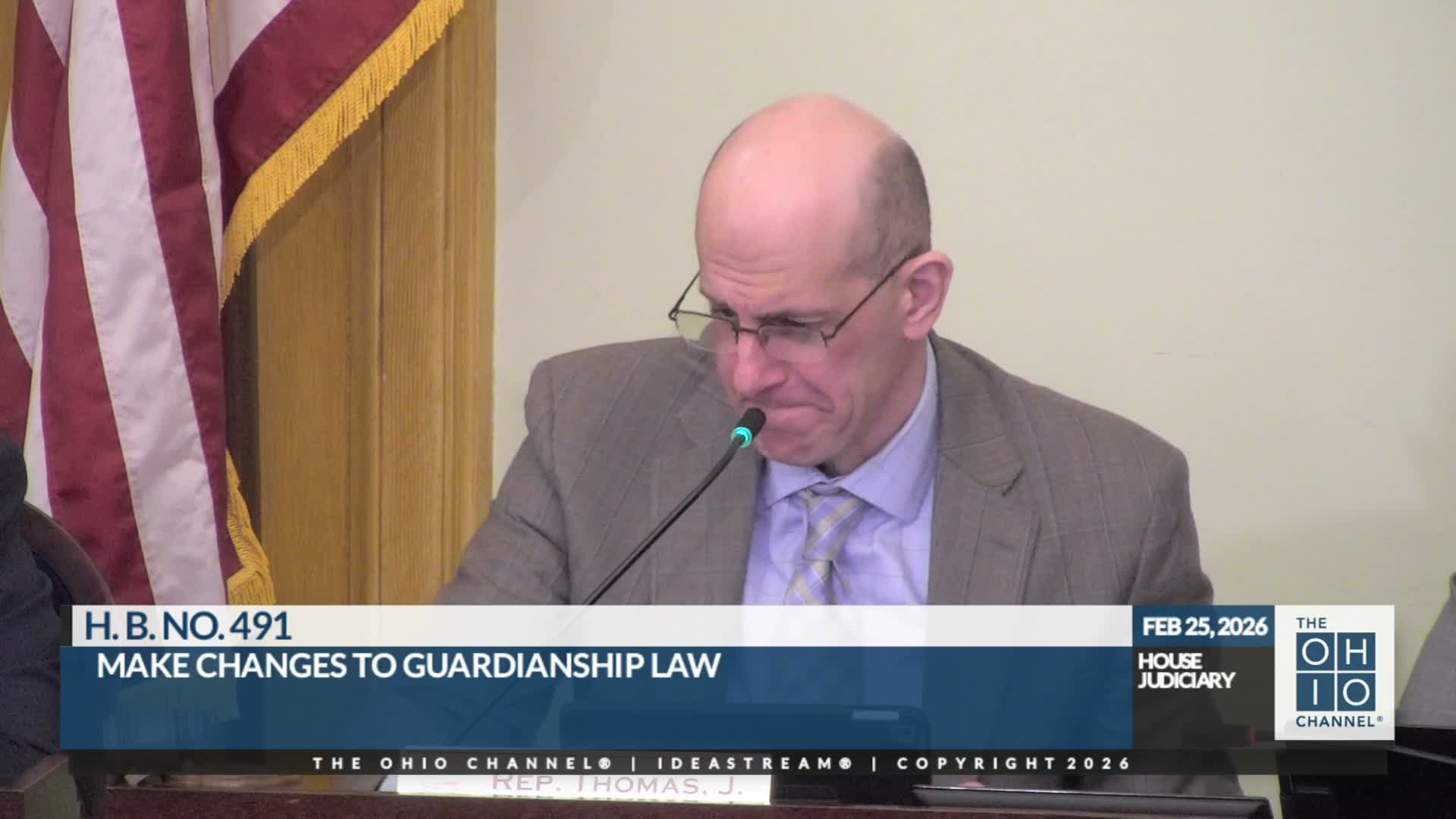
Committee members pressed on process concerns, including whether codifying certain practices amounts to judges writing law rather than the legislature setting policy. Proponents said the changes reflect a long-running collaboration with probate judges and stakeholders and that the statutory clarity would improve fairness and timeliness while preserving judicial discretion.
Proponents also described safeguards: expanding the pool of qualified evaluators is coupled with judicial control to reject inadequate evaluations and with telehealth and independent-evaluation procedures where cooperation is lacking.
The hearing closed with the committee thanking witnesses and noting additional written testimony on the bill.