Get Full Government Meeting Transcripts, Videos, & Alerts Forever!
Get email alerts on the School Safety topic
No spam. Unsubscribe anytime.
Sponsors say bill will give crossing guards clear authority, criminalize ignoring lawful orders
Summary
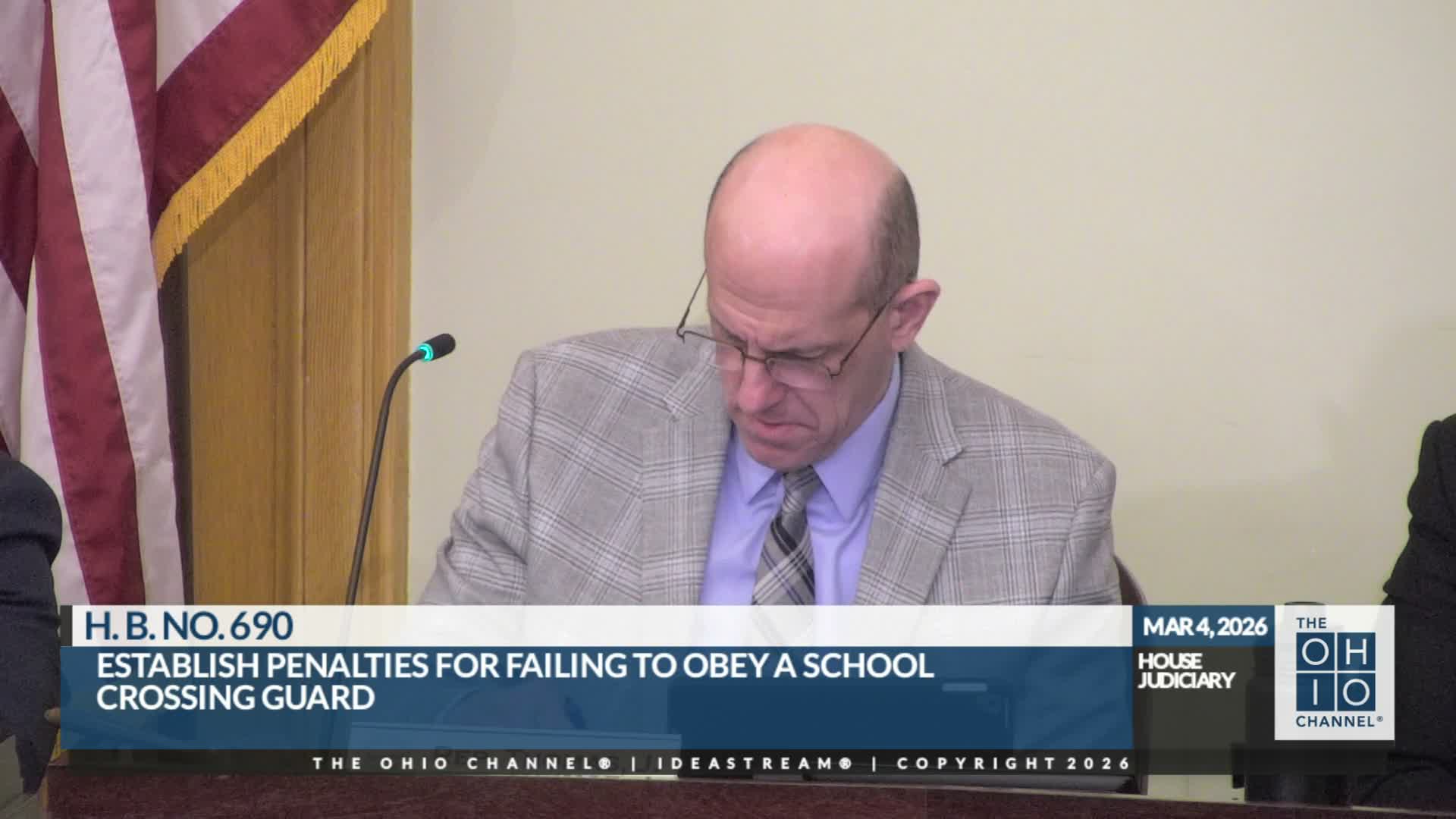
House Bill 690 would make it a misdemeanor to knowingly ignore a lawful order from a school crossing guard, provide civil immunity for guards acting within duty, and allow enhanced vehicular-offense penalties where violations cause serious injury or death; sponsors highlighted local incidents and urged education alongside enforcement.
Representatives Tom Young and Andrew White told the House Judiciary Committee that House Bill 690 is a narrowly targeted school-safety measure intended to protect children and the volunteers who serve as crossing guards.
"It gives school crossing guards clear authority to control traffic and establishes real consequences when the authority is ignored," Representative Tom Young told the committee, saying the bill makes it a crime to knowingly ignore a lawful order from a crossing guard while they are performing official duties. He described the measure as a "protection statute for crossing guards," adding that the base offense is a first-degree misdemeanor while felony exposure would be triggered only where existing vehicular assault or homicide statutes apply.
Representative Andrew White described local experience in Kettering, saying the district documented "over 570 near hits" in elementary schools and noting many crossing guards are older volunteers. "We need education, awareness, and accountability to ensure both the kids and the crossing guards are safe and supported," White said. Committee members asked whether the bill should include more on standard uniforms, training, or funding for signage; sponsors said the bill requires standard gear such as paddles and vests and encouraged voluntary district programs and further committee review if members seek additional statutory language.
Sponsors also discussed how the bill integrates with HB 203 and existing vehicular homicide and assault statutes. Representative Tom Young said the committee could ask Legislative Service Commission to review language to avoid unintended impacts on limited driving-privilege authority in courts. The committee held the bill's first hearing and received no formal votes.