Get Full Government Meeting Transcripts, Videos, & Alerts Forever!
Get email alerts on the Hate Crimes topic
No spam. Unsubscribe anytime.
Sponsors say Ohio needs broader hate-crime law to address terrorizing and civil remedies
Summary
At a House Judiciary Committee hearing, sponsors of House Bill 306 urged lawmakers to expand Ohio law to criminalize terrorizing based on protected characteristics and to create civil remedies for victims, while lawmakers pressed on burdens of proof and overlap with other bills.
Representatives sponsoring House Bill 306 told the House Judiciary Committee that Ohio’s existing ethnic-intimidation statutes do not fully address modern, bias-motivated harassment and violence and that the bill would close gaps by defining ‘terrorizing’ and adding civil remedies.
One sponsor described a constituent who was harassed and followed after reporting an incident, saying the bill would “bring coherence and consequence” by prohibiting terrorizing conduct motivated by race, religion, disability, political affiliation and other protected characteristics and by allowing victims to seek damages and attorney fees.
Co-sponsor Representative Williams told the committee the bill stops short of criminalizing speech alone: “Speech alone is not criminalized. The line is crossed when direct threat of violence creates unreasonable fear and is made with reckless disregard and carries the apparent ability to be carried out.” He said civil suits would let victims pursue relief where prosecutors decline criminal charges.
Members questioned how civil and criminal paths would interact. Representative Piccolantonio asked whether there are distinct circumstances that would lead a victim to pursue a civil case rather than a criminal prosecution. Williams replied that criminal cases would require proof beyond a reasonable doubt of the perpetrator’s motivation, while civil suits could proceed on a preponderance standard, enabling victims to present evidence of motive even when prosecutors decline to charge or cannot meet the high criminal standard.
Representative Stewart expressed skepticism about higher penalties based on victims’ characteristics, asking why identical harms should carry different penalties. Sponsors pointed to existing statutory enhancements (for lawyers, law-enforcement officers) and to the broader societal harm when crimes are aimed at people because of identity or political belief.
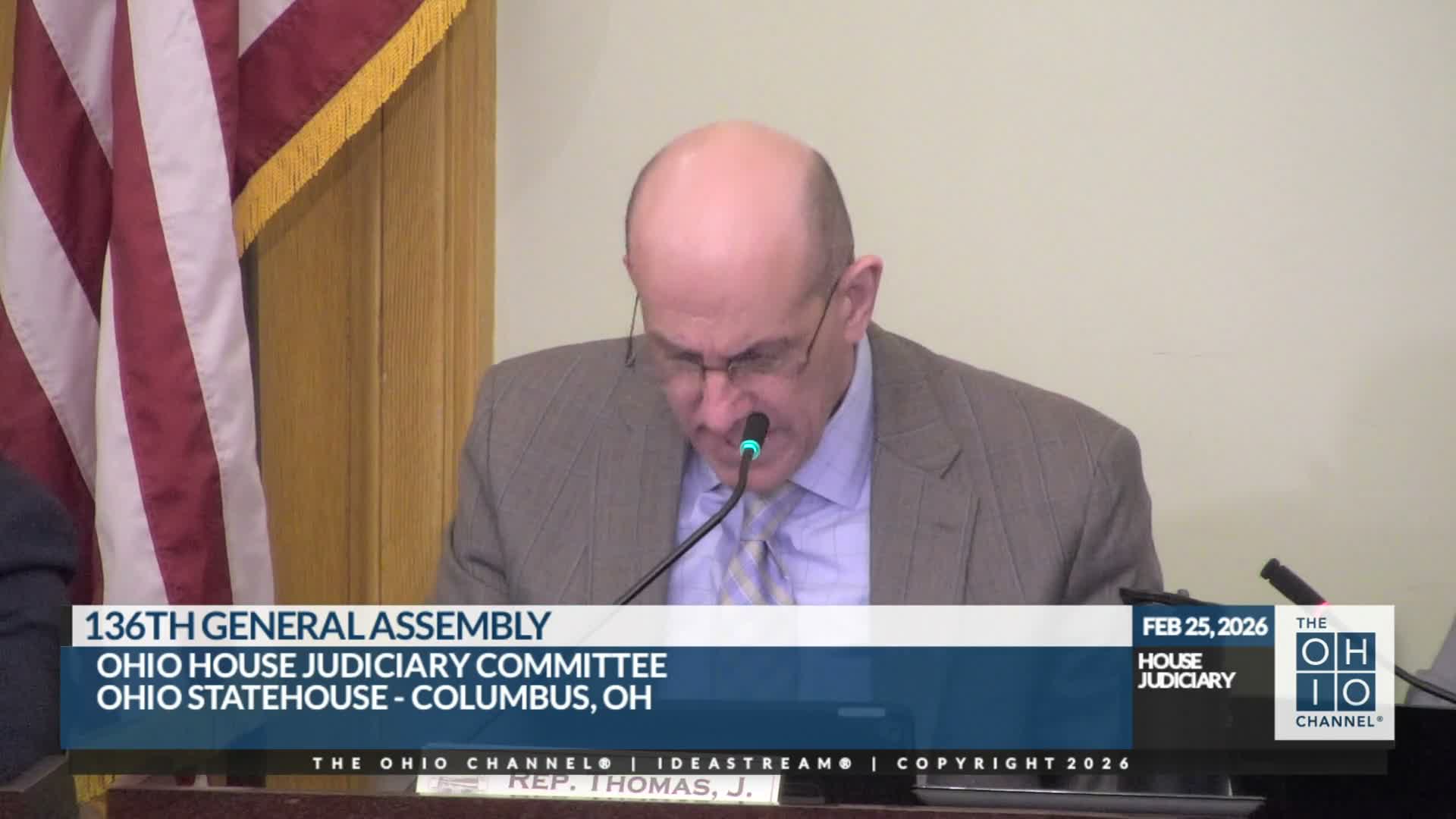
The committee took testimony from the sponsors and members of the committee asked for clarifications about overlap with other bills and the bill’s constitutional limits. Chair Thomas closed the first hearing with no immediate action scheduled.
The hearing provided lawmakers and sponsors an opportunity to weigh civil remedies against prosecutorial standards and to consider how the proposed statute would interact with pending definitions and initiatives elsewhere in the legislature.