Get Full Government Meeting Transcripts, Videos, & Alerts Forever!
Get email alerts on the Prosthetics Coverage topic
No spam. Unsubscribe anytime.
Ohio sponsors push bill to expand insurance coverage for prosthetics to Medicare standards
Summary
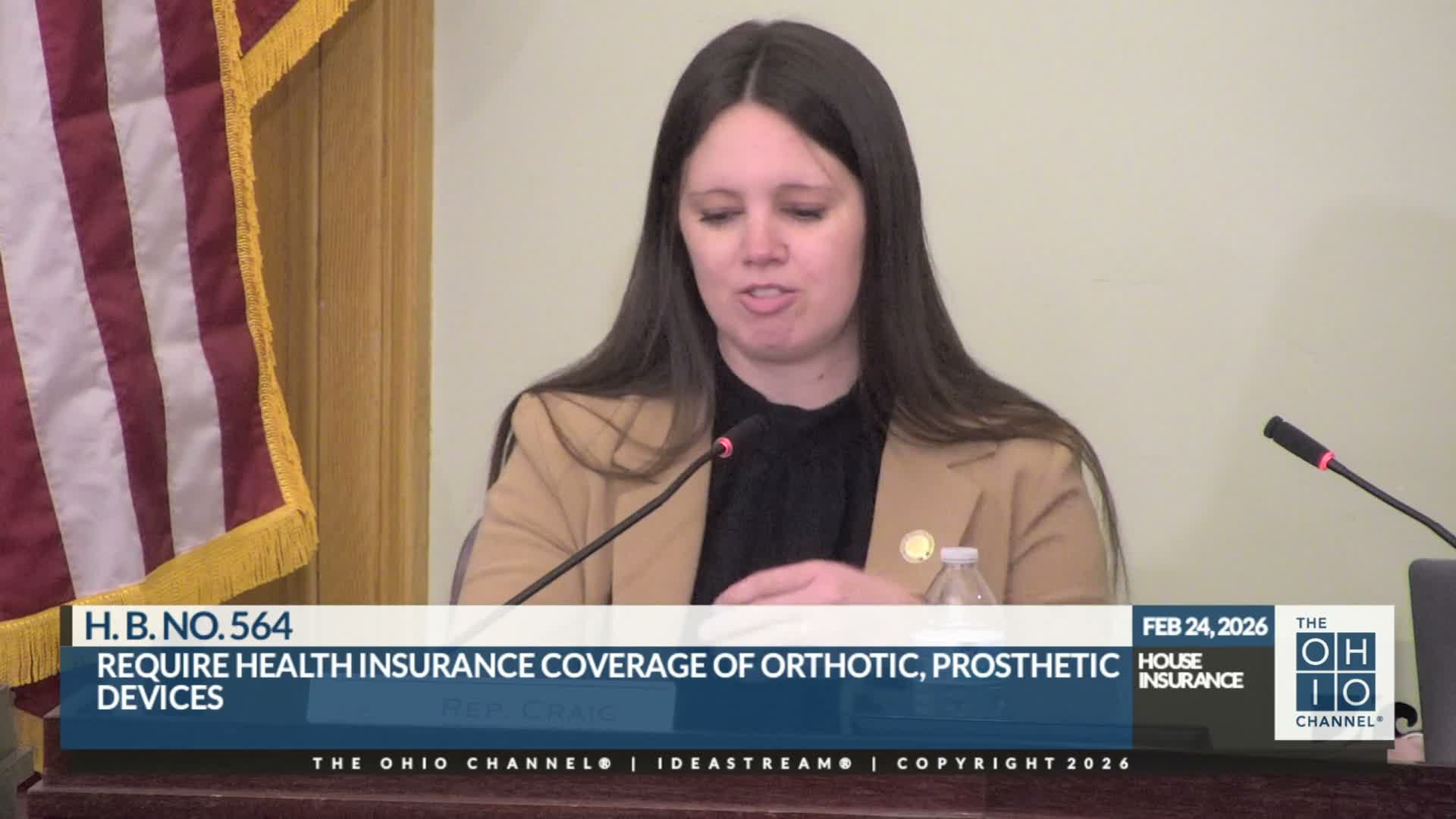
House sponsors presented HB 564, the "So Everybody Can Move Act," which would require qualifying health plans to cover prosthetic and orthotic devices at levels aligned with federal Medicare standards, including activity-specific devices and associated services; sponsors said the change would reduce long-term health costs and improve mobility.
Representatives Dontavious Gerald and Jean Schmidt urged members of the House Insurance Committee to advance House Bill 564, the "So Everybody Can Move Act," saying current insurance practices too often limit coverage to a single device and deny activity-specific prosthetics that restore full function.
Gerald told the committee the bill would require qualifying health benefit plans to provide coverage for prosthetic and orthotic devices "at a level no less than what is provided under federal Medicare standards," and to cover purchase, fitting, adjustment, repair and replacement. He said the measure would require access to qualified in-state providers, create out-of-network protections when necessary and mandate reporting to the superintendent of insurance and the General Assembly for oversight.
The bill, Gerald said, is intended to align Ohio coverage with national standards while preserving insurer review and fiscal accountability. "A prosthetic or orthotic device is not an accessory to treatment. It is the instrument through which a person works, exercises, cares for themselves, and engages in their community," Gerald said.
Co-sponsor Jean Schmidt illustrated the bill's impact with a story about a student she coaches, saying that some children must use makeshift footwear or a single basic device that leaves them unable to participate safely in sports. "This bill would give her the ability to get the right shoe," Schmidt said, adding that device costs can range from about $5,000 to $50,000 out of pocket for families.
Committee members asked for details about how many Ohioans would benefit and whether the bill changes insurers' authorization processes. Sponsors said they have been working with advocates and estimate "well over 300,000" Ohioans could be affected; they also said the bill does not eliminate insurer authorization but widens the standards insurers must consider, using Medicare-based criteria to evaluate whether a device restores function and improves quality of life.
Members discussed possible amendments to clarify how medical necessity determinations would be applied to specialized devices—for example, those used for running or swimming—and sponsors said they would work with stakeholders, including the Ohio Hospital Association, to refine language. A member also asked whether the Farm Bureau health plan is included; sponsors said it was not currently included but could be added by amendment.
The chair closed the first hearing on HB 564 and invited additional testimony at later committee meetings. The bill remains in committee for consideration and potential amendment.