Get Full Government Meeting Transcripts, Videos, & Alerts Forever!
Get email alerts on the Patient Access topic
No spam. Unsubscribe anytime.
Sponsors pitch narrow limits on 'white‑bagging' to prevent treatment delays
Summary
Rep. Gail Manning and Vice Chair Meredith Craig said HB682 would create a narrow exception to white‑bagging rules so community practices and independent hospitals can use on‑site pharmacy stock when delivery delays or dosage changes would jeopardize patient care; sponsors said the bill excludes large hospital systems and focuses on safety for chronic, complex, rare, and life‑threatening cases.
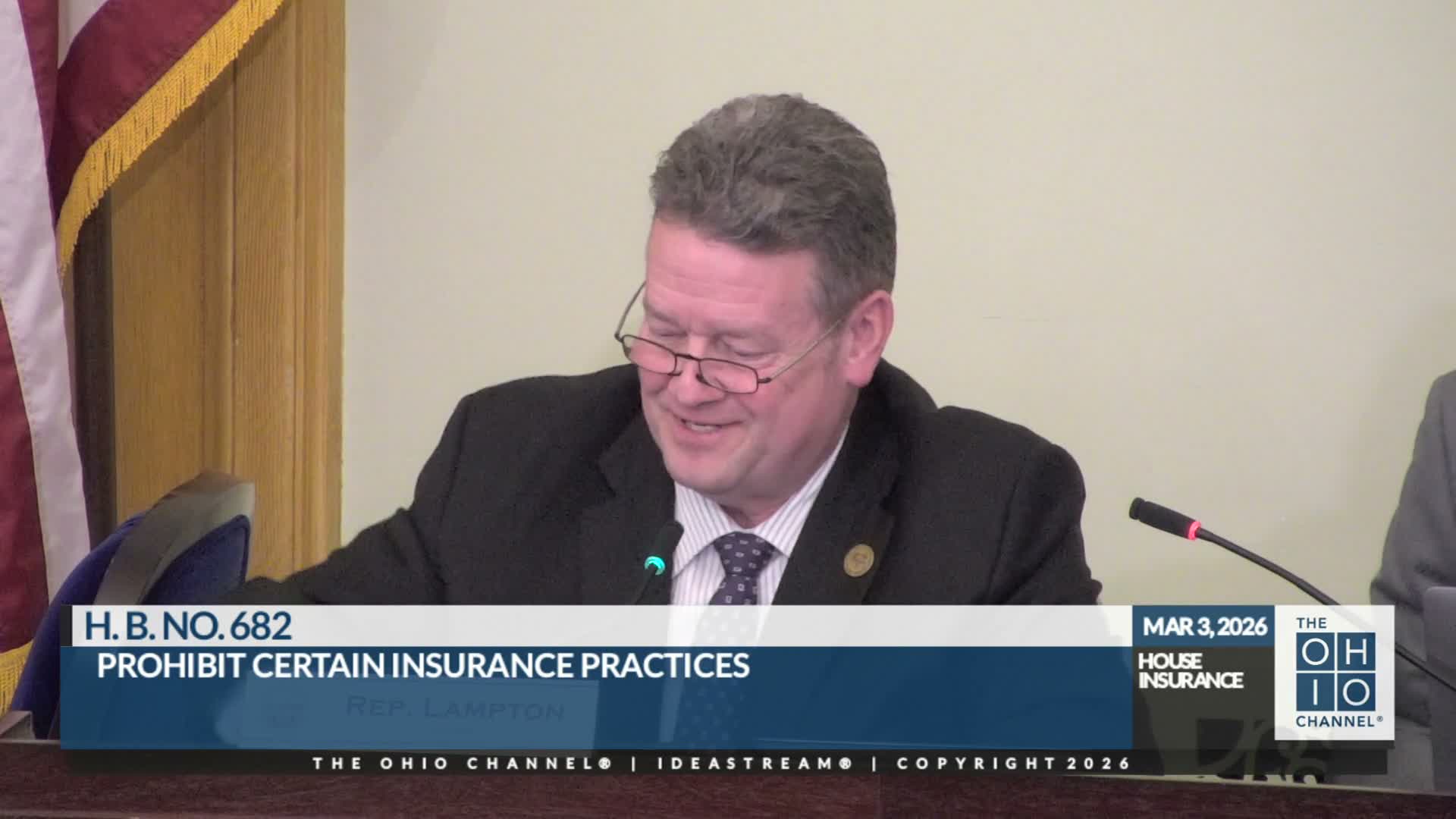
Representative Gail Manning and co‑sponsor Vice Chair Meredith Craig presented House Bill 682 to the House Insurance Committee, describing a narrowly tailored patient protection that would limit the insurer practice known as "white‑bagging" in specific circumstances. Manning said white‑bagging—when a plan requires medications to be dispensed by a specific specialty pharmacy and shipped directly to the provider for administration—can result in patients arriving for infusions only to learn medication delivery has been delayed or the product cannot be safely used.
"When this occurs, patients are often forced to reschedule treatment," Manning said, adding that delays create missed work, transportation burdens, emotional stress, and potential health risk. The bill would allow community physician practices and independent hospitals to dispense medication from their own pharmacies when the treating provider determines a delivery delay or a dosage change would jeopardize the patient’s care. Manning said the measure is limited to chronic, complex, rare, or life‑threatening conditions and excludes large hospital systems; she cited work with Senator Olsager on prior legislation that banned "brown‑bagging."
Vice Chair Meredith Craig described three guardrails: limiting the bill to (1) specified patient populations, (2) situations where patient safety or continuity of care is at risk, and (3) community providers and independent hospitals (defined by financial structure) rather than large systems. Craig and Manning said the approach aims to reduce canceled treatments and protect continuity for patients treated in community settings while leaving broad cost‑management strategies like white‑bagging available in most cases.
Committee members questioned why large hospital systems were excluded and whether the bill would increase costs. Craig and Manning said larger systems generally have greater purchasing and negotiation power and that the bill is a compromise focused on rural and community providers that face the greatest difficulty. The committee concluded the first hearing on HB682 with questions left for further development and potential stakeholder input.