Get Full Government Meeting Transcripts, Videos, & Alerts Forever!
Get email alerts on the Auto Insurance topic
No spam. Unsubscribe anytime.
Sponsor calls for clearer rules on OEM auto parts in repairs
Summary
Sponsor Representative Mark Johnson told the House Insurance Committee HB636 would require insurers and repair estimates to disclose non‑OEM parts, allow policyholders to purchase OEM coverage (paying cost difference), require labeling of aftermarket parts, and expose noncompliant insurers to Ohio unfair/deceptive practice penalties.
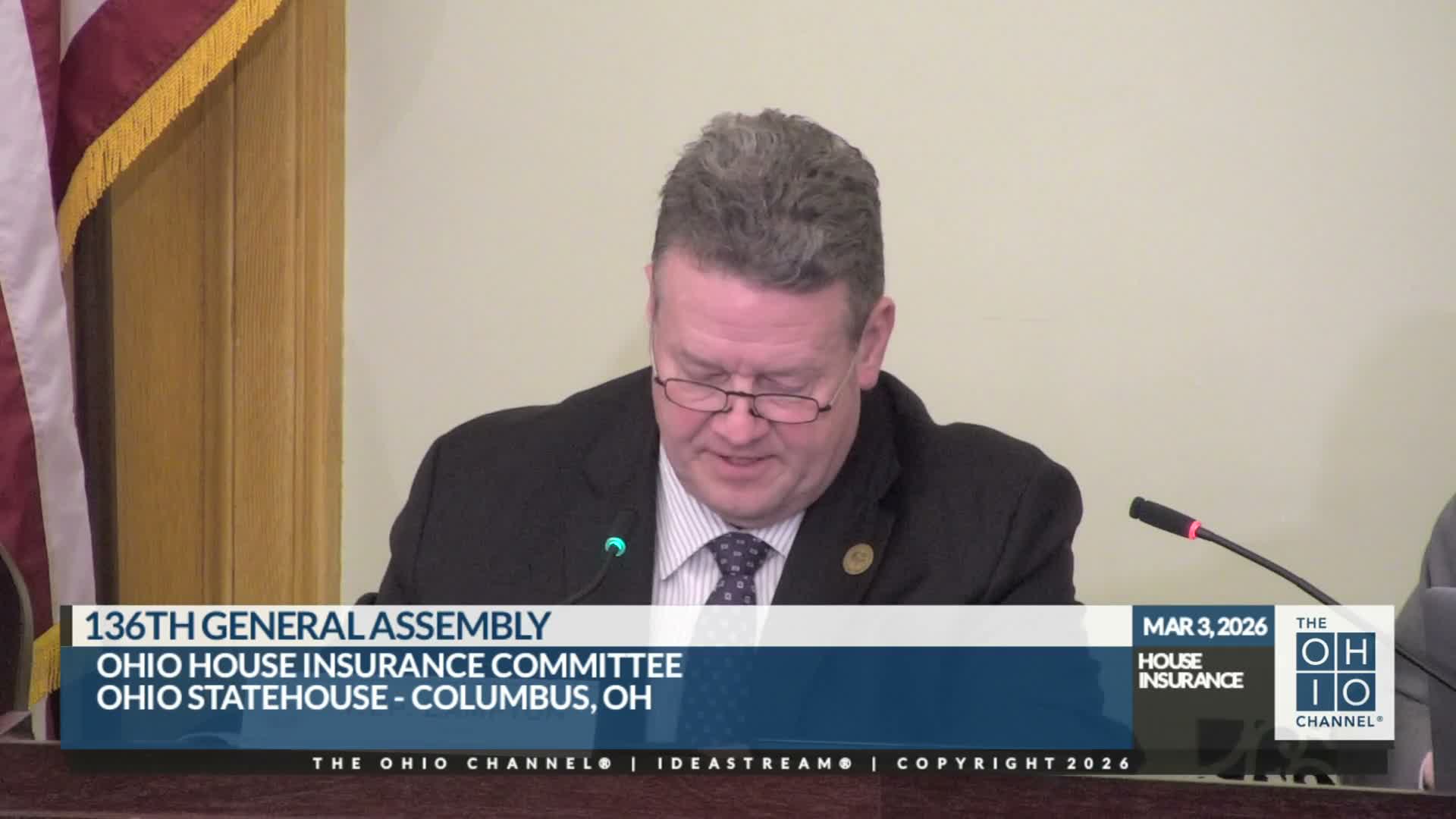
Representative Mark Johnson introduced House Bill 636 at the House Insurance Committee hearing, saying the Auto Insurance Transparency Act would increase consumer choice and require clearer disclosure when insurers or repair shops plan to use aftermarket (non‑OEM) parts in vehicle repairs. "Insurance policies must allow a policyholder to choose between original equipment manufacturer OEM parts for vehicle repairs even if the standard policy limits payment to aftermarket parts," Johnson said, adding that a policyholder could agree to pay the difference in cost for OEM parts.
Johnson told the committee estimates from insurers and repair shops should include a written breakdown of any non‑OEM parts, state whether OEM parts are available, explain the policyholder’s right to choose OEM parts, and disclose that aftermarket part warranties come from the part manufacturer or distributor, not the vehicle manufacturer. The bill would also require permanent labeling of aftermarket exterior body parts manufactured after 1990 and authorize penalties under Ohio’s laws governing unfair or deceptive practices for insurers that fail to comply.
Committee members asked whether other states have adopted similar laws and whether the proposal could increase litigation. Johnson said he was not sure how many states have enacted comparable statutes but noted Utah had a house measure on this topic; he said he did not foresee a rise in litigation and emphasized that many large insurers already offer OEM coverage as an option. Vice Chair Meredith Craig and Representative King asked whether consumers can currently pay the difference to secure OEM parts; Johnson said consumers can do so and that the bill focuses on transparency among insurers and collision repair shops.
Supporters told the committee the bill would preserve manufacturer warranties in some cases and reduce deceptive practices by ensuring consumers and shops share clear, comparable estimates. The committee concluded first hearing testimony without a vote and moved on to other agenda items.