
Opponents Tell Ohio Judiciary Committee HB 249 Is Vague and Will Target Drag Performers and Trans People
Get AI-powered insights, summaries, and transcripts
Sign Up Free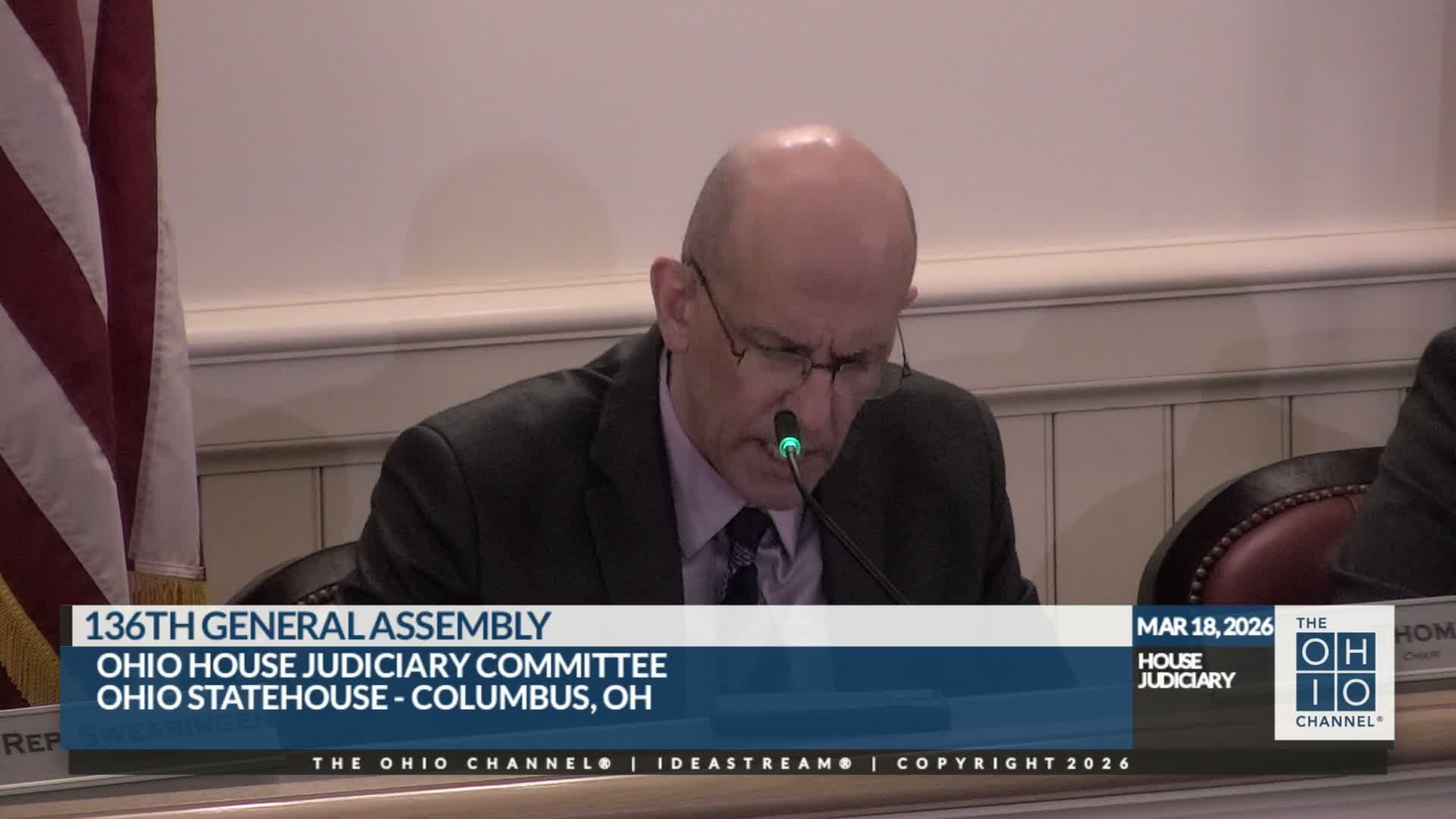
Summary
At a lengthy hearing on House Bill 249, dozens of opponents — performers, lawyers and civil‑rights groups — told the Ohio House Judiciary Committee the bill’s broad language risks chilling free expression and could be used to criminalize transgender or gender‑nonconforming people. Supporters of the sponsor’s intent argued the measure targets obscene conduct in front of minors.
The Ohio House Judiciary Committee heard hours of testimony on House Bill 249 on the bill’s third hearing, with opponents arguing the measure’s vague definitions would invite arbitrary enforcement and target drag performers and transgender Ohioans.
Kimberly Burrows, a former county prosecutor and state public defender, told the committee the bill “is a content‑based restriction” that is “blatantly unconstitutional” and likely to trigger costly litigation. She warned the bill’s language — which references "adult cabaret" and anyone who “exhibits a gender identity that is different from their biological sex” — is imprecise enough to allow prosecutors and officers broad discretion to pursue cases that should not be criminal matters.
“The bill is also unconstitutionally vague,” Burrows said, arguing the statute could be used to chill protected expression and divert law‑enforcement resources. She asked lawmakers to instead focus on child welfare and education funding needs.
Several witnesses gave concrete examples of community and economic harm. Josh Meek, statewide advocacy manager for Equality Ohio, said the bill adds no meaningful protections for children beyond existing obscenity and juvenile‑harm statutes and instead “creates a new pathway for arrests, prosecution, and public pressure” against performers.
Longtime performers and organizers described the social services and charitable work attached to drag shows. Andrew Levitt, who performs as Nina West, said drag entertainers in Ohio have raised millions for local charities and that HB 249 would force artists to “justify my existence, my career, and my livelihood.” Corey Williams, Miss Gay Ohio 2026, said performers face real threats already and that the law would compound the danger for community programs that raise money for local causes.
Civil‑liberties and legal experts echoed those concerns. Gary Daniels, legislative director of the ACLU of Ohio, cited recent federal lawsuits in multiple states that have enjoined or struck down similar provisions and said the bill’s language is unnecessary because current Ohio law already criminalizes obscene performances before minors and includes statutes for disseminating harmful material to juveniles.
Committee questioning illustrated the split. Representative Williams, who sponsored the bill, repeatedly pressed witnesses to point to specific gaps in existing law, arguing obscenity and indecency statutes and the Miller test provide established legal standards and that the committee has a responsibility to protect minors. Opponents responded that even if some criminal statutes exist, the bill’s additional language about gender expression creates a new, targeted risk.
Witnesses also described a practical chilling effect: libraries, theaters, and community groups that host family‑friendly literacy and story‑hour events featuring drag performers may cancel programs to avoid litigation risk. Several witnesses said the bill risks discouraging touring productions and local arts events that contribute to the state’s economy.
The hearing closed when the committee reached its scheduled hard stop. No vote on HB 249 occurred at the hearing; the committee converted remaining testimony to the written record.