Get Full Government Meeting Transcripts, Videos, & Alerts Forever!
Get email alerts on the Hb459 Caitlins Law topic
No spam. Unsubscribe anytime.
Family members urge end to statute-of-limitations for hiding a body as House committee hears House Bill 459
Summary
Family members told the House Judiciary Committee that hiding a murdered body denied them justice and grieving time, and urged passage of House Bill 459 to remove statutes of limitations for moving or gross abuse of a corpse.
David Markham and Tina Barrett, proponent witnesses at the committee's second hearing on House Bill 459, described how the statute of limitations prevented prosecution for moving a corpse and gross abuse of a corpse in the case of Caitlin Markham.
"There should be no statute of limitations for hiding a murdered body, moving a body, or gross abuse of a corpse," David Markham told the committee, appealing for legal change so other families would not endure his family's experience. He described his relief when an arrest was made years after his relative's disappearance and his subsequent shock that time barred charges for those offenses.
Tina Barrett, introduced by the chair to give proponent testimony, recounted community searches and the discovery of partial remains, saying the deliberate hiding of Caitlin’s body deprived her family of a normal grieving process. "Hiding Caitlin's body shielded [the suspect] from a proper investigation into her death, and the passage of time shielded him from being held accountable," she said.
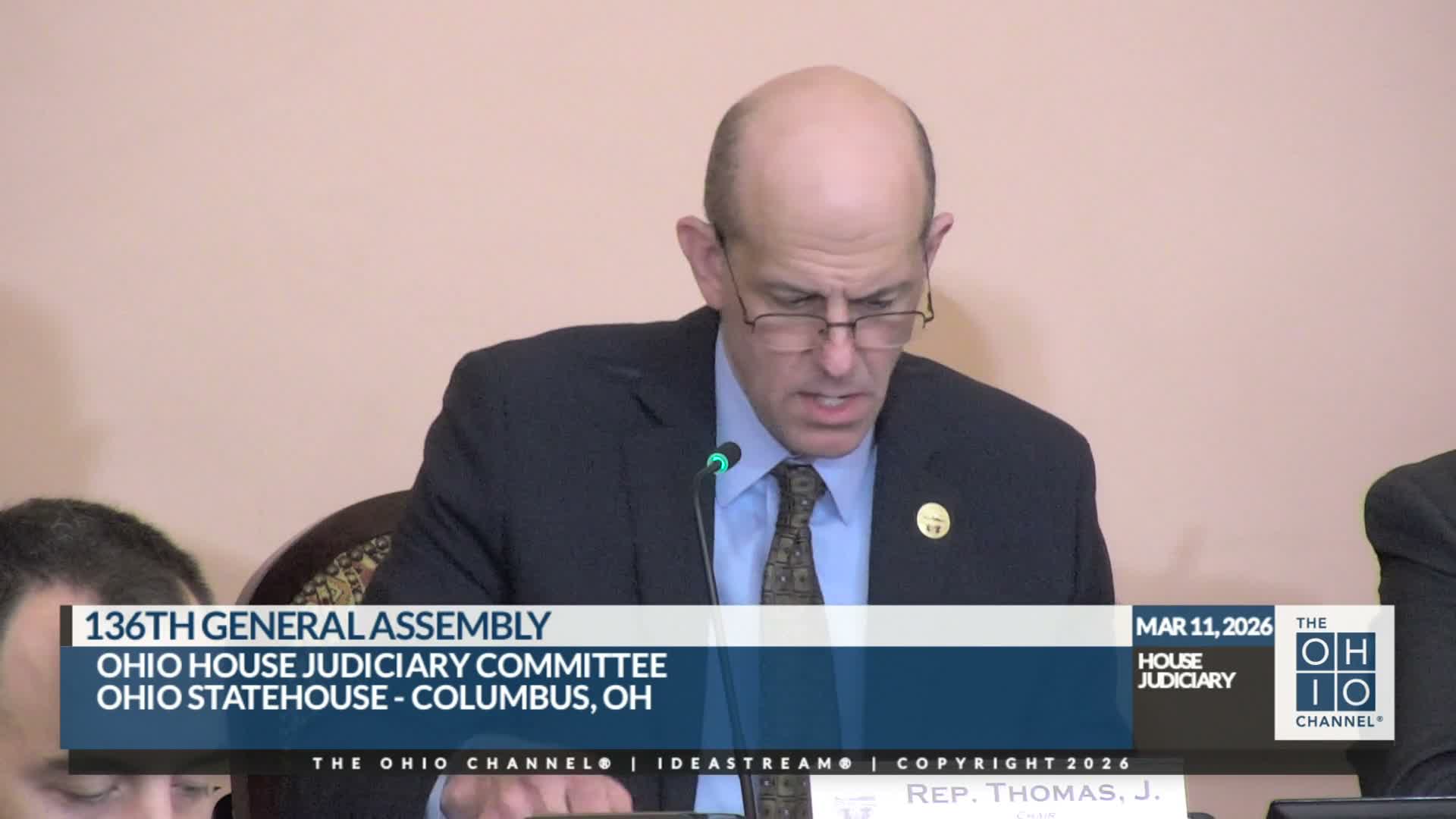
Chairman Thomas offered condolences and committee members asked a small number of follow-up questions about the bill's scope. Sponsors told the committee the bill would ensure that moving or hiding a body cannot block later prosecution for those crimes.
The hearing concluded with the committee recording the proponent testimony and noting written-only testimony available on members' devices. No formal vote on House Bill 459 was taken during this session; the hearing was closed so the committee could consider next steps in future legislative action.