Get Full Government Meeting Transcripts, Videos, & Alerts Forever!
Committee advances substitute for insurer ‘takebacks,’ shortens look‑back and extends provider appeal window
Summary
The committee approved substitute Senate Bill 162 as a working document; the substitute shortens insurer claim ‘takebacks’ look‑back from 24 to 12 months, extends provider appeal rights from 30 to 60 days, and allows agreed electronic notification between insurers and providers, sponsors and the Ohio State Medical Association said.
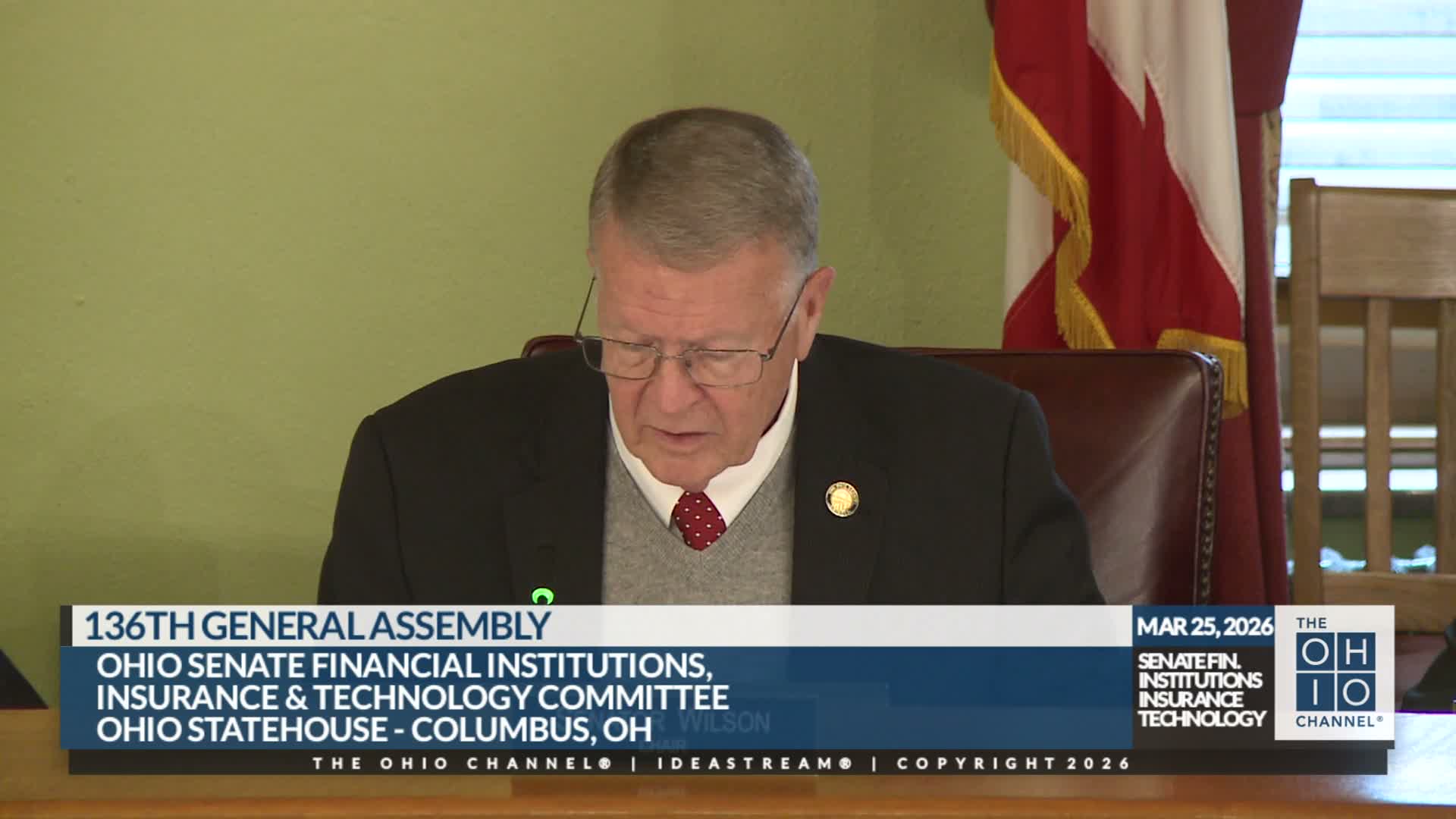
The Financial Institutions, Insurance and Technology Committee on the motion of Senator Blessing approved a substitute for Senate Bill 162 as the working document and heard proponent testimony.
Senator Blessing said the substitute is the product of negotiations between the Ohio Association of Health Plans and the Ohio State Medical Association. "The substitute bill promotes fairness and transparency," he said, and the language narrows the time frame for insurer takebacks while…
Already have an account? Log in
Subscribe to keep reading
Unlock the rest of this article — and every article on Citizen Portal.
- Unlimited articles
- AI-powered breakdowns of topics, speakers, decisions, and budgets
- Instant alerts when your location has a new meeting
- Follow topics and more locations
- 1,000 AI Insights / month, plus AI Chat