Get Full Government Meeting Transcripts, Videos, & Alerts Forever!
Get email alerts on the Debt Settlement topic
No spam. Unsubscribe anytime.
Vice Chair Lang seeks to update Ohio law for debt‑settlement companies, aligning state rules with federal standards
Summary
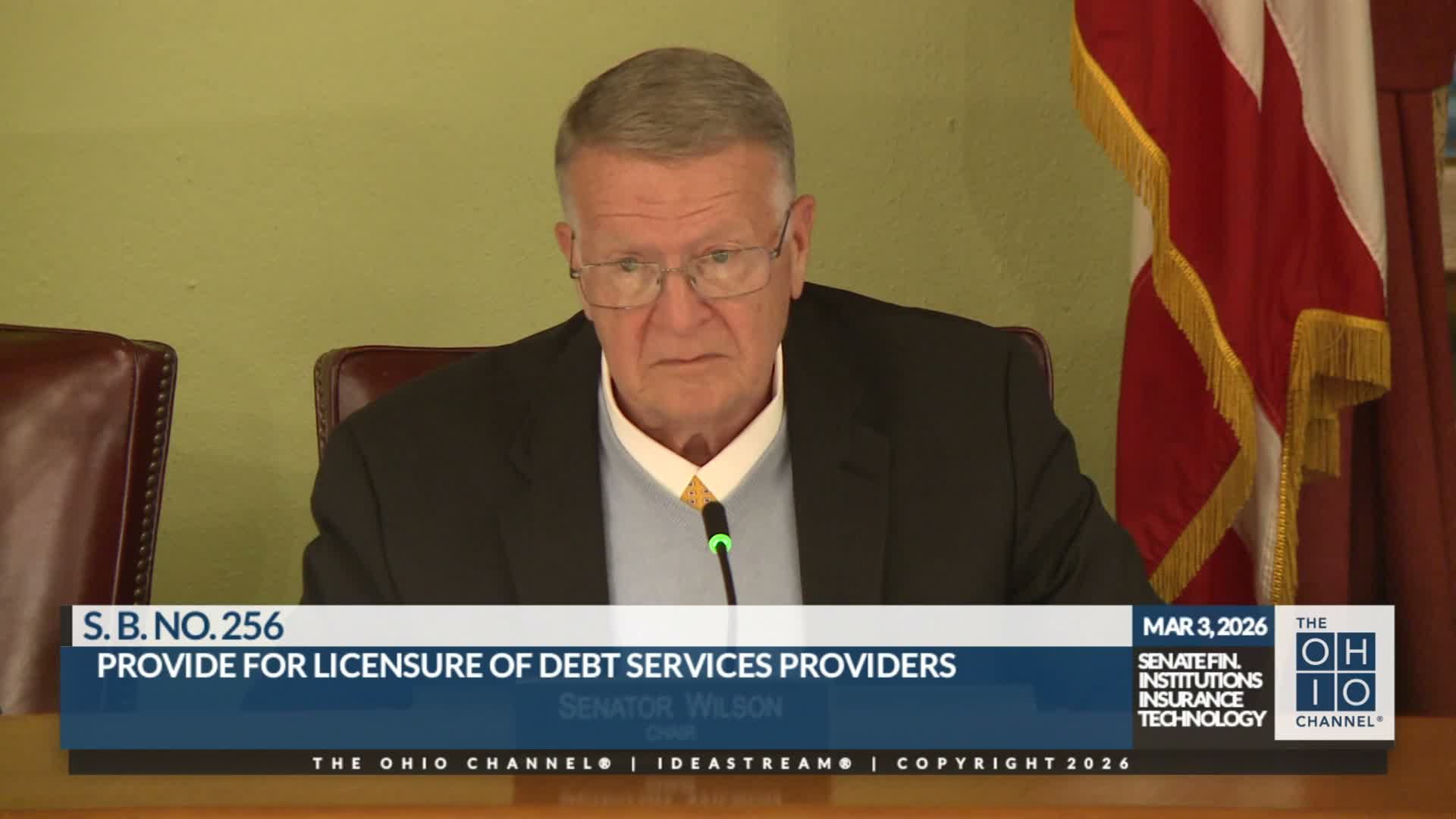
Vice Chair Lang presented Senate Bill 256 to establish licensing, bonding, auditing and enforcement of debt settlement providers in Ohio and align state law with federal rules; committee members asked whether medical debt is covered and about the absence of criminal penalties in the current draft.
Vice Chair Lang presented sponsor testimony on Senate Bill 256, a bill to create a regulatory framework for debt settlement providers and bring Ohio law into alignment with federal regulations and neighboring states.
Lang told the Financial Institutions, Insurance and Technology Committee that Ohio’s current statute governing debt adjusters — described in testimony as outdated — focuses on nonprofit credit counseling and does not reflect modern debt settlement business models. "Simply put, Senate Bill 256 brings Ohio law into alignment with existing federal safeguards," he said, and explained the bill would place compliant providers under the supervision of the Division of Financial Institutions through licensing, bonding, auditing and enforcement.
Committee members asked for clarifications. Sen. Liston asked whether medical debt would be covered under the bill; Lang said the bill would primarily deal with credit‑card and similar unsecured consumer debt, and that medical debt would be covered only if it had been placed on a credit card. Sen. Moore asked about criminal penalties that appeared in earlier versions of the legislation; Lang said he was not sure why penalties were removed and the committee did not resolve that question during the hearing.
Lang said existing federal rules generally prohibit debt‑settlement companies from collecting fees from consumers until a settlement is reached and accepted; SB256 would authorize providers that comply with federal law to operate in Ohio under state supervision. No vote was taken; sponsors indicated they expect future expert testimony and likely technical amendments.