Get Full Government Meeting Transcripts, Videos, & Alerts Forever!
Get email alerts on the Healthcare Single Payer topic
No spam. Unsubscribe anytime.
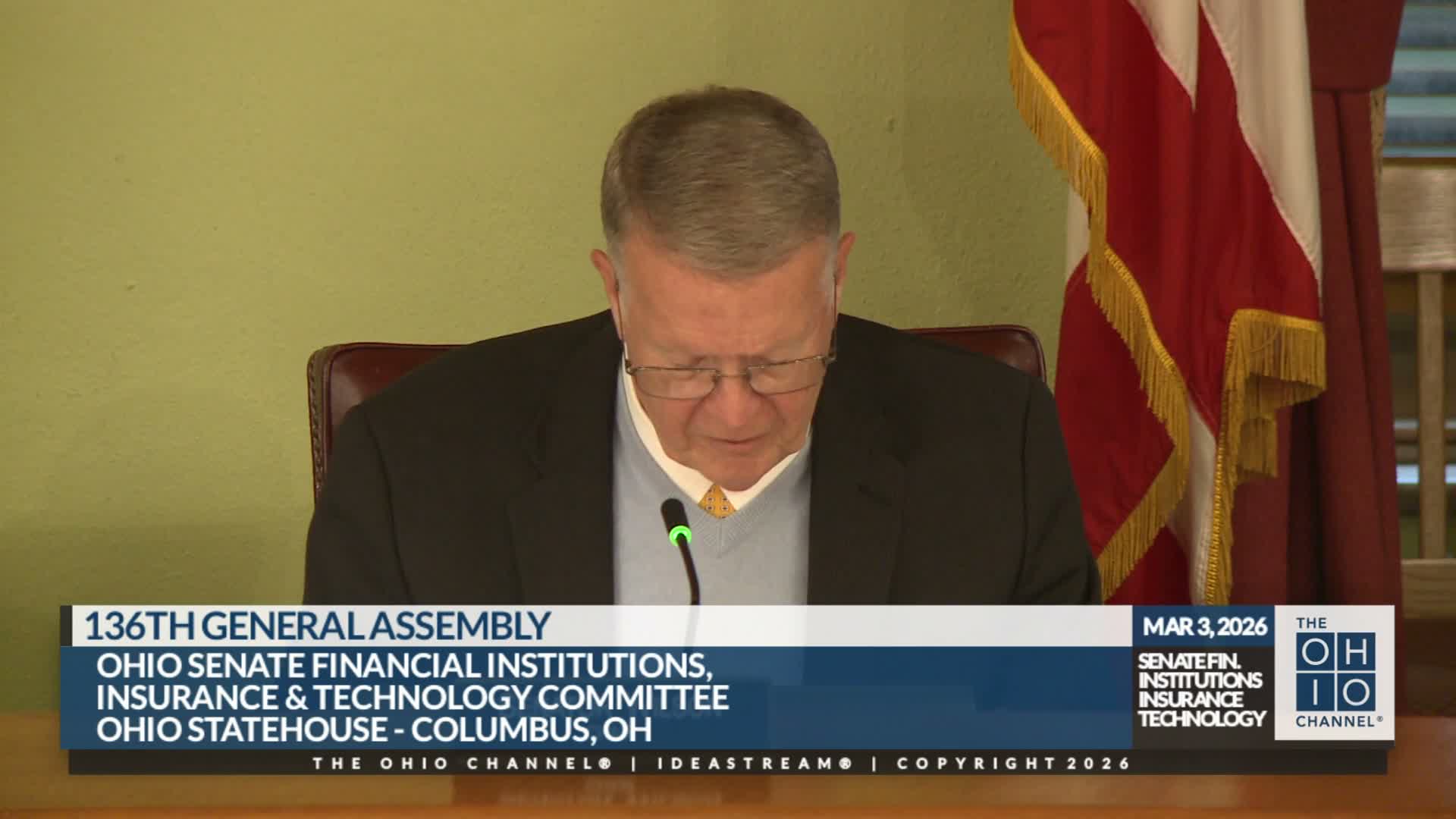
Senators DeMora and Hicks Hudson present single‑payer Ohio Health Care Plan in committee hearing
Summary
Sponsors of Senate Bill 78 told the Financial Institutions, Insurance and Technology Committee the Ohio Health Care Plan would create a single public fund and agency to provide universal coverage, arguing administrative savings and protections for pre‑existing conditions; committee members questioned the choice of single‑payer over a public option.
Sen. DeMora and Sen. Hicks Hudson presented sponsor testimony on Senate Bill 78, the Ohio Health Care Plan Act, framing it as a single‑payer proposal intended to guarantee comprehensive coverage for all Ohioans and reduce administrative costs.
Sen. DeMora told the committee SB78 would “make these stories a thing of the past for all Ohioans,” arguing the bill would prevent situations where people must choose between medical care and basic needs. He cited the Health Policy Institute of Ohio’s 2024 Health Value Dashboard, saying the state ranks 44th in health‑care quality and that Ohioans pay comparatively high amounts out of pocket. The sponsors referenced specific figures they said appear in the dashboard: an average annual health care expenditure of about $3,262 for a single adult and roughly $8,540 for a family of four.
Sen. Hicks Hudson described the bill’s structure: a single public Ohio Healthcare Fund would pay providers for covered benefits; a newly created Ohio Healthcare Agency, operating at the direction of an Ohio Healthcare Board, would administer the plan. He said covered services would include routine outpatient care, prescription drugs, medical supplies and medical transportation without copayments or deductibles, and that coverage would not be denied on the basis of pre‑existing conditions. Hudson said the board would seek federal and state waivers to allow Medicare and Medicaid dollars to flow into the new fund; until such waivers are obtained, he said, the plan would act as a secondary payer for services already covered by Medicare or Medicaid.
Sponsors asserted SB78 could be funded through a mix of payroll, gross receipts and income taxes and that, as drafted, about 91% of Ohio residents would see no tax increase under the plan. They urged additional hearings and expert testimony before further action.
Committee members pressed on policy design and political strategy. Sen. Blessing asked why sponsors pursued a single‑payer model rather than a public‑option approach, saying a competitive public option typically polls better across party lines. Sen. Hicks Hudson responded that the sponsors view single payer as simpler and more likely to provide clarity for both consumers and administrators.
No committee vote was taken on SB78 during the hearing. The sponsors requested additional opportunity for expert testimony and the hearing concluded with no further action scheduled.