Get Full Government Meeting Transcripts, Videos, & Alerts Forever!
Get email alerts on the Career Readiness topic
No spam. Unsubscribe anytime.
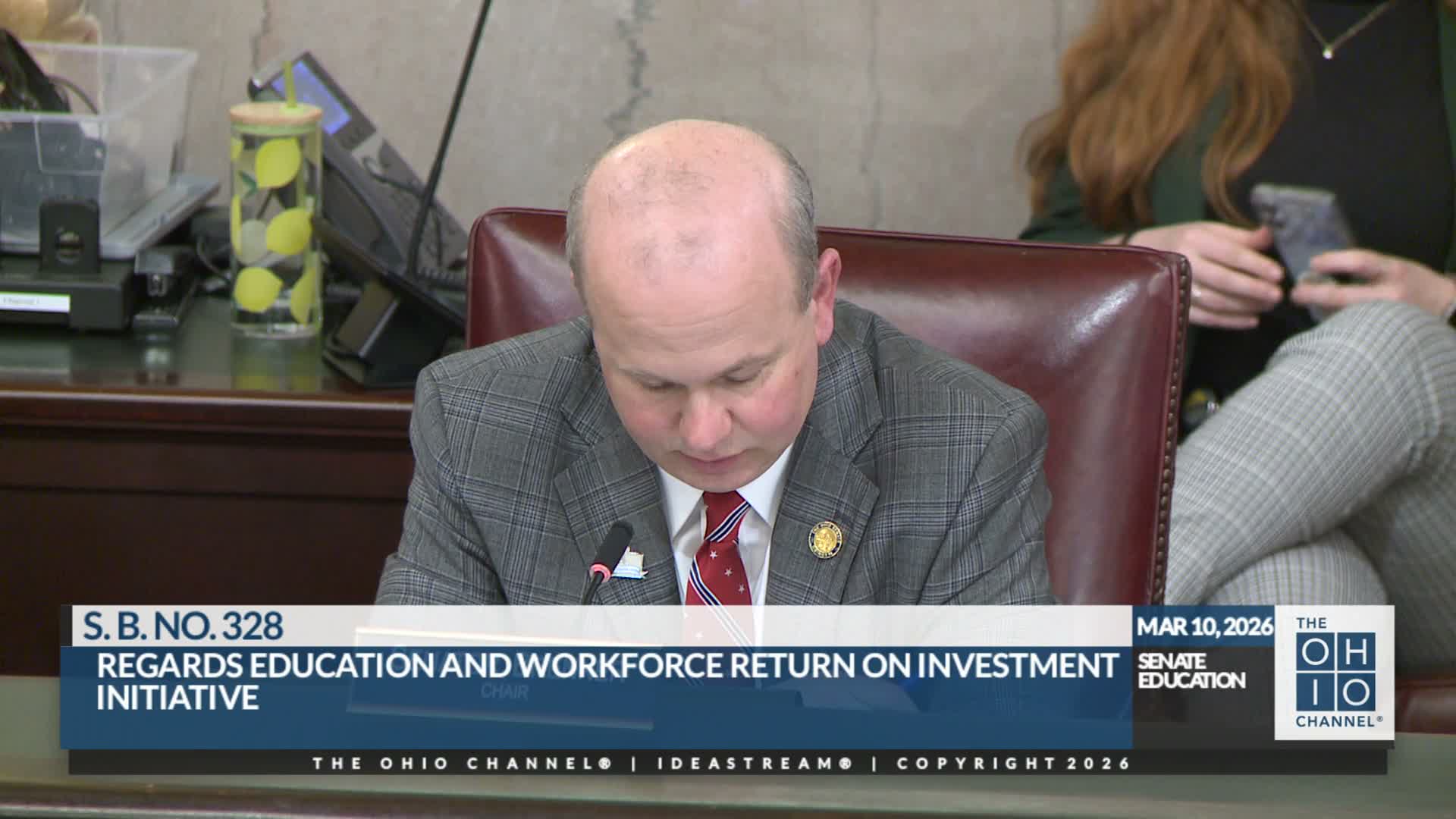
Senate hears broad support and concerns for Senate Bill 328 to expand career planning and data systems
Summary
Witnesses and education organizations supported Senate Bill 328's goals—standards aligned to employer needs, a statewide career‑coaching framework, mandatory academic/career plans and improved data systems—but urged phased implementation, clearer roles for Career Technical Planning Districts and restored funding for career‑exploration activities.
An interested‑party witness and a coalition of education and career‑tech groups testified in favor of Senate Bill 328, which seeks to strengthen career readiness by establishing professional skill standards, a statewide career‑coaching framework and requiring an academic and career plan for students beginning in middle school with annual review.
The primary proponent described three bill elements: professional‑skill standards aligned to employer needs, a leadership team and a statewide career‑coaching framework, and a requirement that students complete an academic and career plan beginning in the 2026‑27 school year. The testimony repeatedly emphasized the need for actionable data to measure return on investment: "Data, data, data," the witness said, arguing for dashboards and regular measurement.
Educational stakeholders including Scott Wojciga (Ashtabula County Technical and Career Center) and representatives from the Buckeye Association of School Administrators, school boards and high‑quality education groups expressed general support but raised implementation concerns: middle‑school schedules are crowded and a half‑credit requirement may be impractical; career‑tech planning districts (CTPDs) should be explicitly involved in developing programs; timelines should be phased (suggested implementation in 2027‑28 with fuller rollout in 2028‑29); and career‑exploration funding that supports field trips and aptitude testing was cut from $10 to $3 per student and needs restoration.
Committee members asked technical questions about data infrastructure (EMIS), dashboard timeliness, governance across multiple state directors named in the bill and how the leadership team would compel cooperation. Proponents recommended strong administrative leadership, business advisory involvement and holding agencies "feet to the fire" to make data systems actually useful. The committee concluded the third hearing and supporters indicated amendments and implementation language are in progress.