
Resolution to dismantle U.S. Department of Education debated; federal official defends agency role
Get AI-powered insights, summaries, and transcripts
Sign Up Free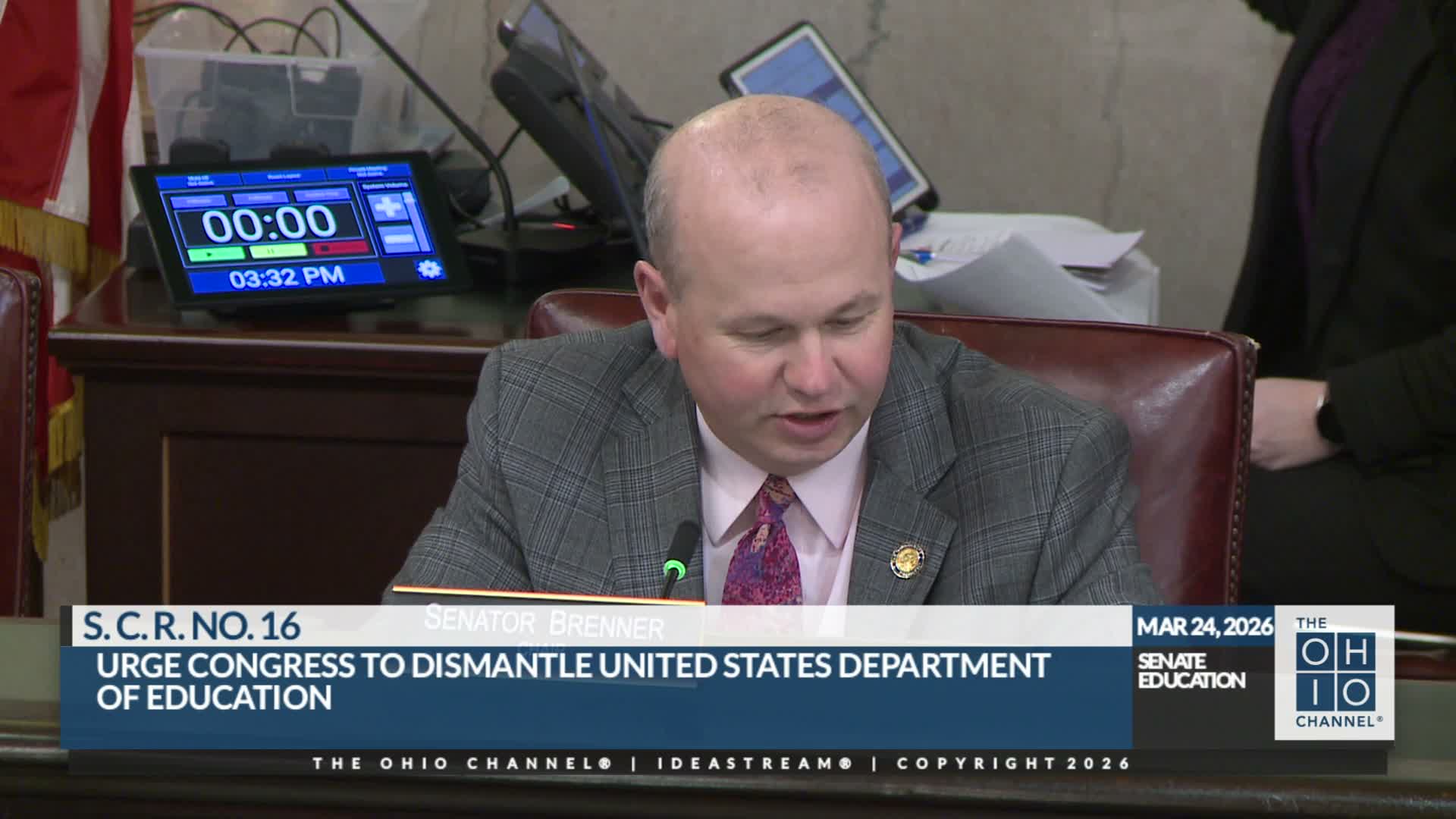
Summary
Supporters of Senate Concurrent Resolution 16 urged Ohio to prepare to assume devolved federal education functions; the U.S. Department of Education's intergovernmental director said federal roles in funding and program administration remain important and highlighted recent interagency transfers and student‑loan portfolio figures.
Supporters of Senate Concurrent Resolution 16 told the committee Ohio should plan now to assume control of federal education programs if Congress dissolves or substantially restructures the U.S. Department of Education. James Paul of the America First Policy Institute urged the committee to pass SCR 16 so the legislature can inventory federal programs, identify statutory changes and waivers, and prepare legislation.
Paul argued the Department of Education has not improved student outcomes in its 46 years and urged devolution of program administration to states or other federal agencies. "Ed simply does not improve student outcomes," he testified, and recommended Ohio prepare to take over program administration if changes in Washington stick.
Brad Jensen, director of intergovernmental affairs at the U.S. Department of Education, described the federal role in administering critical programs such as IDEA and Title I and emphasized that federal funding, while a small share of total education spending, supports key protections and programs. He noted the federal student‑loan portfolio ($1.7 trillion) and described recent transfers of functions to other federal agencies as examples of administrative restructuring, while urging caution about unintended consequences for families and students.
Committee members pressed witnesses on equity, the Institute of Education Sciences' research role, and the practical implications of splitting programs between multiple federal agencies; witnesses offered divergent views on whether devolution would preserve protections and evidence‑based research support.
What happens next: SCR 16 received proponent and federal testimony during the second hearing; the committee did not record a final vote during the session.