Lifetime Citizen Portal Access — AI Briefings, Alerts & Unlimited Follows
Sponsor defends 'Baby Olivia' resources as committee probes accuracy and naming in House Bill 485
Loading...
Summary
Representative Miller told the Senate Education Committee House Bill 485 would require public schools to use a high‑definition ultrasound video and the Meet Baby Olivia animation (or similar resources) to teach early human development; senators raised questions about medical endorsements, versions of the video, parental opt‑outs and naming a fetal figure in statute.
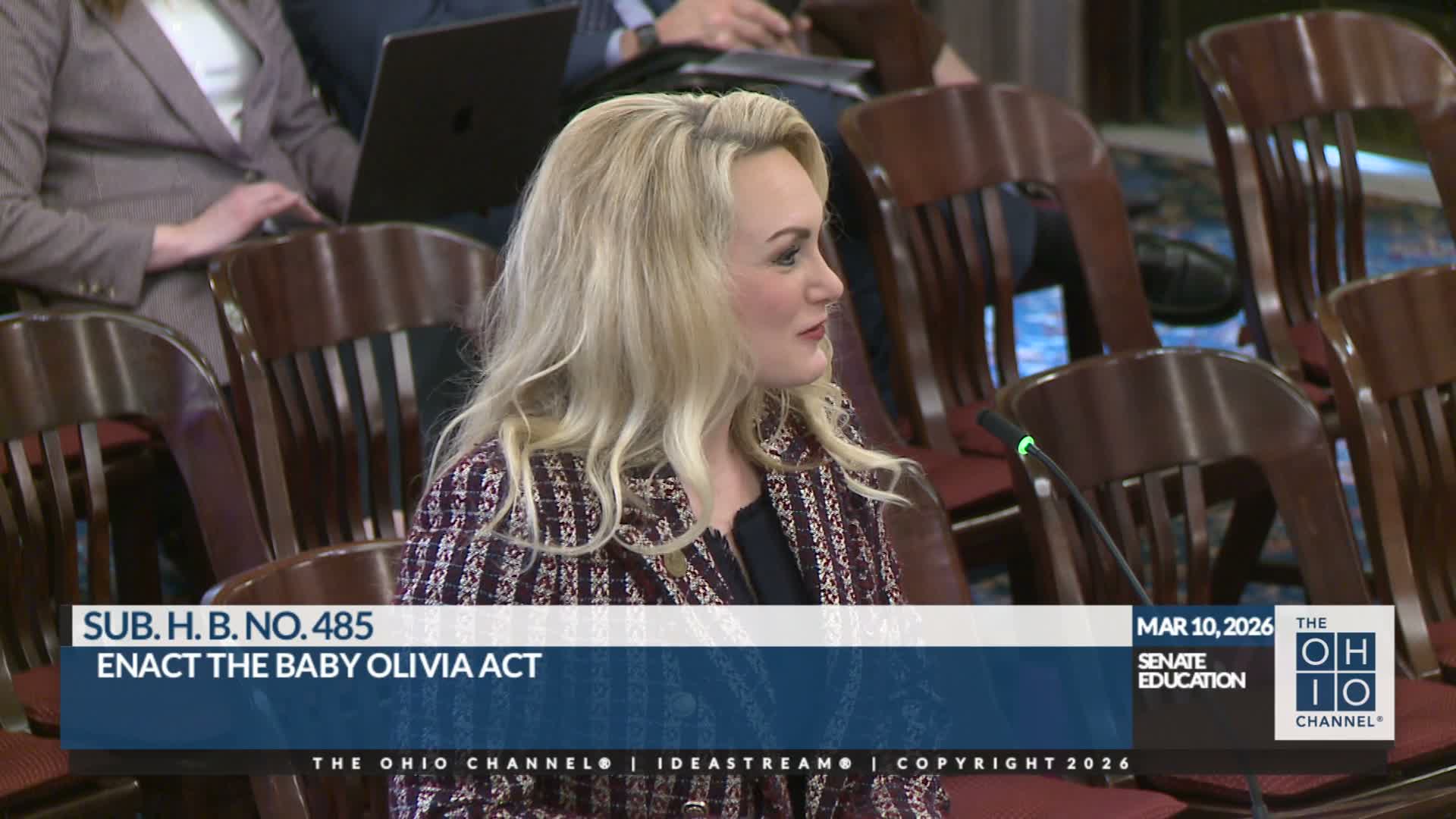
Representative Miller presented sponsor testimony for House Bill 485, the Baby Olivia Act, arguing the bill strengthens science education by giving students "a clear, age appropriate and factual understanding of early human development." The measure would require public schools to incorporate at minimum a high‑definition ultrasound video of at least three minutes and the Meet Baby Olivia animated video (or a substantially similar resource) that depicts fertilization and stages of prenatal development, with parental written opt‑outs.
Miller said the Meet Baby Olivia video was produced by Live Action in collaboration with a panel of medical doctors and that the Endowment for Human Development and National Geographic had endorsed or provided materials that informed the video. Miller offered to provide the list of medical endorsers and invite medical experts for proponent testimony.
Committee members expressed several concerns. Senator Smith asked whether major medical organizations such as OB‑GYN associations had endorsed the video; Miller said he did not know offhand and offered to verify and provide documentation. Ranking Member Ingram and others objected to naming a fetal persona in statute, questioned whether different state versions use different videos, and asked whether the materials address early pregnancy loss or variations in development; Miller acknowledged those are valid points and said he would work with committee members on possible changes.
Miller emphasized that the bill does not replace existing standards, that instruction remains subject to parental opt‑out, and that compliance would follow normal Department of Education and Workforce auditing. The committee concluded the first hearing and the sponsor indicated willingness to explore amendments and provide supporting materials.