
Educators warn of staffing shortfalls as Ohio modifies computer‑science graduation requirement
Get AI-powered insights, summaries, and transcripts
Sign Up Free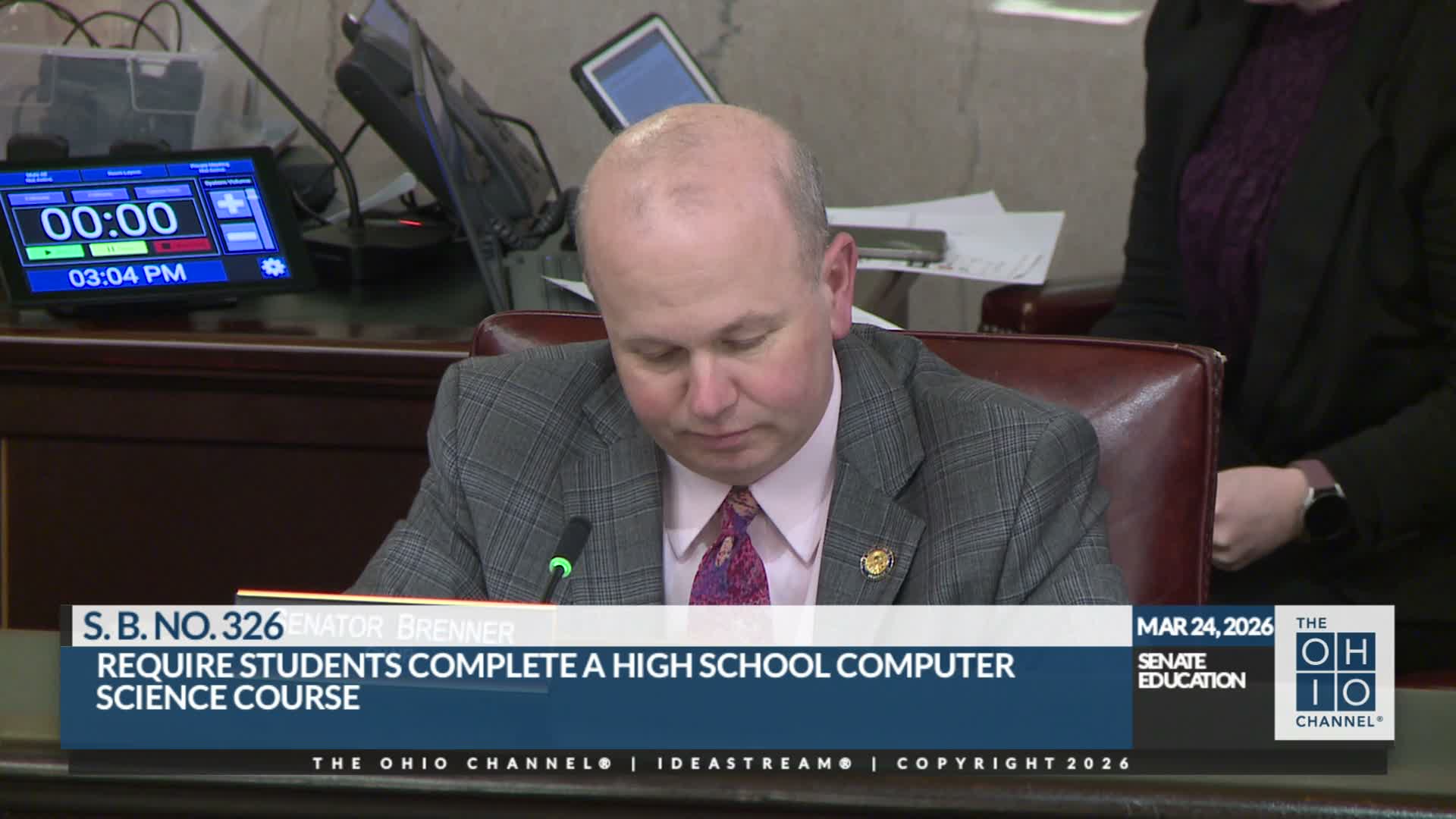
Summary
A substitute bill reduces the mandated computer‑science graduation requirement from a full unit to a half unit; superintendents support the goal but told the committee Ohio has only about 1,300 certified computer‑science teachers statewide and urged flexibility, partnerships, and investment in teacher preparation.
The Senate Education Committee adopted a substitute that changes the computer‑science graduation requirement from a full credit to a half credit and preserves a pathway for students who take a full‑year computer‑science course to substitute that credit for certain math or science units.
Paul Imhoff, appearing for the Buckeye Association of School Administrators, told the committee he supports the aims of Senate Bill 326 but warned implementation will be difficult without more teachers. "According to the LSC, Ohio currently has approximately 1,300 teachers certified to teach computer science, while thousands more would be needed to fully implement a statewide graduation requirement," he said, urging more time and state investment in personnel and training.
Imhoff recommended allowing districts to integrate computer‑science standards across existing courses rather than requiring a standalone class in every high school, and suggested partnering with joint vocational schools and career‑technical centers to deliver instruction. He also urged stronger state support for teacher preparation and professional development tied to grant programs.
Committee members asked whether changing the requirement to a half‑unit would materially reduce staffing pressure; Imhoff said it "would cut that in half" for teacher load but maintained that flexibility in how districts meet standards will be key to avoid geographic disparities in access.
What happens next: The committee adopted the substitute and concluded the third hearing on the bill; sponsors and stakeholders will continue negotiations on implementation details and language to preserve flexibility for districts.