Get Full Government Meeting Transcripts, Videos, & Alerts Forever!
Get email alerts on the School Health topic
No spam. Unsubscribe anytime.
Nurses, parents and pediatricians back bill to let students self‑carry intranasal epinephrine
Summary
Proponents at the Senate Education Committee said House Bill 462 would add intranasal epinephrine to existing self‑carry rules, citing FDA approval (Aug. 2024) and ease of use for younger students; members asked about dosing, procurement and whether procurement law should be updated.
Proponents told the Senate Education Committee that House Bill 462 updates Ohio Revised Code 3313.718 to allow students to self‑carry FDA‑approved intranasal epinephrine devices as an alternative to auto‑injectors.
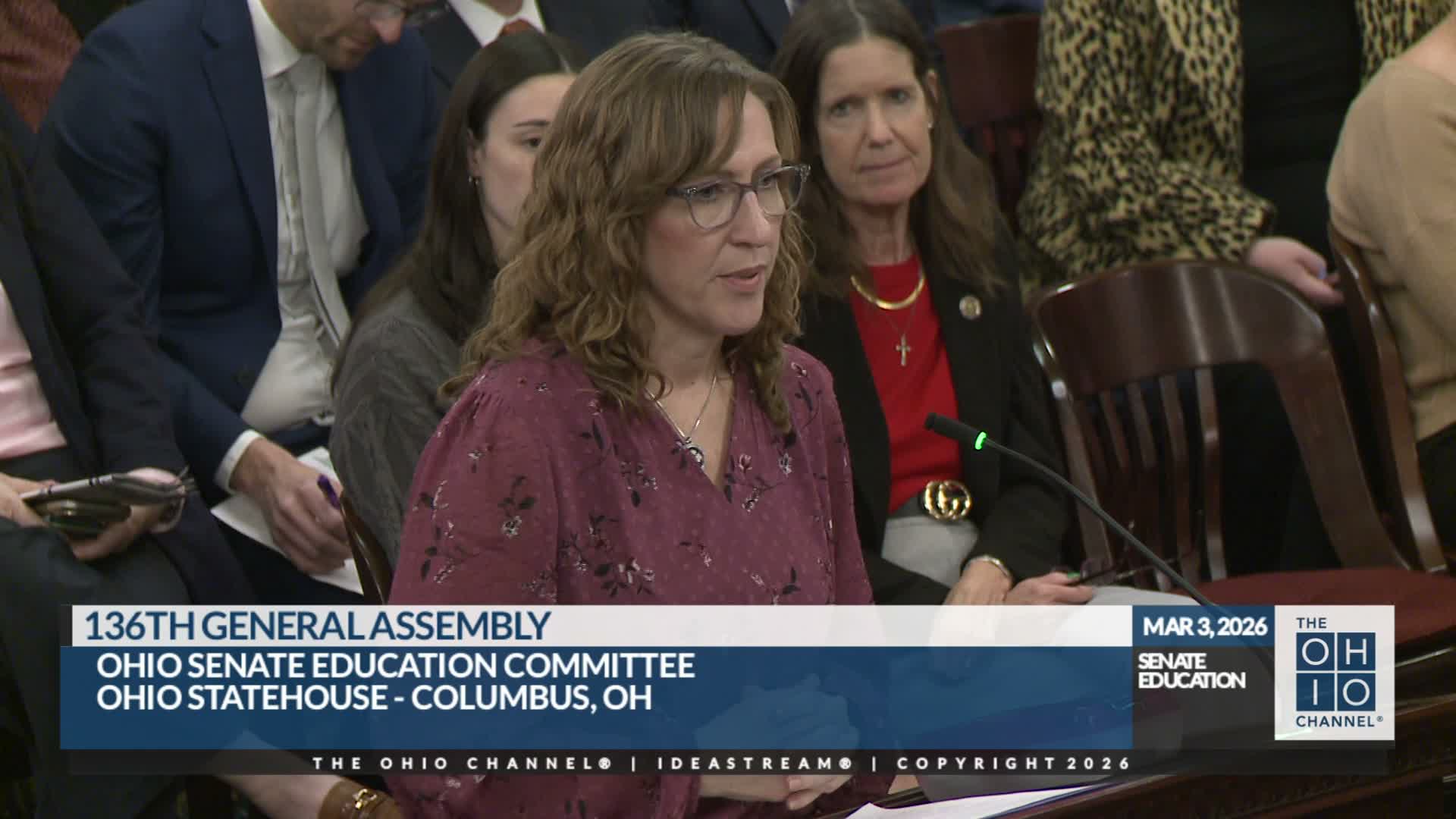
Aubrey Marbaugh, a registered nurse who works in school health in Marysville, described the intranasal device as "a much preferred delivery route, especially for children," and said the devices her testimony referenced are single‑dose and prefilled so they present minimal risk of accidental repeated dosing. Marbaugh said intranasal delivery could lower anxiety for staff who must administer emergency medication and make life‑saving treatment more accessible when time is critical.
Parent Beth Heller described her family's experience: her son Isaac has life‑threatening food allergies and was prescribed intranasal epinephrine this summer. "Because his medication is not delivered by an auto injector, he is not allowed to carry it himself. It must be stored in the nurse's office," Heller said, urging the committee to let parents and physicians choose the device that best fits a student's needs.
Dr. Kyle Isaacs, representing the Ohio Chapter of the American Academy of Pediatrics, said intranasal epinephrine received FDA approval in August 2024 and "carries the same advantages in its treatment for anaphylaxis. It is simple to use, it is effective, and it allows for quick delivery of life‑saving medicine." He urged the committee to advance the bill so state law aligns with current clinical practice.
Members asked practical questions about dosing and procurement. Ranking Member Ingram worried whether intranasal devices could be administered repeatedly and whether staff would unintentionally administer extra doses; Marbaugh and Dr. Isaacs said the devices discussed in the testimony are single‑dose and are prescribed per student. Senators also discussed procurement rules for school districts and whether existing standing orders and state funding mechanisms that cover auto‑injectors would need statutory updates to include intranasal devices.
The hearing concluded with the committee receiving additional written proponent testimony; committee members asked staff to follow up on procurement language and potential funding implications prior to any committee vote.