
Irving council hears Public Works “year in review,” officials cite hundreds of millions in ongoing projects
Get AI-powered insights, summaries, and transcripts
Sign Up Free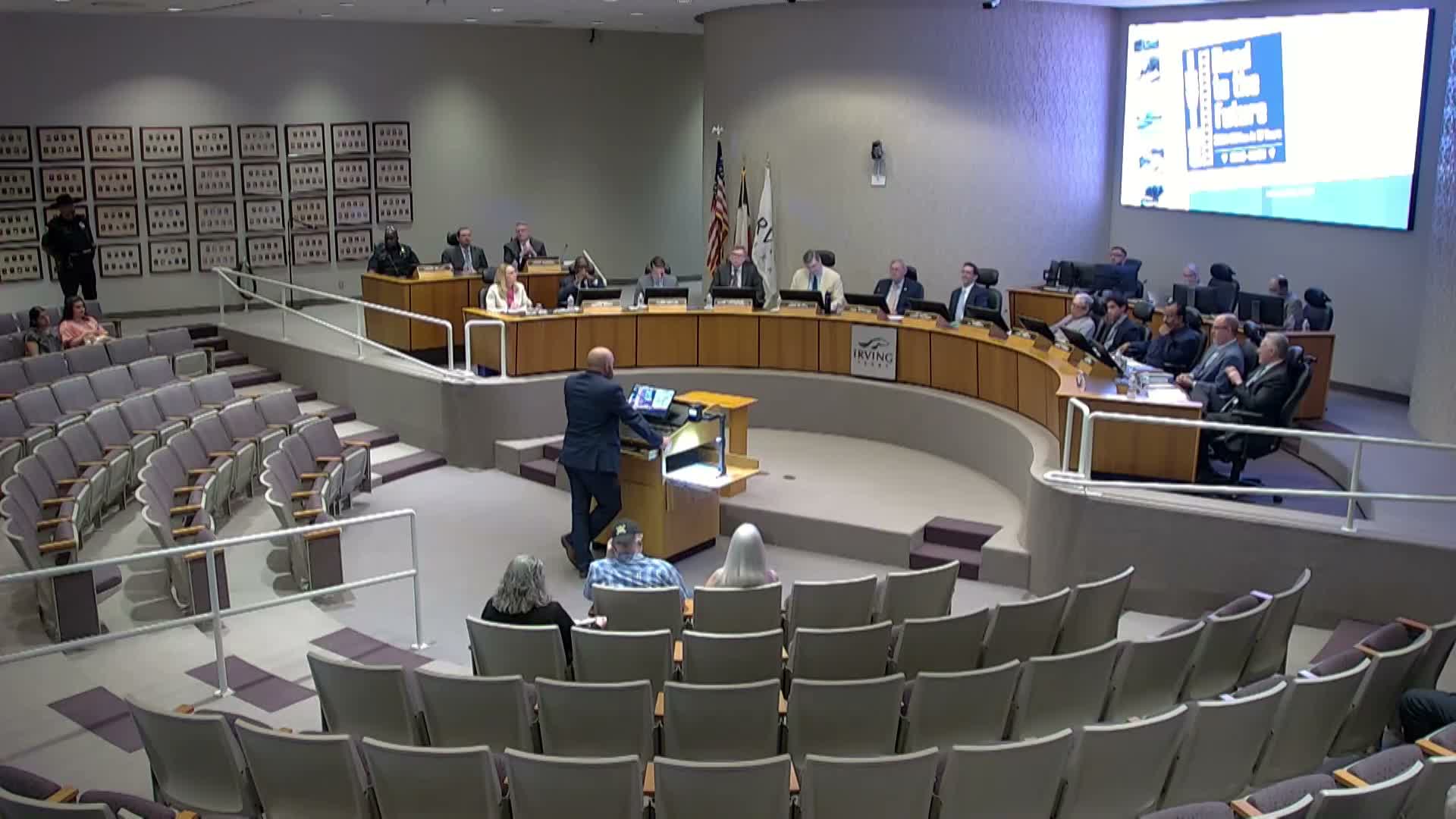
Summary
Trevor Crane, the city’s CIP director, told the council the city has tens of millions in ready‑to‑build projects and hundreds of millions in multi‑year pipelines across roadways, water systems and vertical projects; councilmembers asked about cash versus bond financing.
Trevor Crane, director of the City of Irving Capital Improvement Program, presented a Public Works “year in review” to the Irving City Council on March 26, laying out maps, project lists and spending totals across roadway, water/wastewater, drainage and vertical portfolios.
Why it matters: The presentation framed the scope of near‑term public investment in infrastructure and fed into council questions about how the city finances that work and what residents can expect on street, water and drainage projects.
Crane summarized the program’s pipeline and recent accomplishments. He said the city’s design or ready‑to‑build line items include about $54,000,000 on the vertical side and about $180,000,000 on the horizontal side; completed construction last year totaled roughly $24,000,000 vertical and $81,000,000 horizontal. Looking ahead, he said the near‑term pipeline includes almost $100,000,000 in vertical projects and nearly $20,000,000 on the horizontal side. Crane also reported federal and county grants of about $61,000,000 in recent years and described the Road to the Future overlay program, which he said has funded 190 overlaid road segments and nearly 100 centerline miles to date.
On water and wastewater, Crane said the program is investing about $50,000,000 per year — roughly $285,000,000 across five years — and listed recent work including six replaced water mains and 25 meter set replacements. He also described roughly $116,000,000 in contracted vertical facility projects currently in progress.
“...we are doing projects all over the city, whether it be vertical, roadways, water utilities, drainage,” Crane said during his presentation, emphasizing the citywide scope of the work.
Mayor Rick Stover framed the presentation as part of a long‑running mayoral pledge to prioritize infrastructure, thanking council members and staff for advancing the city’s project list. During council Q&A, a member identified in the record as Dennis asked how much of the spending is paid in cash versus bonds; a staff member replied that water and sewer averages about 45–50% cash while general‑fund capital is approximately 25–30% cash on average.
The presentation concluded without immediate council action; staff indicated the maps and program tables would guide upcoming design and procurement work and help inform budget discussions.