Get Full Government Meeting Transcripts, Videos, & Alerts Forever!
Get email alerts on the Kratom Regulation topic
No spam. Unsubscribe anytime.
Ohio committee hears dozens of pro‑ and personal‑testimonies on kratom bill, with experts urging bans on synthetic alkaloids
Summary
A House committee heard hours of proponent testimony for HB 587, with medical and industry witnesses urging regulation that preserves natural kratom leaf while banning high‑potency synthetics and requiring testing, labeling and age limits; family testimony raised at least one death certificate claim and the committee took no vote.
A House committee convened a second hearing on a measure described in testimony as House Bill 587 to regulate kratom products in Ohio, drawing medical experts, industry representatives, retailers and dozens of personal witnesses who largely urged preserving access to natural leaf kratom while restricting synthetic, high‑potency alkaloids.
Dr. Boyer, an attending physician at Ohio State University and a staff toxicologist at the Central Ohio Poison Center, told lawmakers that mitragynine (the principal kratom alkaloid) appears to act as an opioid‑receptor agent that some people use as an opioid replacement and for chronic pain, anxiety and depression. "It is an opioid replacement," he said, adding that reported adverse events — seizures, liver and cardiac abnormalities — are associations rather than proven causal links and that most severe exposures reported to poison control involved sublingual formulations of concentrated 7‑hydroxymitragynine (7‑OH).
The medical and regulatory witnesses who followed urged targeted limits rather than a full ban on natural leaf products. Mac Haddow, senior fellow with the American Kratom Association, told the committee that manufacturers have marketed concentrated 7‑OH products as "kratom" since September 2023 and urged the panel to prohibit labeling that conceals those differences. "Anything that's called kratom should have all the limitations in there," he said.
Bob Durkin, a food and drug attorney and former deputy director in the FDA's Office of Dietary Supplement Programs, backed the measure as a way to clarify how kratom fits with federal food and supplement rules and to ban synthetics and manipulated molecules. He cited federal GMP requirements and batch testing as consumer protections and said the bill's approach is a "belt and suspenders" clarification rather than a substitute for existing federal rules.
Nurse‑practitioner and health executive Dr. Heidi Sikora said the bill's proposed caps on 7‑OH (described in testimony as a 2% or 1‑milligram‑per‑serving threshold) and age limits would create a safety net for consumers while preserving access to natural products. Multiple manufacturing witnesses described New Dietary Ingredient (NDI) processes and 90‑day toxicology studies used to set product specifications.
Dozens of personal testimonies emphasized lives they said kratom had helped. Madeline Bradford described chronic pain from Ehlers‑Danlos syndrome and credited kratom with allowing her to return to school and work; Andrew Toops, Noah Dowdy and others described long histories of opioids or heroin and said kratom helped them avoid higher‑risk prescriptions or illicit drugs.
At least one family member gave a contrasting account: Dan Gibbs said his 25‑year‑old son died in December 2023 and that the Montgomery County coroner certified the cause as "intoxication by mitragynine," saying toxicology found mitragynine without fentanyl, heroin or prescription opioids. Gibbs argued that mitragynine acts on mu opioid receptors and suggested the substance be evaluated under controlled‑substance criteria; the chair asked him to reserve that testimony for the opponents' panel at a later hearing.
Committee members asked technical and practical questions about potency, what constitutes a "synthetic" versus natural product, labeling limits, testing standards and age gating. Several witnesses recommended banning sublingual and oral‑dissolving formulations of concentrated 7‑OH, requiring certificates of analysis and restricting sales near schools.
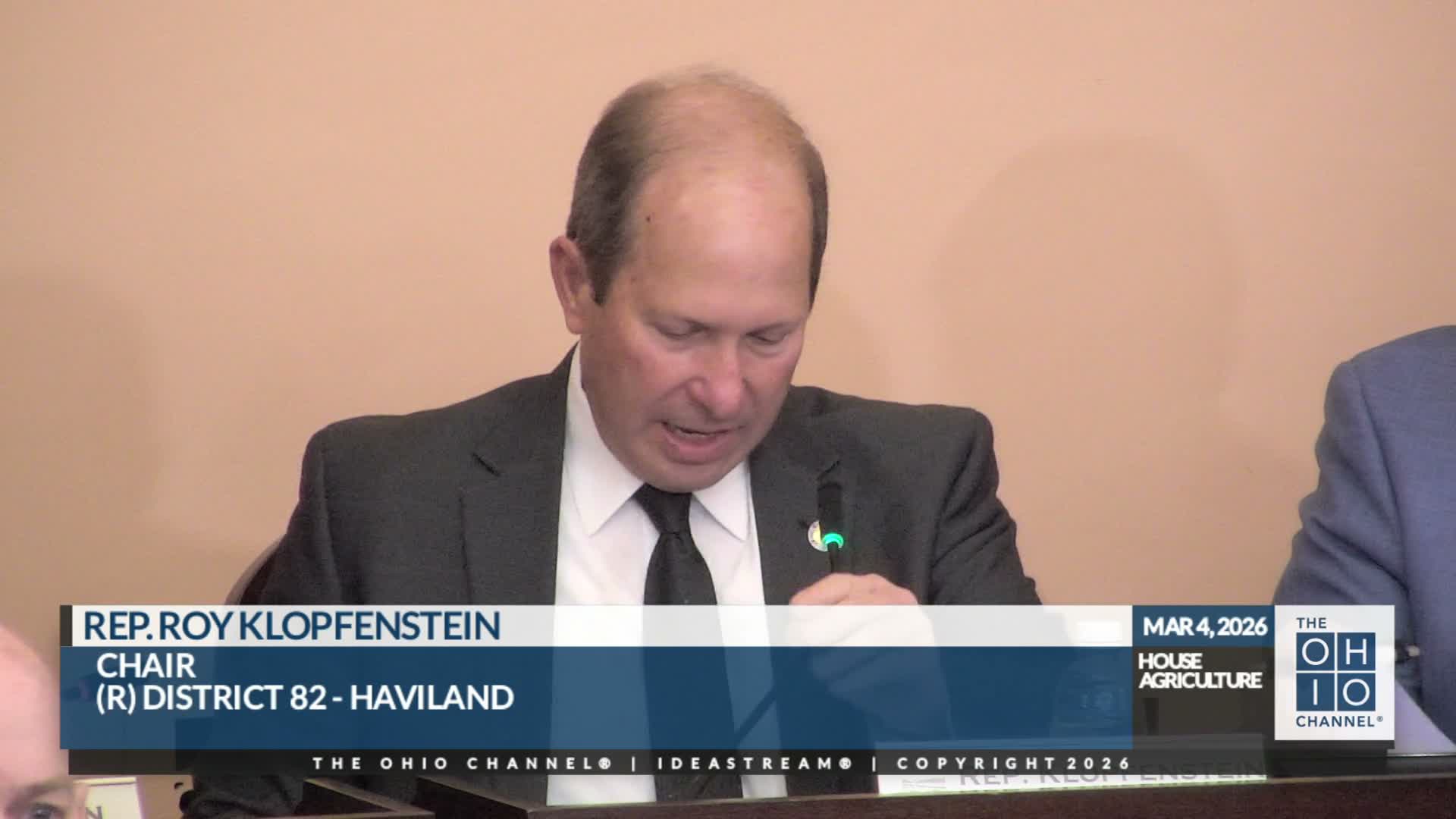
No formal motions or votes were taken. Chair Klopfenstein closed the session after advising members that written testimony was available on their iPads and reminding the committee of the hearing's time limits.
The committee's record shows testimony supporting regulation that distinguishes traditional kratom leaf from chemically altered or concentrated products, while testimony opposing the retail availability of mitragynine‑containing products was deferred to a later opponents' panel.