Get Full Government Meeting Transcripts, Videos, & Alerts Forever!
Get email alerts on the Food Safety topic
No spam. Unsubscribe anytime.
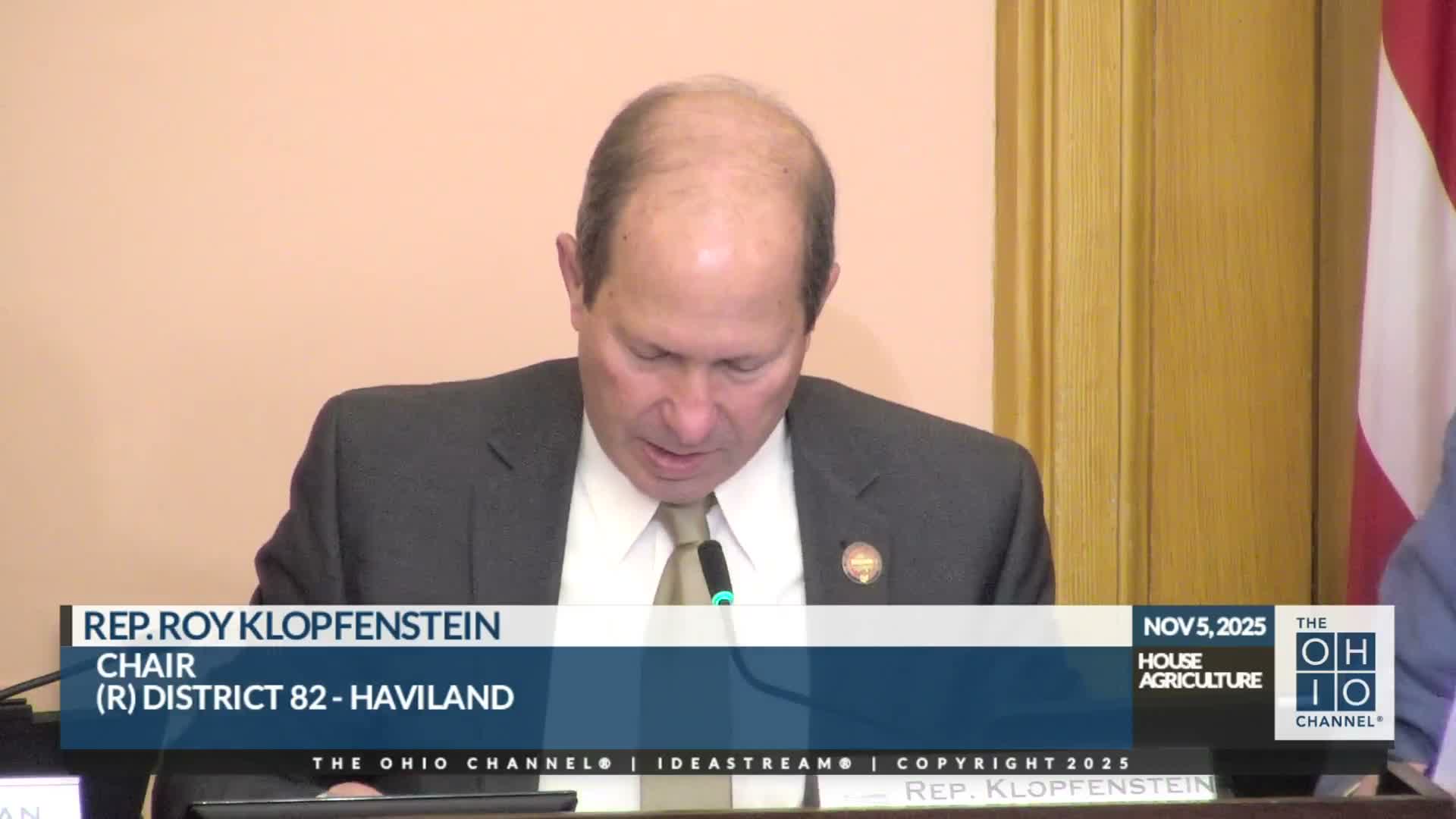
House Ag Committee favorably reports HB 134 after OEHA tests and amendment to align home-kitchen rules with state food-safety code
Summary
The House Agriculture Committee accepted an OEHA-backed amendment clarifying labeling and food-safety requirements for micro-enterprise home kitchens and voted 10–0 to favorably report House Bill 134 to the next legislative step.
The House Agriculture Committee on March 30 accepted an amendment to House Bill 134 and voted to favorably report the measure after testimony from the Ohio Environmental Health Association highlighting both improvements and remaining safety concerns.
Scott Whitaker, food technical committee chairman for the Ohio Environmental Health Association, told the committee that sponsors had worked with OEHA to address many of the association’s initial concerns, producing “a stronger, safer framework for micro enterprise home kitchen operations.” He said the updated bill restricts high‑risk food processes, aligns sanitation standards with the Ohio Uniform Food Safety Code, requires basic food-safety training for operators, mandates inspections of all areas of the home used for production, and caps meal production for residential kitchen operations.
Whitaker also cautioned that operating commercial food service from a residential kitchen “carries risks.” He said the association remains concerned about labeling for potentially hazardous foods and exemptions that could allow home-prepared potentially hazardous foods to be sold at off-site locations without consistent licensing or oversight.
During questioning, Ranking Member Franklin Miller asked whether the Department of Agriculture or local health departments will have the funding and capacity to perform the inspections the bill envisions. Whitaker replied that inspections would typically be completed by Department of Agriculture staff unless authority is delegated to local health departments, in which case local departments could face a financial burden beyond the nominal fee — citing fringe benefits, mileage, forms and equipment as cumulative costs.
Representative Semp asked specifically about sales away from the home, and Whitaker said Ohio’s existing structure requires licensed, approved setups for off-site sales (for example, mobile food licenses or event licenses), and that exemptions for venues such as farmers markets could allow home kitchens to sell without sufficient oversight.
Vice Chair Newman offered Amendment No. 1189 to HB 134 to clarify that certain labeling must match cottage food product standards and to move delivery of potentially hazardous foods to the Ohio Uniform Food Safety Code requirements; the amendment was explained and — with no objections — accepted.
Newman then moved to favorably report HB 134. The clerk called the roll and the committee recorded 10 affirmative votes; the chair announced the bill will be favorably reported. The committee asked members to review additional written testimony on their iPads and directed Legislative Service Commission staff to harmonize HB 134 as needed.
The committee’s action sends HB 134 forward with clarified labeling and stronger alignment to statewide food-safety rules, while OEHA and committee members signaled intent to continue working on concerns about inspection capacity and rules for off-site sales.