Child‑care providers press committee over late DHHS payments and ‘ghost’ emails; OPAGA flags shared mailboxes
Get AI-powered insights, summaries, and transcripts
Sign Up FreeSummary
At a public hearing on OPAGA’s report, childcare providers described months‑long payment delays, alleged retaliation and ‘ghost’ shared billing email accounts that can delete messages without legal‑hold protections; OPAGA and the committee plan follow‑up with DAFS/Maine IT and DHHS.
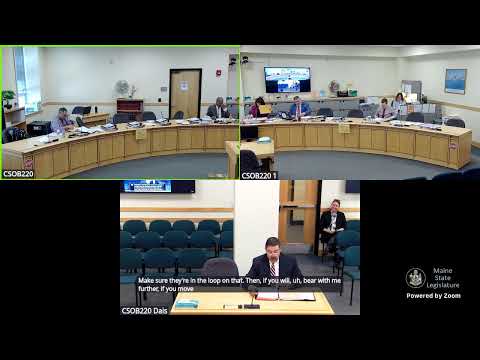
Child‑care providers and others testified at a statutory public hearing about OPAGA’s recent report on the timeliness of payments to child‑care providers who serve children in state custody. Providers described months‑long payment delays that disrupted operations and alleged administrative failures that impeded payment and oversight.
Betsy Grant, a longtime child‑care provider from Ellsworth, told the committee she documented “withholding of money,” “auto deletion of emails that violates public access laws,” and what she called “ghost billing email accounts” that were not monitored. Grant said the combination of missing emails and inconsistent managerial decisions made it difficult to establish a clear record when problems arose: “When you don't have emails that you can refer to, then you don't know… then it's a he said, she said,” she told the committee.
OPAGA’s director explained the technical issue the office discovered while gathering evidence for the child‑care payment review: some OCFS (Office of Child and Family Services) invoice mailboxes were free, shared accounts without a legal‑hold feature, meaning emails deleted from those mailboxes may not be recoverable after 30 days. OPAGA said OCFS upgraded those accounts after the problem was identified, but the office does not yet know how widely such free shared mailboxes are used across state government.
Another remote testifier, Ryan Michaels, told the committee he had repeatedly tried to secure formal sponsorship of an investigation into his records and alleged retaliation but had received no meaningful response; he urged the committee to apply the same oversight it has shown in other cases and to engage with the materials he submitted for the record.
Committee members asked OPAGA and the administration a range of procedural and factual questions and debated next steps. The committee moved — and unanimously approved — a letter to the Department of Administrative and Financial Services (DAFS), routed through Maine IT, asking whether free shared mailboxes without legal‑hold protections are used broadly across state government, and requesting a count and list of such accounts. The chairs said the draft letter will be circulated to committee members before sending.
Committee members also elected not to take a vote to endorse OPAGA’s report that day, because they want further follow‑up with the Department of Health and Human Services (DHHS) and its Office of Child and Family Services. Members requested Director Bobby Johnson (OCFS) appear at a future meeting to answer questions and clarify timelines for corrective actions OPAGA recommended in its report.
The committee’s motion to ask Maine IT/DAFS about shared mailboxes and to convene DHHS for follow‑up reflects concern about both the record‑retention problem OPAGA identified and the operational failures witnesses described that left some providers unpaid for multiple months.