
Judiciary committee recommends confirmation of five judicial nominees
Get AI-powered insights, summaries, and transcripts
Sign Up Free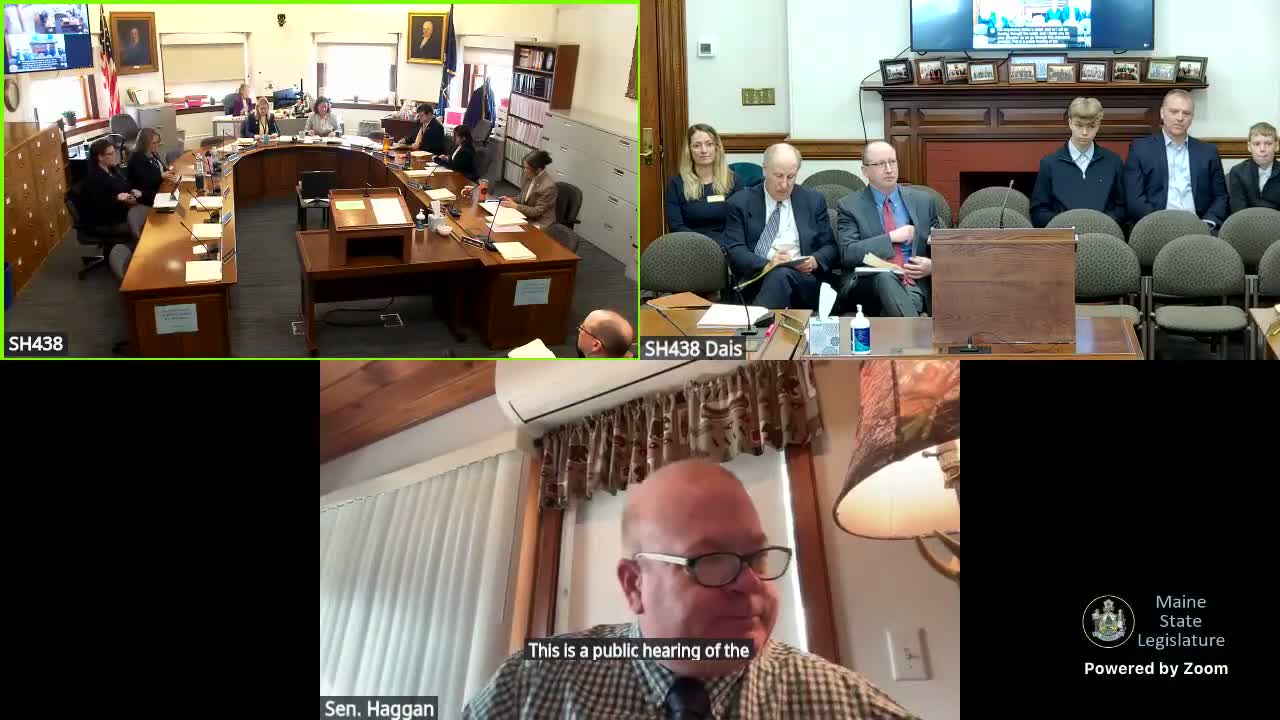
Summary
The Joint Standing Committee on the Judiciary voted to recommend confirmation of five nominees — John P. O'Neil Jr., Arnold Clark, Rafael Silver, Julia Pitney and Christopher Taub — following public hearings in which supporters highlighted experience and temperament. All five were recommended by committee voice/roll-call votes.
The Joint Standing Committee on the Judiciary on March 30 recommended confirmation of five judicial nominees, voting in favor of each after public hearings that featured statements from the governor's counsel, the judicial selection committee and multiple supporters.
Senate Chair Anne Carney opened the day by introducing the first nominee, John P. O'Neil Jr. of Kennebunk, for appointment as an active retired justice of the Maine Superior Court. Governor's counsel Jerry Reed and John Hobson of the Judicial Nominations Advisory Committee described O'Neil's long trial experience and work on judicial ethics panels. Justice O'Neil told the committee he sought a judgeship to "do something important," said he has tried to balance firmness with compassion, and described his focus on understanding why people act as they do. The committee heard a statement of support from Rachel Oken, president of the Maine State Bar Association, and then took an immediate roll-call vote; the clerk recorded eight yeas, zero nays, and six absentees, recommending O'Neil's confirmation.
The committee next considered Arnold Clark of Calais for the District Court. Jerry Reed and John Hobson summarized Clark's work in tribal and family-law dockets and his decade as a family law magistrate. Supporters joining remotely praised his temperament and humility; in answering questions Clark emphasized the value of the "team approach" in drug treatment courts and noted persistent resource gaps for recovery services. After public testimony the committee moved to a roll-call vote and recorded eight yeas, zero nays, and six absentees, recommending confirmation.
Rafael Silver of Bangor, nominated for the District Court, received several in-person and remote endorsements from county prosecutors, federal defenders and court-appointed counsel who cited her experience handling family, trafficking and complex federal prosecutions. Supporters described Silver as "even‑handed" and "compassionate." The committee voted immediately and the clerk announced eight yeas, zero nays, six absentees.
Julia Greenleaf Pitney of Yarmouth appeared for nomination to the Superior Court. Members of the bar and the Maine Trial Lawyers Association testified that Pitney's district court service and prior civil litigation experience prepared her for superior‑court work. The committee's roll-call vote recommended her confirmation with seven yeas, zero nays, and seven absentees recorded by the clerk.
Finally, the committee heard from Christopher Taub of Brunswick on his nomination to the Maine Supreme Judicial Court. Taub, the chief deputy attorney general, described his long appellate practice and pledged to recuse where necessary to preserve public confidence. Attorney General Aaron Frey and a large number of colleagues and former opponents testified in support, citing Taub's appellate skill, writing and leadership. The committee recommended Taub by roll-call vote: seven yeas, zero nays, and seven absentees.
What happens next: the committee's favorable recommendations will be sent in writing to the president of the Senate as required under 3 M.R.S. chapter 6, §157. The full Legislature will receive the committee's recommendations as it considers confirmation on the floor.
Quotes from the hearings capture the tone of the proceedings: "I want to do something important," Justice John O'Neil said of his reason for seeking judicial service. Arnold Clark described his district-court work and recovery-court experience and said, "When someone relapsed, it was not an automatic heavy hand — it was what is going on in this person's life and how can we best move that person to continued recovery." Attorney General Aaron Frey, speaking for Christopher Taub, said Taub "is an exceptional attorney... a strong writer" whose experience will serve the law court well.
All five hearings featured questions from committee members and multiple statements of support; no sustained opposition testimony was recorded in any of the public comment periods.