
Minn. senators hear divided testimony on bill to curb ‘surveillance pricing’ and electronic shelf labels
Get AI-powered insights, summaries, and transcripts
Sign Up Free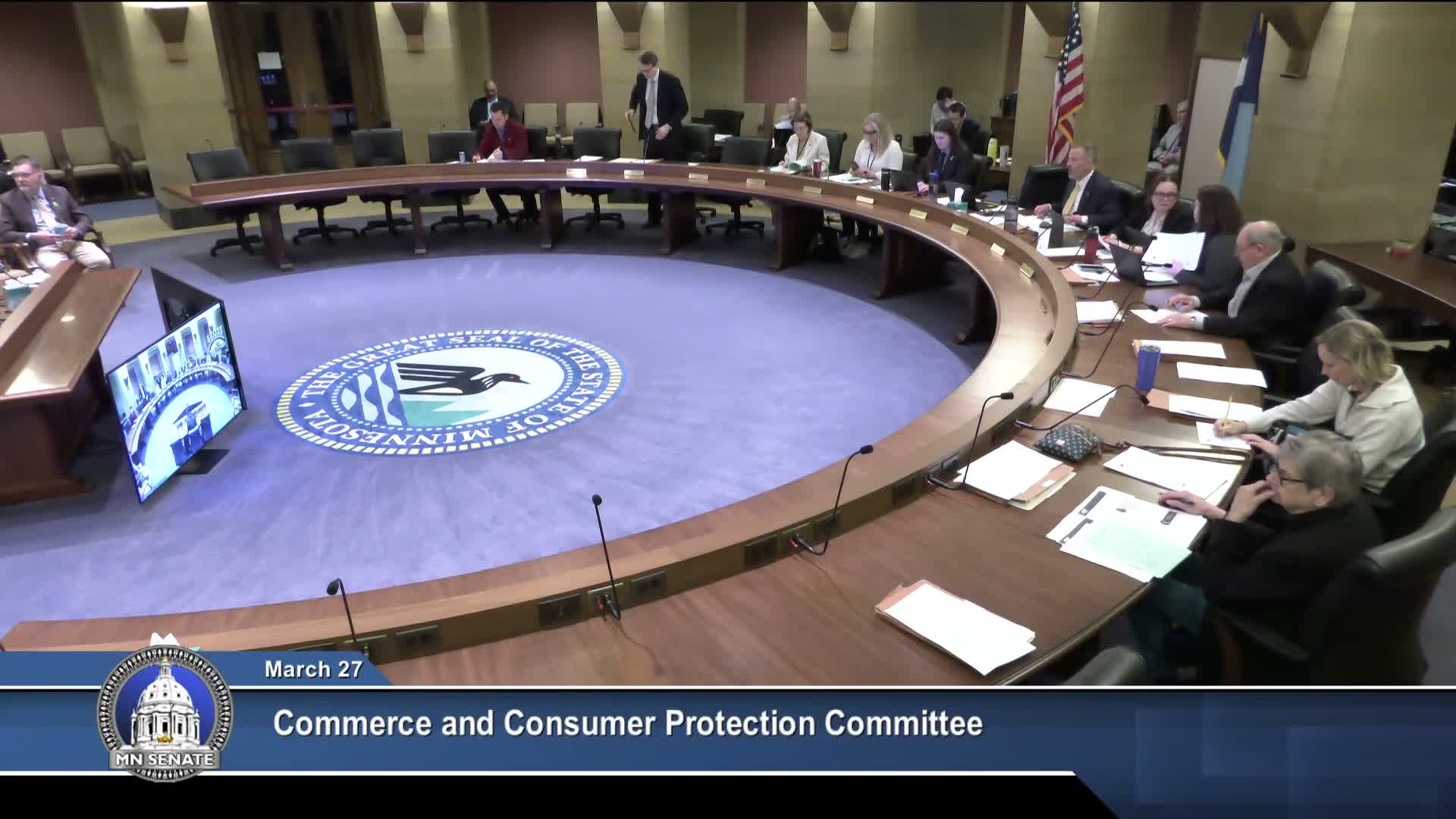
Summary
A proposed Minnesota ban on surveillance pricing and broad limits on electronic shelf labels drew support from labor and consumer advocates who warned of price discrimination and harm to workers, while retailers and grocers said the language is too broad and risks eliminating discounts and accuracy tools. The committee laid the bill over for further work.
Senators on the Commerce and Consumer Protection Committee on Thursday heard sharply divided testimony on Senate File 4711, a bill that would restrict so‑called surveillance pricing and tightly limit use of electronic shelf labels, or ESLs.
Sen. Port, the bill author, told the committee that algorithmic pricing and instant updates tied to consumer data create an opening for discriminatory pricing. He warned of major retailers and platforms using personal data to adjust prices in real time and urged careful rulemaking to protect shoppers. "Everyone deserves to pay the same price for the same product," he said.
Labor and consumer groups backed the proposal. Rena Wong, president of United Food and Commercial Workers Local 663, said the technology threatens both affordability and grocery jobs: "AI surveillance pricing is not going to improve individual privacy, and it is gonna be workers who pay the price of moving towards electronic shelf labels," she said, urging guardrails to protect small stores and union jobs.
Frontline grocery workers echoed the concern. Jordan Blomquist, a UFCW member who manages a meat department in St. Paul, described how inconsistent in-store pricing can place workers in the middle of disputes and urged senators to support SF4711.
Retail trade groups urged caution. Will Hagen of Minnesota Retailers said ESLs primarily promote accuracy and transparency at checkout and warned that overly broad language could chill loyalty discounts, targeted promotions and digital coupons that many consumers use to lower prices. "If the language is too broad, those tools could be limited or chilled," he told the committee.
Steve Bartel of the Minnesota Grocers Association said common ESL systems take time to update and lack the real‑time, individualized targeting critics fear; he also cited rising operating costs that drive consumer prices. He said banning or restricting ESLs could reduce retailers' ability to offer discounts that help price‑sensitive households.
Committee members asked about studies and experiences from other states. Sen. France asked whether the data showing little evidence of surge pricing after digital labels were introduced changes the calculus; Sen. Port said Minnesota could lead on consumer protection while the technology and its uses continue to evolve.
The committee agreed to lay the bill over and continue discussions with retailers, labor and consumer groups to refine definitions and carveouts.
The bill was not advanced out of committee Thursday; senators said they would continue negotiations before any final vote.