Get Full Government Meeting Transcripts, Videos, & Alerts Forever!
Get email alerts on the School Library Content topic
No spam. Unsubscribe anytime.
Sponsors urge vendor accountability for school/library databases; committee asks about standards and enforcement
Summary
Sponsors of House Bill 583 told the House Finance Committee the bill would require InfoHio/OWL vendors (Cengage/Gale, EBSCO) to certify materials are free of harmful, age‑inappropriate content and institute a three‑strike enforcement scheme; members asked how monitoring, reporting and exemptions would work.
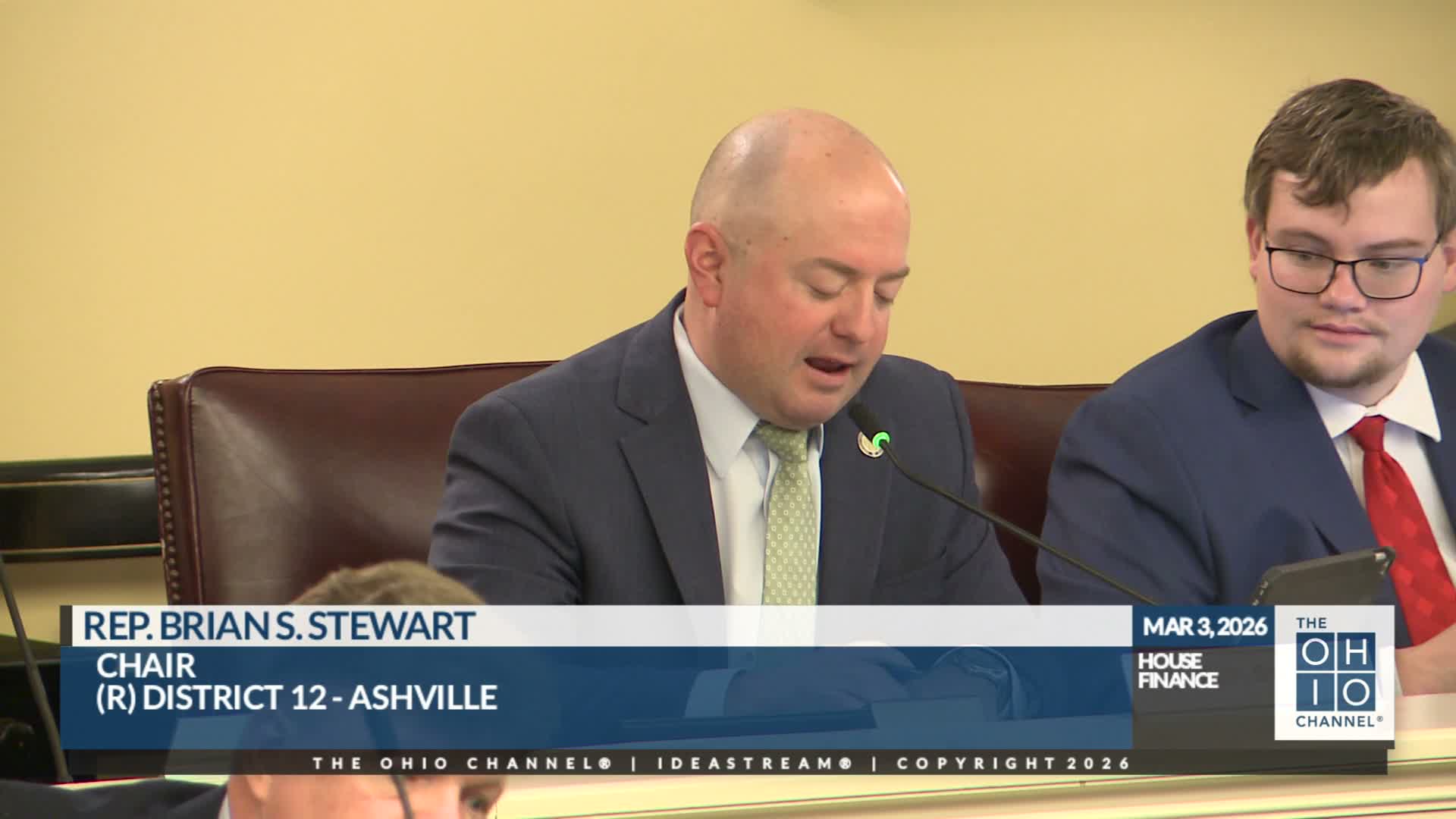
Representatives who sponsored House Bill 583 told the House Finance Committee on Tuesday the measure would require major school and library database vendors to certify that the resources they provide to Ohio students are free of harmful, age‑inappropriate material and would impose a three‑strike enforcement regime with rights to cure at each step.
"House Bill 583 seeks to safeguard Ohio children," Rep. Ritter said in sponsor testimony, naming the two major database providers used through state programs as Cengage/Gale (branded in Ohio as InfoHio) and EBSCO (branded as OWL). Ritter said the state pays for these databases as a safer alternative to internet searches and that problems have persisted despite local cleanup efforts.
Joint sponsor Rep. Newman recounted a constituent case in which a parent found an objectionable item while a child used a school‑assigned portal; Newman said the parent then discovered about 60 additional items and that the district later shut down the portal while the material was investigated.
Committee members sought details on scope and oversight. Representative Rob Sweeney asked whether the bill would simply let the state dictate what can be viewed or whether local boards retain discretion; sponsors said the bill does not rewrite Ohio’s existing standards for obscenity or age appropriateness but asks vendors to align their curation to those standards. "This bill does not touch the standard. It doesn't seek to redefine it," a sponsor said.
Members also asked how monitoring would work and who would trigger mandatory reporting to the attorney general. Sponsors said InfoHio and OWL currently do monitoring and that the bill’s mandatory reporting provision is designed to ensure the state is informed when local entities become aware of vendor failures; sponsors added that they expect mandatory reports to decline once vendors correct repeat problems under the three‑strike framework.
Lawmakers raised concerns about exemptions and potential loopholes. Representatives questioned whether exempting higher‑education systems and college‑credit programs might permit minors accessing college resources to see material that would be blocked in K‑12 settings; sponsors replied parents choosing college credit programs accept that college materials may include adult content and that the bill targets school and public library portals marketed to children.
Several members suggested technical alternatives, including school‑level AI monitoring tools; sponsors said they are open to additional technical solutions but prioritized rulemaking for the two vendors that cover the majority of Ohio schools and libraries.
Next steps: the committee heard no sponsor motion or vote in this session. Sponsors said they will bring additional witnesses and engage interested parties in follow‑up meetings.