Get Full Government Meeting Transcripts, Videos, & Alerts Forever!
Get email alerts on the Budgeting topic
No spam. Unsubscribe anytime.
Sponsor pitches periodic 0‑based budgeting in committee hearings
Summary
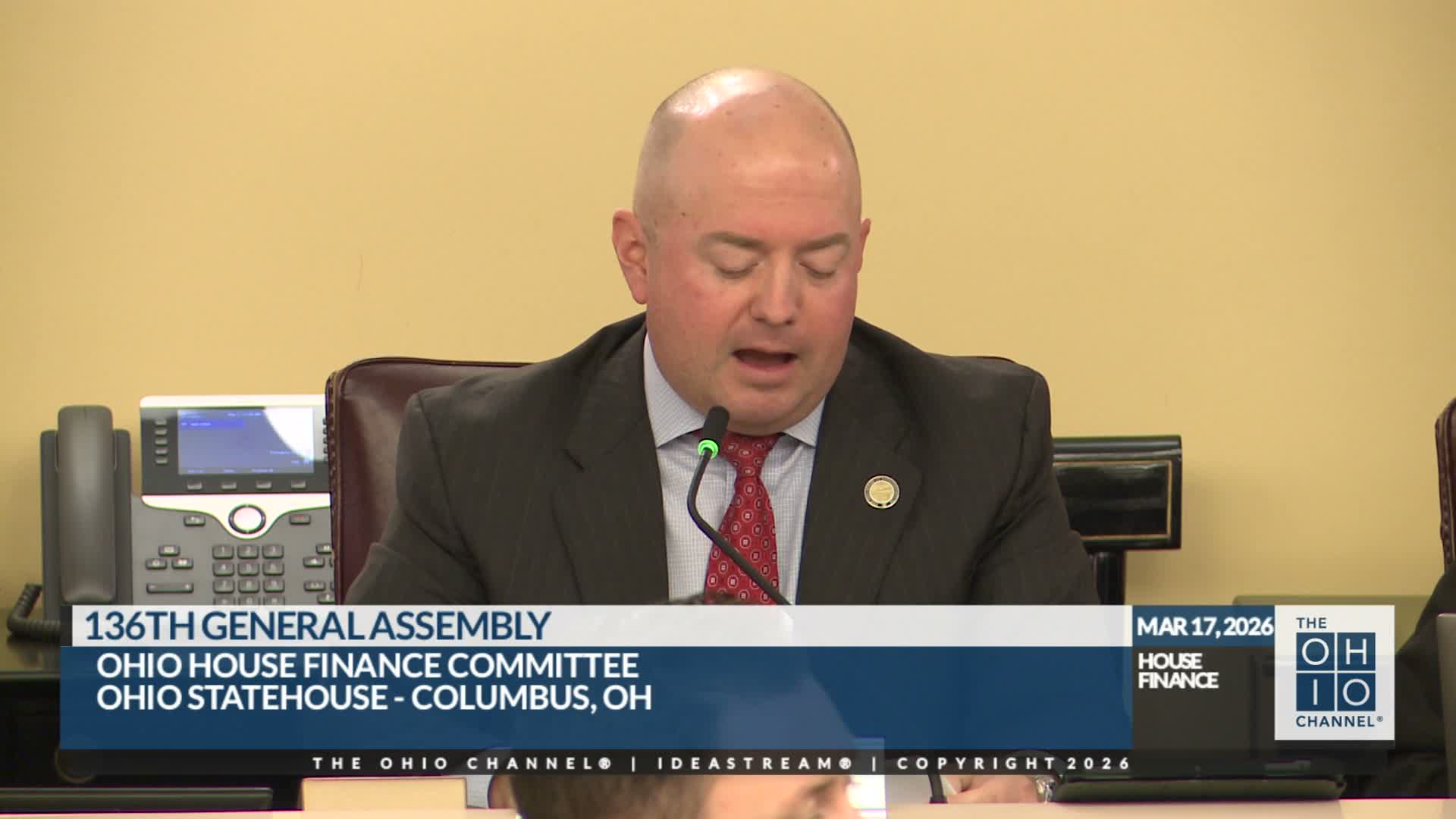
Vice Chair Davila argued House Bill 645 would require a 0‑based review of the state budget every 10 years and presented a companion concurrent resolution urging Congress to consider the approach; members asked about administrative workload and precedent.
Vice Chair Davila presented sponsor testimony for House Bill 645, which would require a periodic 0‑based budgeting review of state agency budgets every 10 years, beginning with the General Assembly convening in 2027. Davila said 0‑based budgeting requires agencies to justify their spending from a baseline of zero and that a 10‑year cycle balances meaningful review with administrative practicality for legislative and executive staff.
Davila also presented House Concurrent Resolution 32, which urges Congress to consider a similar federal approach and cites the 0 Based Budget Act (S.181) introduced by Sen. James Risch. He described the resolution as an expression of the General Assembly’s view that Congress should evaluate periodic 0‑based reviews to strengthen oversight and fiscal discipline.
Committee members asked how often the process should occur and whether additional staff or time would be required. Representative Ritter asked why every 10 years was chosen and whether the review would create extra work for legislative staff; Davila said the legislative workload informed the 10‑year cycle and that the administrative agencies already perform substantial budgeting work. Representative Sims asked whether other states have implemented the approach; Davila referenced historical federal interest (noting Jimmy Carter’s use of similar ideas at the state level in Georgia decades ago) and said he would seek more recent state examples.
The committee concluded first hearings on HB 645 and HCR 32 without a final vote; both measures will proceed through the committee process.