Get Full Government Meeting Transcripts, Videos, & Alerts Forever!
Get email alerts on the Debt Settlement topic
No spam. Unsubscribe anytime.
House sponsors seek state licensing, oversight for for‑profit debt‑settlement firms
Summary
Representatives Gumbari and Erica White introduced House Bill 534 in a first hearing, saying the bill would license and regulate for‑profit debt‑settlement companies, align state law with federal rules, and prohibit firms from collecting fees until consumers accept a negotiated settlement.
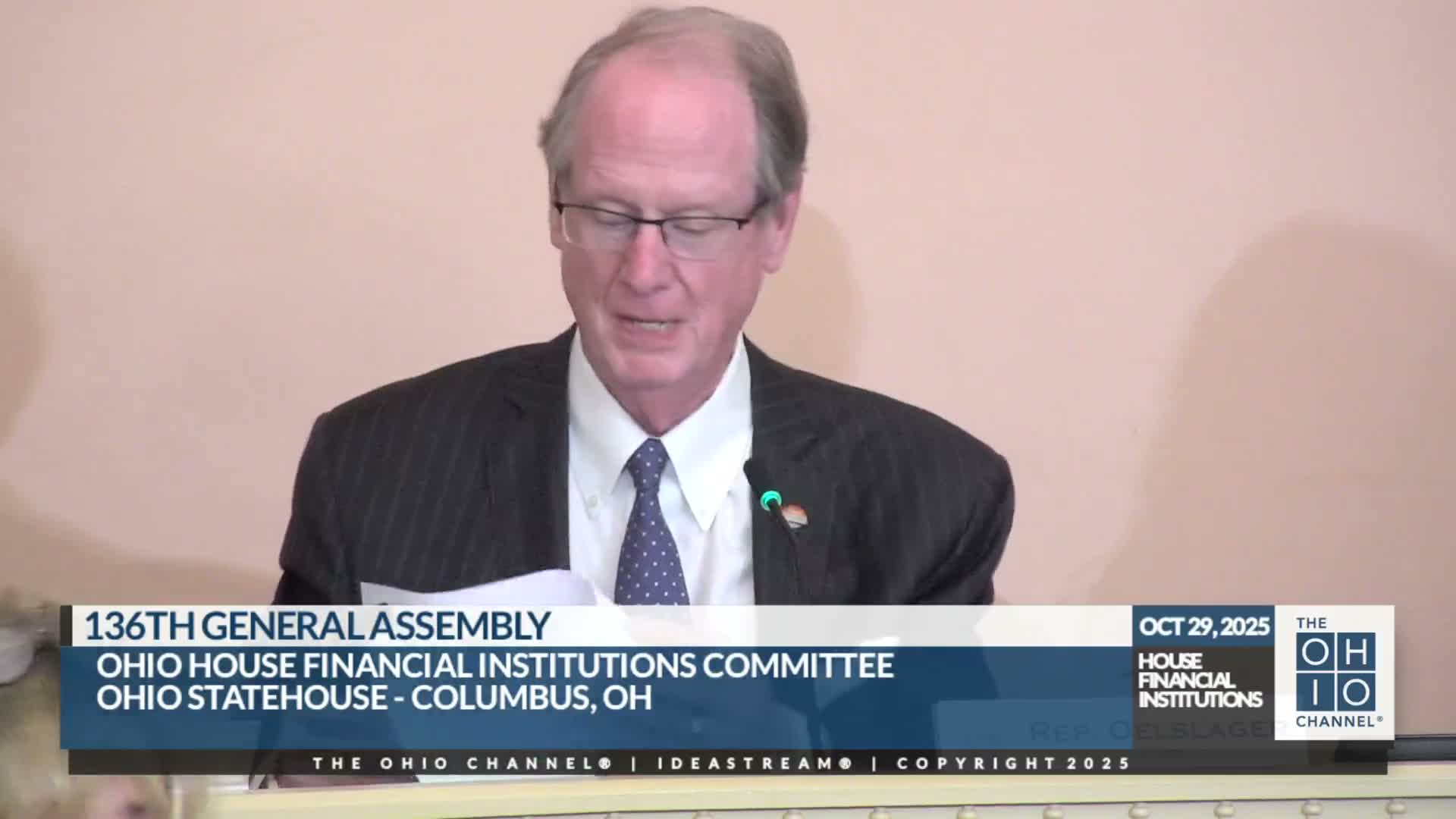
Representative Gumbari, a joint sponsor of House Bill 534, told the House Financial Institutions Committee that the bill “modernizes Ohio law by creating a clear, regulated framework for for‑profit debt settlement services.” The committee held a first hearing and took no vote.
The measure would align Ohio law with the Federal Trade Commission’s 2010 telemarketing sales rule and federal consumer‑protection standards, Gumbari said, and it would bar debt‑settlement companies from collecting fees from a consumer “until a settlement has been reached, the consumer accepts it, and the first payment is made toward it.” He said the bill would place providers under state licensing and oversight by the Department of Commerce, require annual audits and surety bonding, and give the state enforcement authority to protect consumers.
Representative Erica White, the bill’s joint sponsor, said the proposal is needed because household debt in Ohio is rising faster than income and “the average Ohioan carries more than $6,000 of credit card debt.” White told the committee that the current Ohio Debt Adjusters Act (ORC 4710) was drafted for a different market and for nonprofit credit counseling, and that it does not account for modern, federally regulated debt settlement services. She said ambiguity in state law leaves some legitimate providers and consumers without a clear path and can push households toward bankruptcy or unregulated operators.
Both sponsors framed the bill as consumer‑protection legislation that also would expand access to lawful debt‑relief options. There were no committee questions for the sponsors during the hearing. Chair Oslager closed the first hearing of HB 534 and the committee adjourned without taking action; next steps were not specified during the session.
The hearing record shows sponsors cited federal rules and an existing Ohio statute; committee staff or members did not provide alternative analysis or a fiscal note during the session. The bill’s text, any fiscal analysis, and potential rulemaking by the Department of Commerce would be the next sources of detail for how licensing, audits, bonding and enforcement would be implemented.