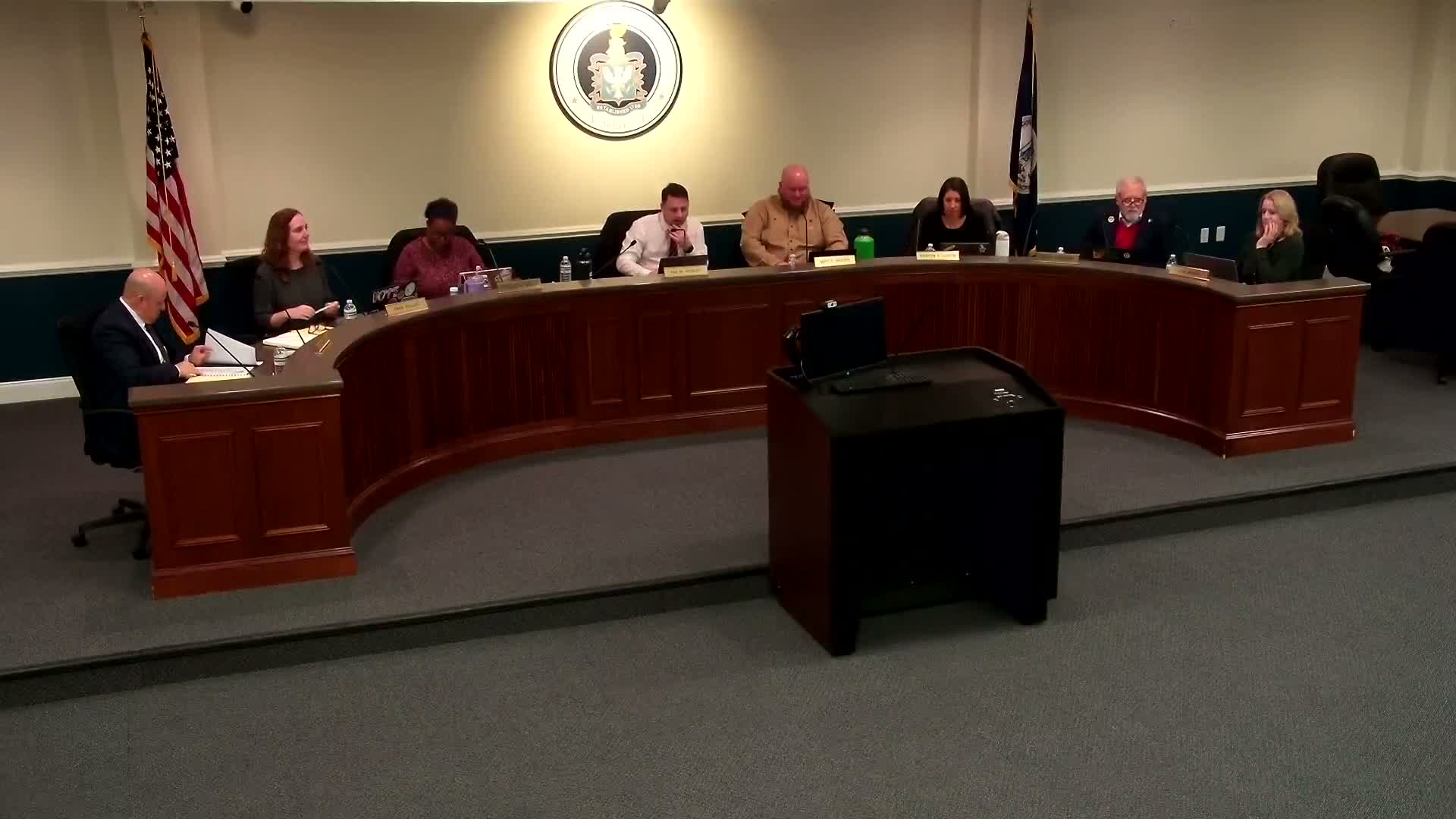
Harrisonburg board approves first-reading updates to student health, medication and support‑staff policies
Loading...
Summary
The Harrisonburg City School Board reviewed and approved first-reading changes to several policies — including a new student‑athlete sudden cardiac arrest policy, reorganization of student health services, and medication-policy language to allow newer inhalable rescue devices — and advanced a change to support‑staff probationary periods.
The Harrisonburg City School Board on Feb. 3 advanced a package of policy revisions affecting student health, medication handling and support-staff probation. Staff said the updates are intended to align local manuals with Virginia School Boards Association (VSBA) language and state requirements, move operational details into accompanying regulations and reflect new rescue‑medication technology.
Kelly (staff member presenting the policies) told the board the new Policy 04:20 on student‑athlete sudden cardiac arrest "is required by Virginia law" and that the division has already placed required plans at each school. The board approved that policy on first reading by voice vote.
On Policy 424 (student health services), staff explained the revision primarily relocates detailed procedures into a regulation that will remain available to nurses and athletic trainers. Trustee discussion focused on who certifies health professionals and which standards apply; a board member asked whether the State Board of Education or external medical certifying bodies set those expectations.
The most detailed discussion centered on Policy 428, which reorganizes medication sections (diabetes supplies, asthma medications, epinephrine) and clarifies employee administration of certain drugs. "We're changing the word 'auto injectable' to 'device' because there are now inhalable rescue sprays," Kelly said, noting newer inhaled options function as alternatives to traditional auto‑injectors. Staff also said opioid‑antagonist language was made more generic to cover different antagonists rather than a single brand name. Trustees asked whether other "rescue" medications should be included; staff said the current list follows state law naming the medications most commonly allowed in schools and offered to follow up with Chief Officer April Howard for additional guidance. The board approved the reorganization and related first‑reading motions by voice vote.
Mr. Weaver presented Policy 647 on support staff and recommended extending the local probationary period from 18 months to two years. He said the change "gives the principals time to really be able to evaluate" new employees; the board approved that change on first reading.
What happens next: staff will refine language where trustees asked for clarification (including the policy text referencing superintendent authorization and any remaining statutory questions), circulate the related regulations (e.g., 428R) for review, and return final readings at a future meeting. Several trustees asked that Dr. Michael Richards (the superintendent, not present) or the chief officer who drafted the changes review outstanding wording before final adoption.
Vote notes: the policy actions were taken by voice votes recorded as "Aye" in the meeting; the transcript does not contain a roll‑call tally or named vote record for each motion.