Get Full Government Meeting Transcripts, Videos, & Alerts Forever!
Get email alerts on the Open Meetings Public Comment topic
No spam. Unsubscribe anytime.
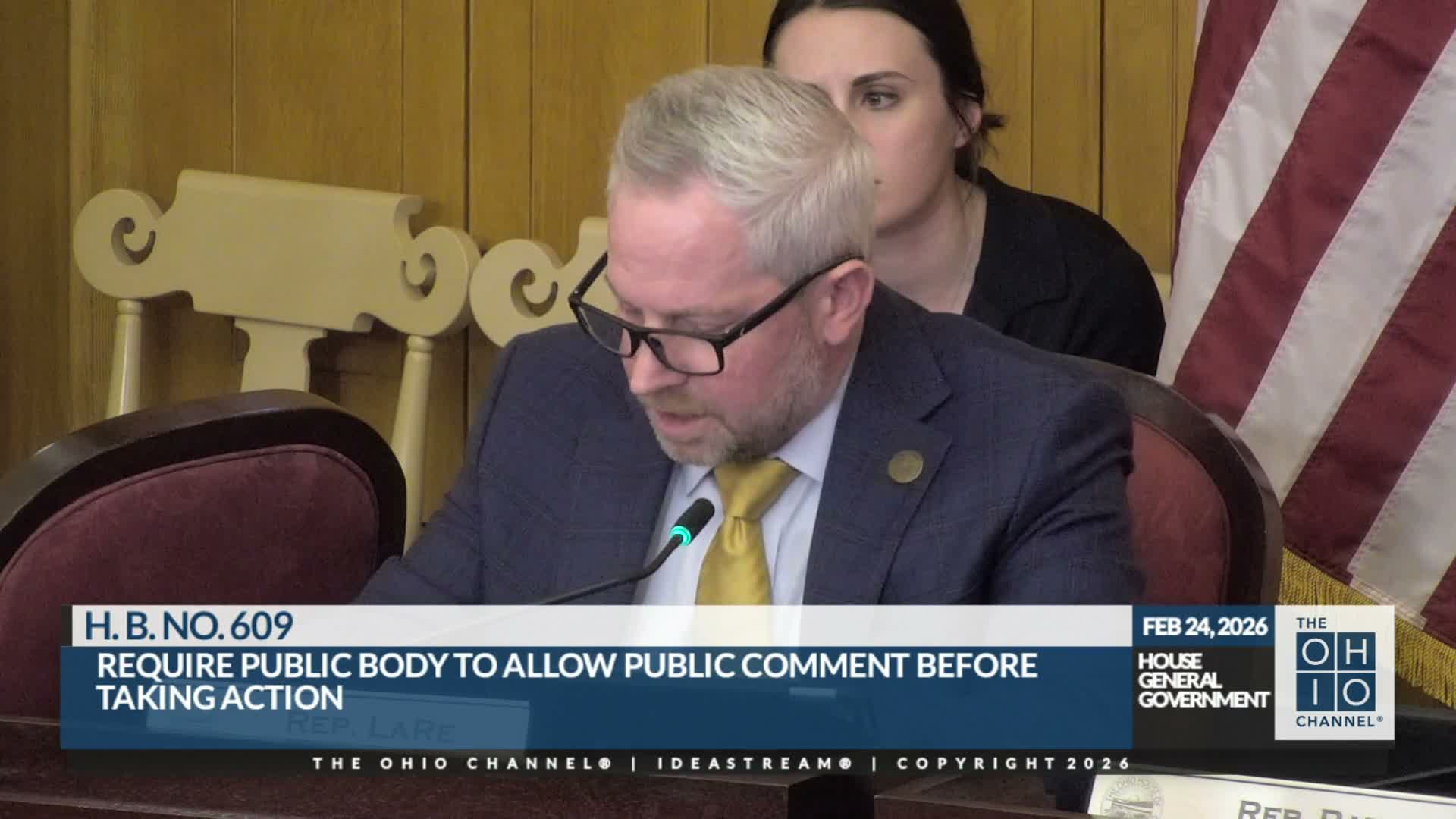
Committee adopts substitute for HB609 to require at least one public comment period at elected-body meetings
Summary
The committee adopted a substitute for House Bill 609 requiring elected public bodies to permit at least one period for public comment and prohibiting fees for advance notice via email lists; sponsors said the substitute balances public input with reasonable time and conduct rules.
The House General Government Committee adopted a substitute and heard sponsor testimony for House Bill 609, legislation that would require elected public bodies to provide at least one period for public comment at meetings and bar charging a fee to receive meeting notices via electronic mailing lists.
Vice Chair LaRae moved to adopt substitute L362754-two, explaining the change "requires at least 1 period of public commentary and testimony to be allowed during each meeting and prohibiting a public body from charging a person a fee to receive advance notice of the meetings via electronic mailing list or electronic mail." Sponsors said the subbill preserves local bodies' authority to set reasonable rules on the duration, nature and order of comment while preventing total elimination of public comment.
Representative Russo asked whether the substitute would apply to the General Assembly and whether committees could still require registration; sponsors replied that the bill does not force a body to waive reasonable post‑testimony identification procedures and that many committees already permit in-person testimony without pre‑submitted written testimony. Representative Miller raised the common practice of prioritizing residents during limited comment periods; sponsors said entities could call resident speakers first but should not entirely bar nonresidents who may be taxpayers or property owners.
The committee adopted the substitute and concluded the first hearing; sponsors said they would provide further technical language and answer questions from members.
What happens next: The substitute was adopted in committee and sponsor testimony was taken; technical clarifications and potential rule harmonization remain for future staff work and subsequent hearings.